
Women and girls tend to mask their ADHD, showing traits of inattention or hyperactivity in less obvious ways than males. That was the case with Poppy, who had also been diagnosed with dyslexia when she was 8, and as a teenager developed an eating disorder – both of which have been linked to ADHD.
“It made me realise that no one really knew much about women and ADHD – and she didn’t seem like someone who had ADHD,” she says of her daughter.
Wheaton worked hard to get answers for her daughter, who had moved back to the UK, where the family is from, as a teenager and was diagnosed with ADHD there.
“It was a huge step to get her to that point.”
Wheaton recalls reading some children’s books about ADHD that she had bought for her son, and recognising herself in their pages.
“I was like, that’s me – and it’s also my dad – and I realised the hereditary element. I went to the same psychiatrist that my son had seen and he diagnosed me.”
ADHD often runs in families – about 25% of children with ADHD will have a parent with ADHD, according to ADHD New Zealand.
For Wheaton, the diagnosis process was straightforward, due to her son’s previous diagnosis and her own history of anxiety.
“I had to pay for it, but at that point there weren’t huge waiting lists. [But] I couldn’t have gotten diagnosed if I didn’t have the financial means to pay for it.
“I felt [like] a bit of a fraud – I’m an academic, I’m a professor. I definitely didn’t feel like I had a disability. But that’s because I think I hadn’t thought through all the things that are disabling for me. A few years on, I’m much more in touch with that.”
Since then, Wheaton says she has learned the importance of “self-understanding and self-forgiveness”.
“I don’t think that’s something that happens overnight. But it helps you understand that the things you have done through your life were not necessarily choices and weren’t just bad decisions, and you weren’t just stupid.”
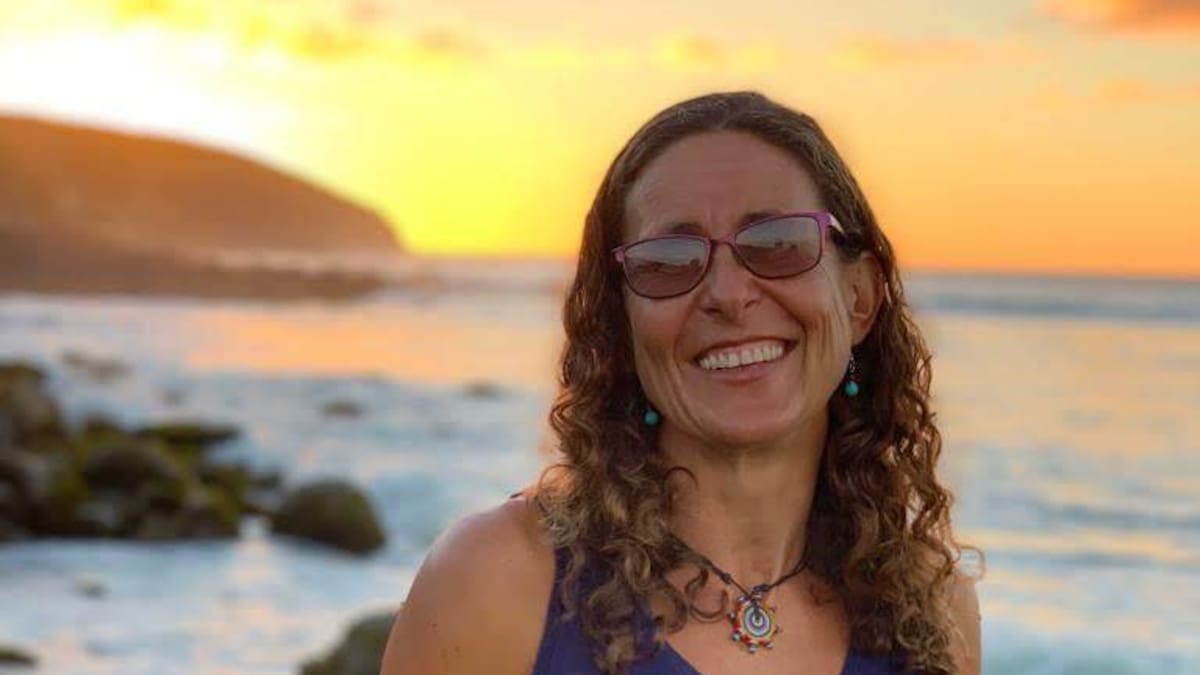
Belinda Wheaton, right, was diagnosed with ADHD at 54 after her daughter Poppy, left, was diagnosed at 17.
Her ADHD diagnosis explained why she couldn’t do certain tasks like fill in a tax return, and why she struggled at school as a child.
“I always felt stupid. I [grew up] in an era where if you couldn’t structure your work properly, you spelled badly, you got no support – you just failed your English exam,” Wheaton says.
“It was totally discriminatory and I’d constantly have teachers that would say I was doing really well, I’d do great in class, and then I would fail the exam. Everything was exam-based and that really impacted me.”
As a child, she was told she was “too much”.
“That’s really hard, because then you can’t be [yourself]. I think I really suffered socially at school. I don’t think I ever had good girlfriends and relationships, because I felt I was different the whole time in a way that didn’t make sense to me.”
When she left school, she didn’t go straight to university – which at the time made her feel like “an outcast”. But when she did, she flourished.
“To start with, I thought I was just a phony. I must be doing something wrong, I must be cheating – why am I getting good grades? I realised that once it stopped being about your brain remembering stuff and it was actually about your ability to understand and high-level thinking skills, I started to thrive.
“I was doing well because I deserved to, not because something weird was going on.”
In midlife, her tendency towards people-pleasing and perfectionism meant she worked hard – to the point of burnout.
“I was lucky I was in a job I really liked, so it’s not like I was having to do some boring, dull job. But I would take on too much, please people and then crash and not be able to cope.
“I never understood why.”
Counselling helped, but Wheaton believes this would have been more effective if she’d known she had ADHD earlier.
“I never slept. That’s something that’s been an issue through my whole life, and lack of sleep is just debilitating. You can’t turn your brain off.”
Getting the diagnosis and starting medication was “life-changing”.
“There are certain things I can do so much more effectively and that just gives me a sense of calm and control, which is so important.”
So does exercise, and for Wheaton that means spending a lot of time in the water.
“It’s having that place where I can get away from my thoughts. Exercise and movement is massive.”
Wheaton’s children Poppy, left, and Ollie.
Since her diagnosis, she’s also become a “much better parent”.
“I wish I’d known this stuff when my kids were young … their lives and our family life would have been so much easier if I’d known earlier.”
Many adults only get diagnosed with ADHD after their children have been.
“I understand it’s just who we are, so I don’t feel guilty about passing it on [to my kids],” Wheaton says, though it has made her reconsider some of her own early parenting choices.
“My mum put a lot of structure in my life, and in hindsight that was so valuable to me because I learned a lot of coping strategies.
“But I think the way that I then imposed that on my children wasn’t helpful, particularly for my son. He just disengaged, he didn’t want to be different.”
Her children have taught her that no one’s experience of ADHD is the same, even within families. She and her daughter have co-authored an academic article published this year comparing their diagnosis journeys.
“I can see that in my family the neurodiversity is really different across us.”
Wheaton hopes to help improve Kiwis’ understanding of ADHD through her research. She’s awaiting the results of an application for funding from the Health Research Council to look into ADHD inequities in New Zealand.
“In New Zealand, all we do is give people drugs, and all the evidence shows internationally that multimodal is important – we need support and counselling.
“The research will look at the groups [with ADHD] that we think are most marginalised in Aotearoa.”
She says those overlooked when it comes to ADHD include Māori, Pasifika and women, who are all underdiagnosed.
“A lot of the women I speak to, who I can see clearly have ADHD, have not gone for a diagnosis … there’s something still holding them back.”
Bethany Reitsma is a lifestyle writer who has been with the NZ Herald since 2019. She specialises in all things health and wellbeing and is passionate about telling Kiwis’ real-life stories.