
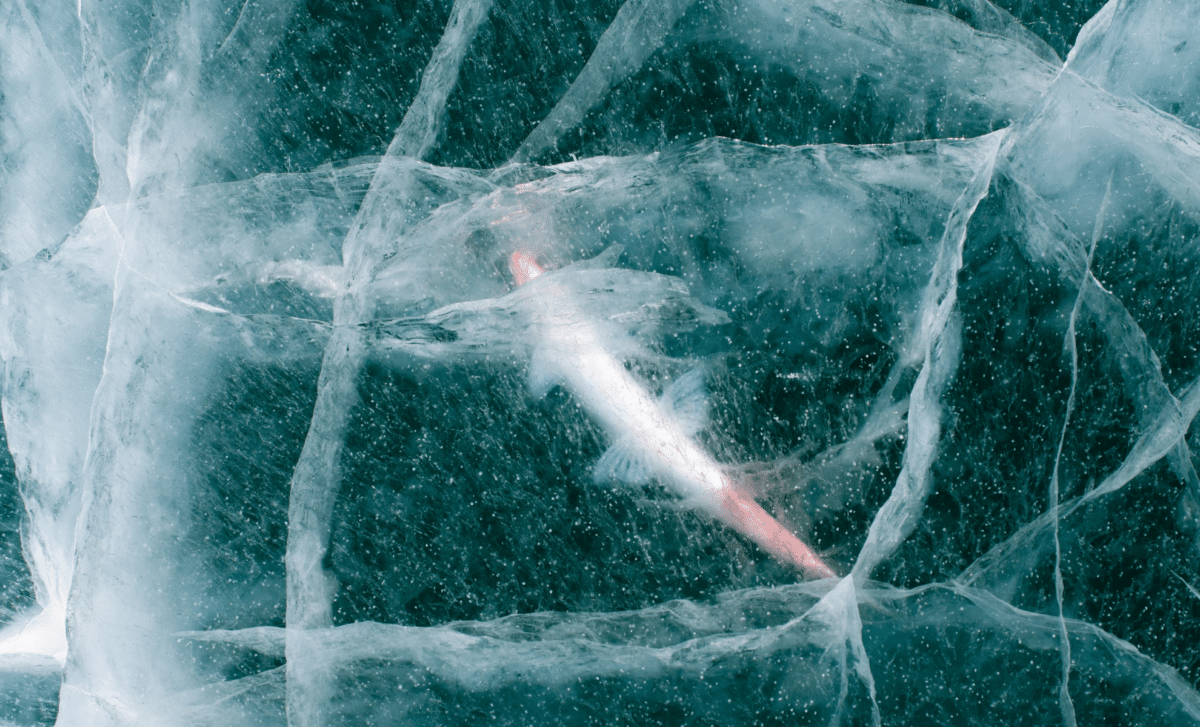
A microscopic animal frozen in Siberian permafrost for 24,000 years has been brought back to life, marking a breakthrough in our understanding of survival under extreme conditions, according to a study published in Current Biology.
A Microscopic Survivor From The Ice Age
The discovery centers on a rotifer, a tiny multicellular organism known for its resilience. Scientists extracted it from deep within Siberian permafrost, where it had remained frozen since the Late Pleistocene. After careful thawing in laboratory conditions, the organism not only revived but also resumed normal biological activity, including reproduction.
This finding pushes the known limits of cryptobiosis, a state in which organisms suspend metabolism to survive extreme environments. While similar behavior has been observed in single-celled organisms and some simple animals, this case stands out because rotifers possess more complex internal structures, including digestive systems.
Researchers described the environment that preserved the specimen with remarkable clarity:
“The core contained ice-rich loam from the Late Pleistocene Yedoma formation (also called the Ice Complex),” the team explained in a study published in Current Biology. “The shape, good development and wide distribution of ice wedges, and occasional finding of well-preserved mammal mummies support syncryogenetic formation of the Ice Complex, i.e. that layers of sediments were frozen relatively quickly after their formation and have never melted.”
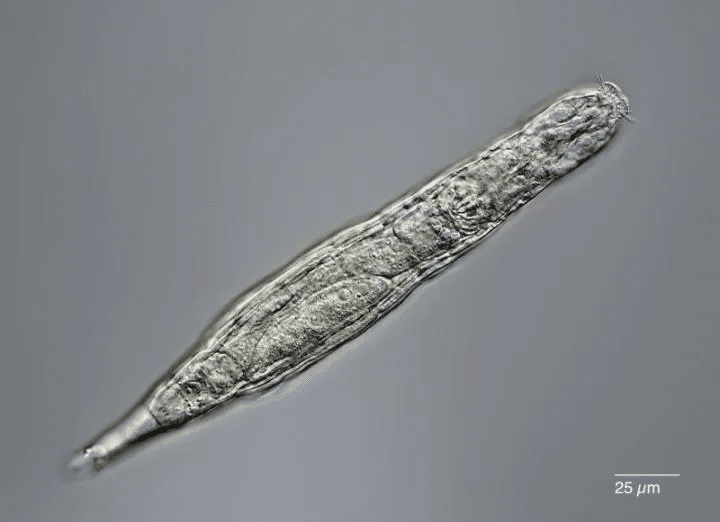 A rotifer seen under a microscope.
Credit: Michael Plewka
The Science Behind A 24,000-Year Comeback
The study, published in Current Biology, highlights how extreme cold can effectively halt biological time. In cryptobiosis, metabolic processes slow to nearly zero, allowing organisms to endure conditions that would otherwise be fatal.
Lead researcher Stas Malavin emphasized the significance of the findings: “Our report is the hardest proof as of today that multicellular animals could withstand tens of thousands of years in cryptobiosis, the state of almost completely arrested metabolism,” he said.
The rotifer’s revival was not a brief anomaly. It demonstrated sustained activity and even reproduced asexually, suggesting that its cellular structures remained intact despite millennia in a frozen state. This raises new questions about how biological materials can resist degradation over such vast periods.
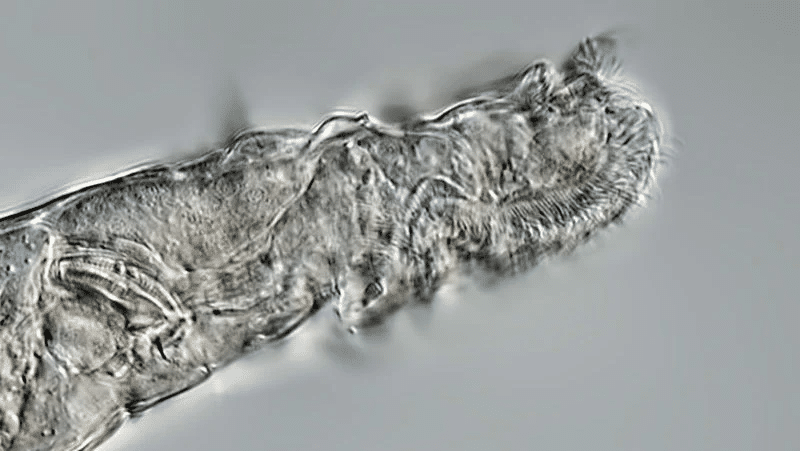 Close-up view of the revived rotifer.
Image: Michael Plewka
What This Means For Science And The Future
The implications extend far beyond microscopic life. Scientists have long speculated about the limits of suspended animation, especially in the context of space travel and long-duration missions. While this discovery does not bring human cryopreservation closer to reality, it does expand the scientific foundation needed to explore such possibilities.
Malavin addressed this directly:
“The takeaway is that a multicellular organism can be frozen and stored as such for thousands of years and then return back to life – a dream of many fiction writers,” he explained. “Of course, the more complex the organism, the trickier it is to preserve it alive frozen and, for mammals, it’s not currently possible. Yet, moving from a single-celled organism to an organism with a gut and brain, though microscopic, is a big step forward.”
This step forward lies in understanding how cells avoid damage from ice crystal formation, radiation, and time itself. Each insight could inform fields ranging from biotechnology to astrobiology, where survival in extreme environments is a central question.