
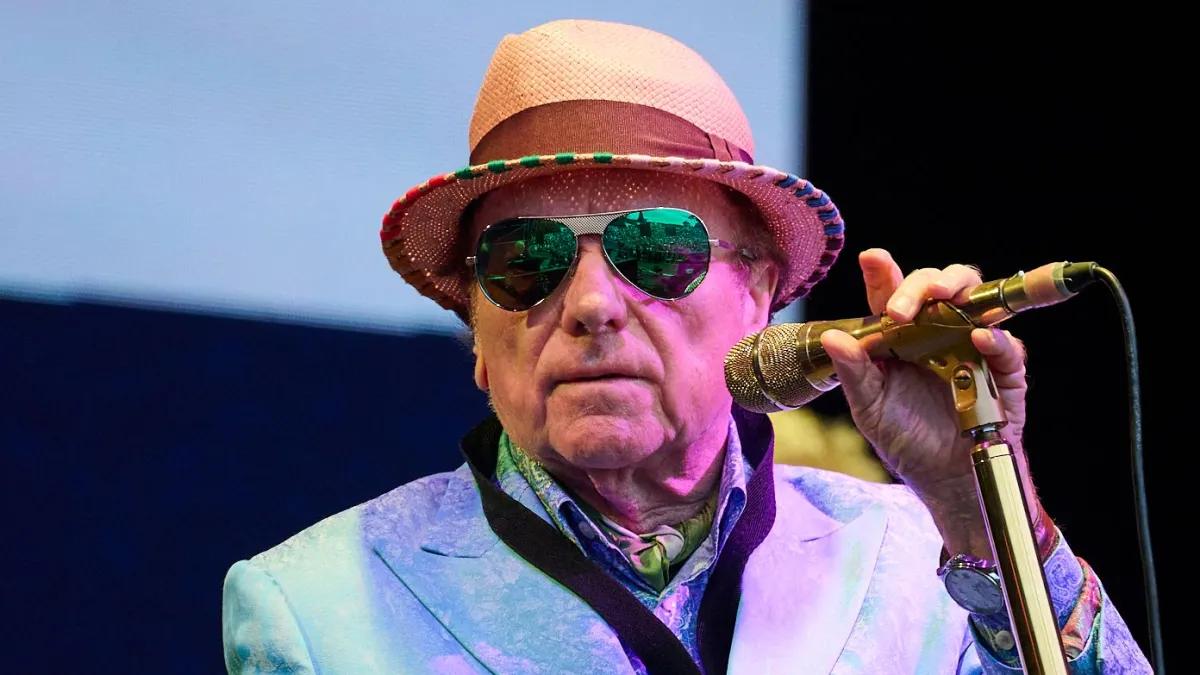
Van Morrison and I are talking about jazz, about how Louis Armstrong “never sang a song the same way twice. That kind of stuck with me,” says Morrison, 80. Is it also a way to avoid getting bored? “That’s absolutely right. That’s how to keep it interesting, because I can’t keep singing the same songs the same way. It’s boring.”
Being bored, I’m convinced, is the root of Morrison’s supposed curmudgeonliness: he has played the same songs, been asked the same questions and heard the same myths for decades. Say something that he sees as incorrect and you get a death-ray frown. No, his father, an electrician at the Harland & Wolff shipyard in Belfast, did not have one of the biggest record collections in the city (“No, no, it wasn’t a big collection — it had a certain amount of records”) and nor did his dad buy records from American sailors (“That’s bullshit, here we go again”).
However, ask him if he would be here today without that early immersion into his father’s jazz, blues, folk and gospel and he sits up. “Probably not,” he says. “That was a huge influence. I was hearing jazz when I was a very young kid. My father played jazz records day in and day out. Skiffle came out of jazz, blues came out of jazz, so it was interconnected.”
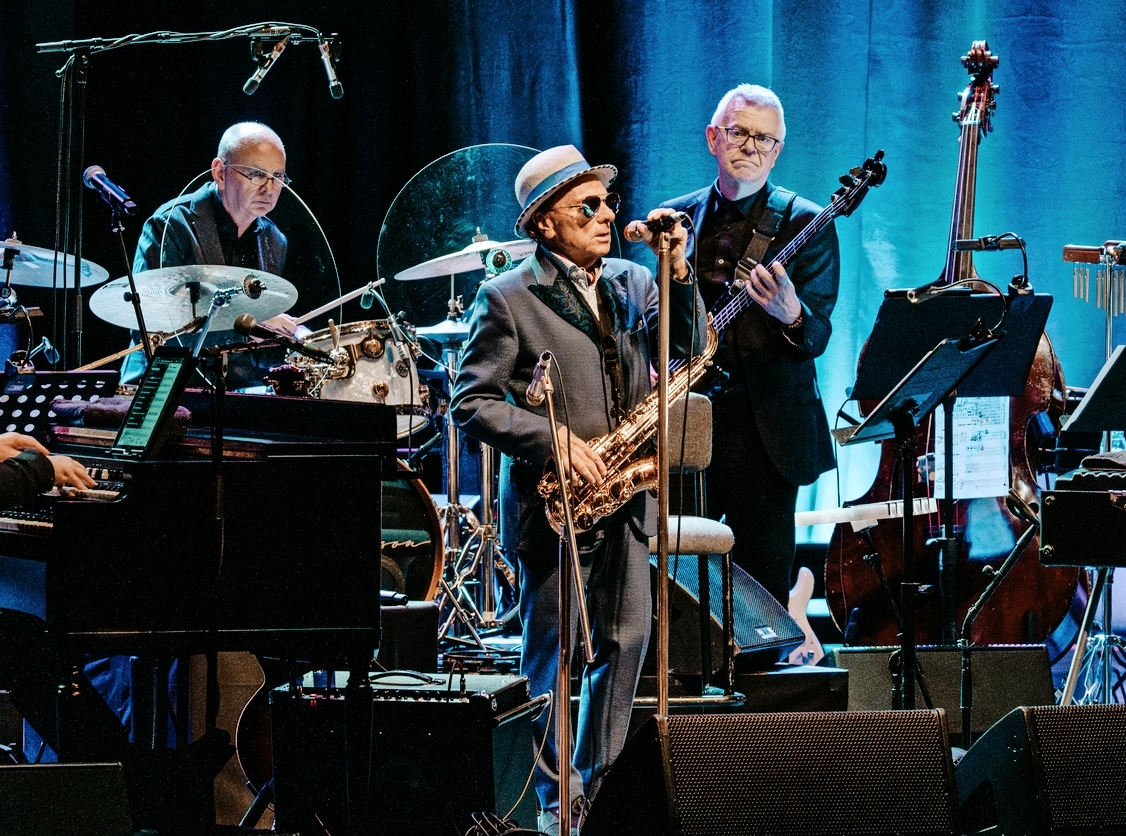 Morrison on stage for his 80th birthday concert at Belfast’s Waterfront last yearBRADLEY QUINN
That fluid mutation powers his unique blend of soul, jazz, blues and folk, which has influenced Jim Morrison, Bruce Springsteen, Patti Smith and even Al Pacino, who compared him with Oscar Wilde, both being “visionaries who push boundaries”. Morrison has sold more than 16 million records, was No 24 in Rolling Stone magazine’s 100 Greatest Singers of All Time and had three tracks, Brown Eyed Girl, Madame George and Moondance, in the Rock & Roll Hall of Fame’s list of Songs That Shaped Rock and Roll.
When he is on form, which of late has been often, Morrison and his band achieve a kind of transcendence — voice, melody and groove hitting a level few artists can reach. “If everything’s coming together I can take off and they can follow me,” he says. That must be a great feeling. “Yeah, it is. It’s probably why I keep doing it,” he says with a laugh. Sitting in a swanky hotel in Belfast, down the road from his beachside home, he is wearing a cap, cardigan and chinos with desert boots. It’s strange to see him out of his stage uniform of trilby, suit and shades.
On his album of 2025, Remembering Now, his voice, saxophone and guitar playing were as strong as ever on the kind of spiritual odysseys that filled classic albums such as Astral Weeks and Veedon Fleece. It was his best in years and we may have the pandemic to thank for that. Morrison was vehemently anti-lockdown, calling for “No more government overreach/ No more fascist police” on his 2020 song No More Lockdown. That didn’t go down well with many — a councillor even called for him to be stripped of his freedom of Belfast.
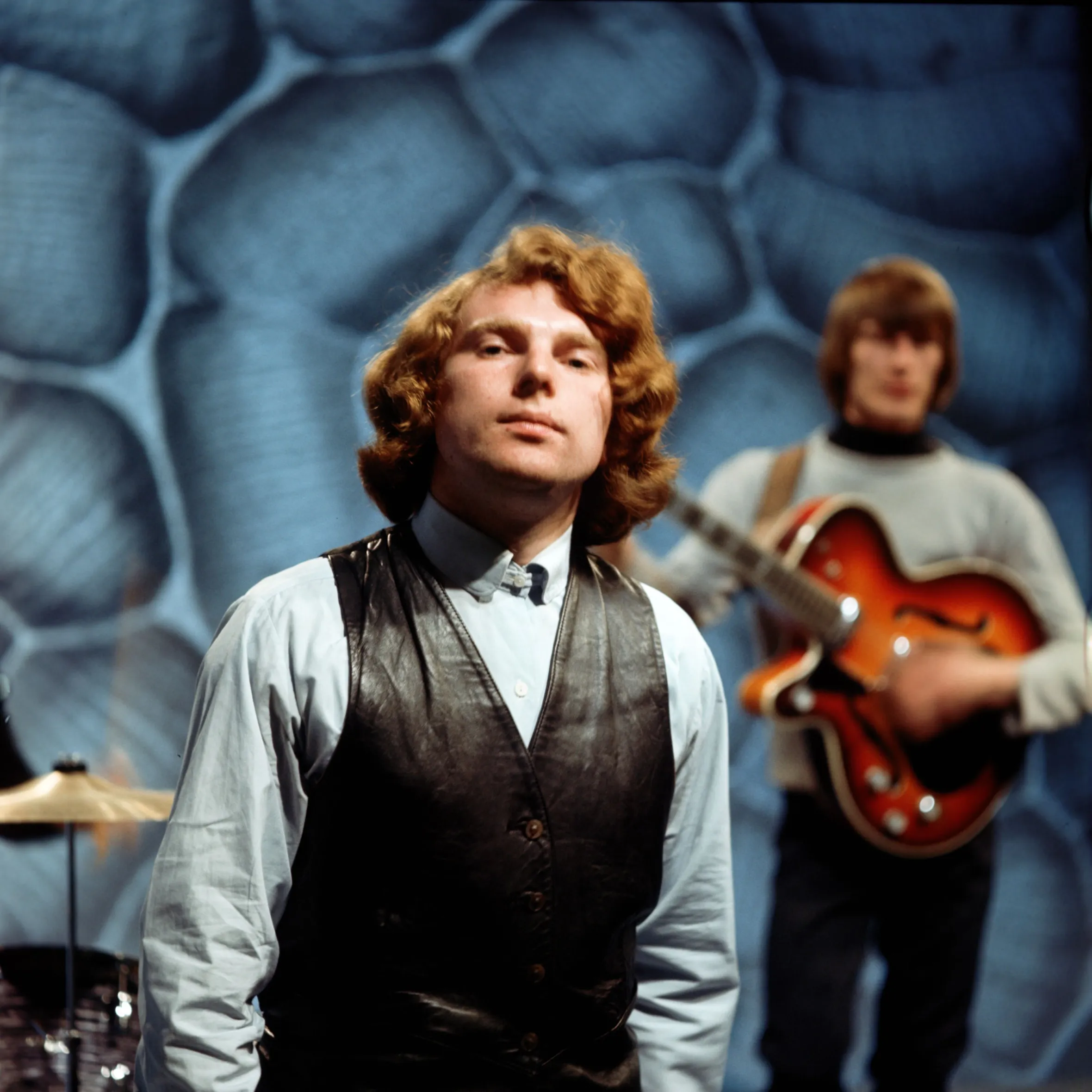 On TV in 1961Fremantle Media/Shutterstock
Yet that turbulent time brought about one of his most positive eras. “I was getting quite a lot of negative feedback during this period so myself and the musicians just wanted to do something that was going to be fun,” he said last year of Remembering Now, which he followed this year with Somebody Tried to Sell Me a Bridge, an album of rollicking blues covers and originals. More proof of his resurgence comes this week, when he receives a lifetime achievement award at the Jazz FM awards in London.
Recognition of his connection to jazz “is quite significant, because a lot of [awards ceremonies] seem a bit nebulous”, he says, remembering being inducted into the Rock & Roll Hall of Fame in 1993. “That was actually more to do with rock than rock’n’roll, which was a bit confusing. Rock got no roll,” he says, referring to the swing that runs through his tunes but is often missing from guitar music. The Hall of Fame “was basically run by Rolling Stone, which I wasn’t a big fan of”, despite both organisations often worshipping him.
It couldn’t have helped when Jann Wenner, a co-founder of the Hall of Fame and Rolling Stone magazine, said in 2023 that some black artists were not “articulate enough” — black music has always been Morrison’s lodestar. Remembering Now features a tribute to Ray Charles called If It Wasn’t for Ray in which Morrison sings about the man who “reinvented soul, rhythm and blues and rock’n’roll/ Country and western too.”
The music of Charles, who years later became a friend, showed the young Morrison that he need not be imprisoned by genre and inspired one of his first bands, the International Monarchs, when they toured Germany in the early Sixties. “That was the real apprenticeship — seven sets a night and no days off,” he says. So is that where he got his 10,000 hours, the amount of experience that Malcolm Gladwell wrote in Outliers was required to make it, whether you’re the Beatles or Bill Gates? “I read that book and I think it’s absolutely right.”
Like a surprising number of performers, he is not naturally outgoing. “Look up the word introvert and you’ll get me,” he says. “I’m an introvert working in an extrovert world.” His public image is “absolutely nowhere” near who he really is. “The person on stage, that’s a role I’m playing.” He sounds like an actor who hides his real self so he can play his stage role more convincingly. He nods. “I’m splitting myself up into two. I couldn’t do the job as myself — I have to pretend to be somebody else.” I had always assumed that he was at his happiest on stage. “No, no, no. Whatever emotion is happening up there — sadness, anger, joy — I’m acting it out.”
Don Black, the celebrated British lyricist who has worked with Morrison for decades, told me about a recent lunch they had. “He’s got a reputation as being the grumpiest guy,” Black said. “But he made me laugh so much. ‘You’re always so optimistic,’ Van said. ‘It wouldn’t surprise me if you’d never thrown one television set out of a window.’”
Morrison laughs heartily at this. Has he ever defenestrated a TV? “No, but someone in my band did.”
Born in Belfast to that music-loving father and a mother who had been a singer and dancer, he has written songs about the city throughout his career. As recently as Stomping Ground (2025) he namechecked Strandtown, Orangefield, Bloomfield village and “the mystic avenue”, his beloved Cypress Avenue, where he played a joyous 70th birthday concert in 2015. At his 80th birthday shows in Belfast last year he was joined by Ronnie Wood: “He’s fun to work with, always very upbeat.”
With nostalgia often comes spirituality, where the results can be mixed, exhibit A being Whenever God Shines His Light, Morrison’s 1989 duet with Cliff Richard. Better was a recent song called Love, Lover and Beloved, written with Michael Beckwith, the founder of the Agape International Spiritual Centre, a transdenominational community in Los Angeles to which Morrison belongs. “For me, he’s the real deal,” he says of Beckwith.
Morrison is in Los Angeles about once a year, spending the rest of the time at his homes in Belfast, London, Somerset and Cardiff. He is single, having been married to the American Janet “Planet” Rigsbee (1968-73), with whom he has a daughter, Shana, 56, a singer; and the Irish socialite Michelle Rocca (1992-2018), with whom he has a daughter, Aibhe, 20, and a son, Fionn, 18.
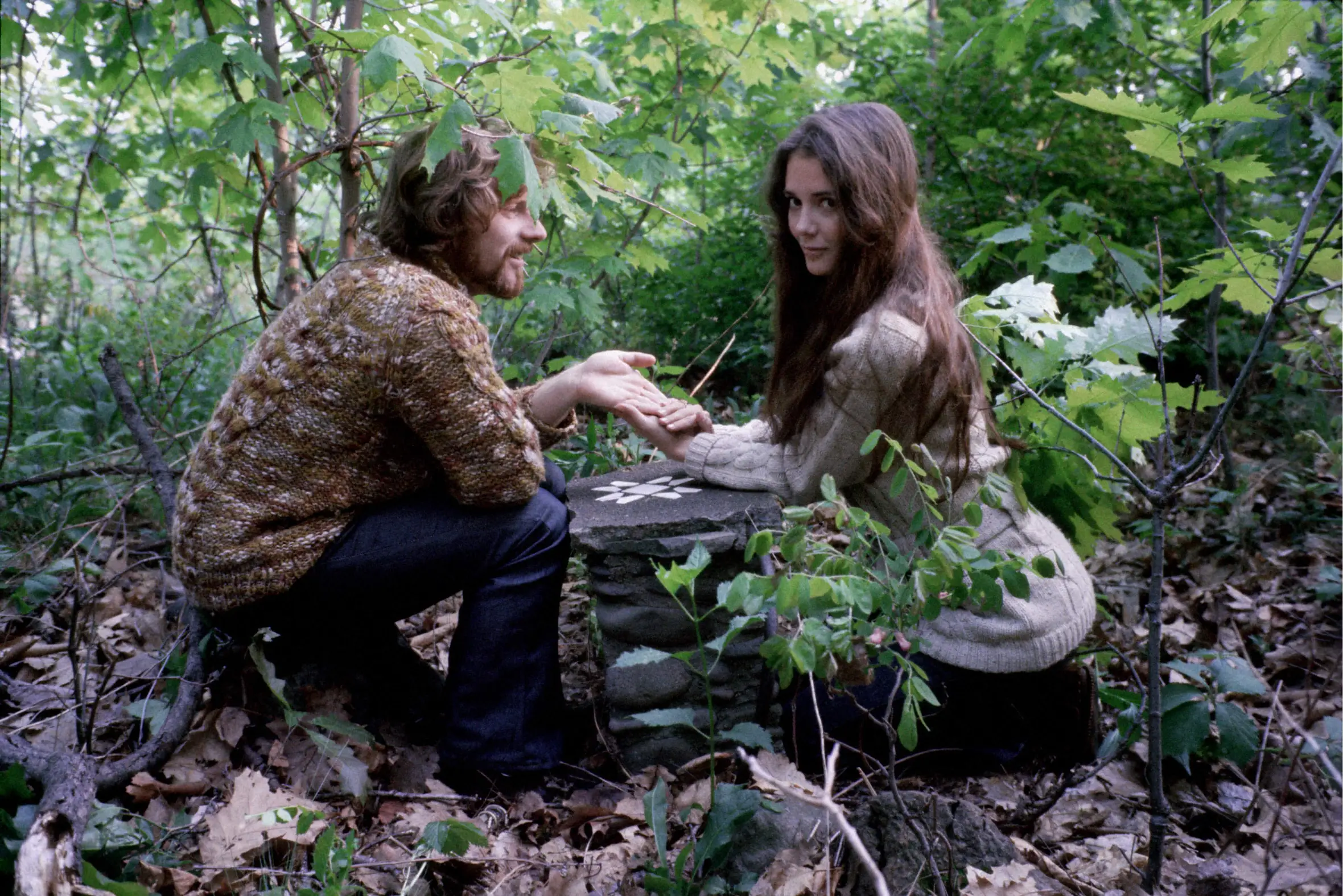 With his first wife, Janet ‘Planet’ RigsbeeElliott Landy/Redferns
“Do you have enough yet?” he asks, shifting in his seat. I’ve caught him on a good day but he still hates interviews. Not quite, I say, sweating slightly. I’m keen to know what he makes of the streaming revolution. “I don’t understand why it was so easy for the guy [Daniel Ek, the boss of Spotify] to decide he was going to do this and then all the record companies went along with it. I know you need millions of streams to get anything.”
Morrison makes most of his money from touring these days, especially in America, where tickets sell out in a flash and fans pay more than they do here. This self-described workaholic has slowed down, though. Last year, he says, “I got burnout. Sometimes you don’t know you have it until it’s extreme.” How did it manifest itself? “Just fatigue. You can’t do anything. You just go, ‘I’ve had enough.’ A lot of people my age can’t do what they used to do. When you’re 50 you think everything’s possible but then that changes. I don’t want to sit on long car journeys, long plane rides. I’ve been there, I’ve done that.” It’s the boredom factor again.
What does he do when he’s not making music? “I do music all the time,” he says. “I’m writing songs all the time and I have at least a hundred songs I’m compiling and cutting up into various album projects. But you can burn out at that too.” So what does he do to unwind? “I do a lot of reading.” What was the last great book he read? “I can’t really remember… I don’t want to get caught out.” I’m not trying to catch you out, I’m just curious. “I know but if I name a title and I forget what it’s about…”
He eventually thinks of a book and, guess what, it’s about music: Here Comes the Night: The Dark Soul of Bert Berns and the Dirty Business of Rhythm and Blues by Joel Selvin. It’s also partly about Morrison. Berns was an American songwriter and producer who worked with Them, the Belfast band with whom Morrison made his name in the Sixties. After they split, Berns invited him to New York and produced songs including Brown Eyed Girl, his first solo hit from 1967. The songs were released as an album, Blowin’ Your Mind, without Morrison’s input. He wasn’t happy; it was the start of his fractious relationship with record labels. “When I arrived [in New York] it was like, ‘We’ll take care of everything.’ You need to beware those words. They didn’t take care of anything.”
These days he produces everything himself and only uses labels to distribute his music. He has an album of original material due out next year, which, of course, is an excellent way to avoid getting bored. “Exactly,” Morrison says with the hint of a smile. “That’s what it’s all about.”
Van Morrison is receiving the lifetime achievement award at the Jazz FM awards, which are broadcast on Jazz FM on Apr 19 at 9pm. He is playing the Cheltenham Jazz Festival on Apr 30