
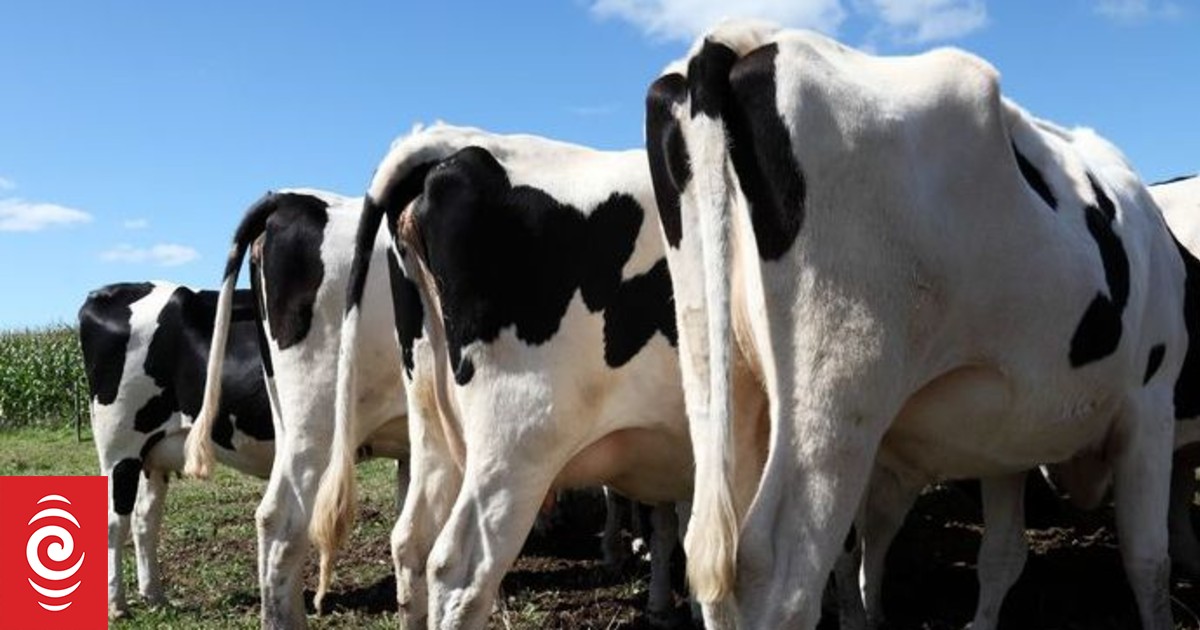
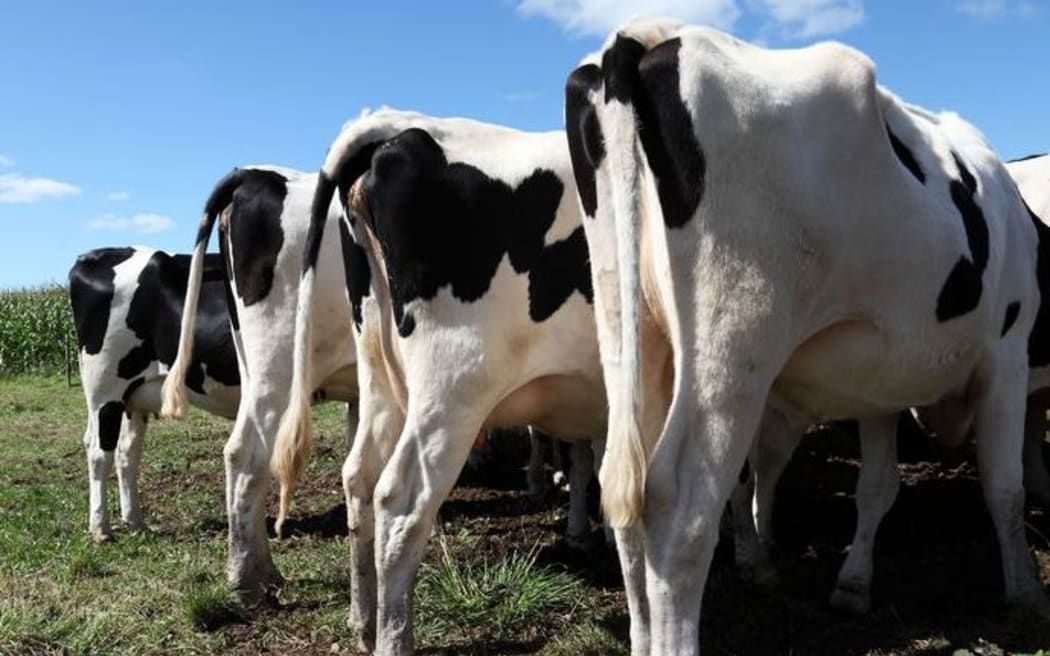
Methane-emitting dairy cattle accounted for 26 percent of gross emissions in the latest Greenhouse Gas Inventory.
Photo: 123RF
Climate scientists say the fuel crisis is the perfect chance for the government to act to reduce the country’s greenhouse gas emissions.
One says data released on Thursday by the Ministry for the Environment shows progress to bring down emissions is far too slow.
The numbers, from the latest Greenhouse Gas Inventory, showed New Zealand emissions of carbon dioxide and other gases fell just 0.1 percent between 2023 and 2024.
Once forests and other carbon sinks were taken into account, net emissions dropped two percent, from 56 million tonnes of CO2-equivalent gases to 55 million tonnes.
The two largest contributors were methane-emitting dairy cattle, which accounted for 26 percent of gross emissions, and transport, which accounted for another 18 percent.
Ministry chief science adviser Alison Collins the largest increase in emissions came from energy production, after low hydro lake levels in winter 2024 forced the country to burn more fossil fuels to produce electricity.
However, that was partly offset by decreased emissions from manufacturing and construction, because the energy shortage forced some companies to slow and even stop production.
The inventory, which was submitted to the UN Framework Convention on Climate Change each year, acted as an annual climate check-up, Collins said.
“Looking over the long term, gross emissions peaked in the mid-2000s and then were relatively stable, and have then been declining since 2019 apart from a little blip due to Covid.”
A fraction of what’s needed
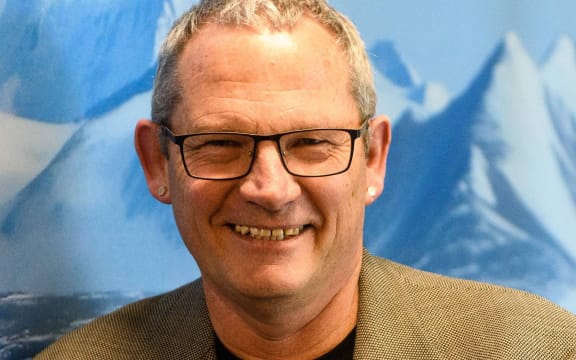
James Renwick
Photo: Supplied
Victoria University climate scientist and former climate commissioner James Renwick said it was good to see emissions come down.
“But 0.1 percent is about one percent of what we need. We really need somewhere close to 10 percent a year… if we’re going to be living up to our Paris Agreement obligations.”
New Zealand’s current international target obliges the country to halve its net emissions from 2005 levels by 2030. A domestic target, set through legislation, requires emissions to reach net-zero by 2050.
The 2024 drop, due largely to what happened in the energy sector, was down to “good luck rather than good management”.
“I know this current government’s saying we’re on track to meet our emissions reduction budget – yeah, maybe that’s right, but it’s not going to be because of any coordinated policy action.”
It was the perfect time for the government to act, with the current fuel crisis sparking renewed interest from voters in low-carbon technology, he said.
“I saw… that the National government are very interested in rooftop solar. Well, that’s good – let’s put some money into it and get a roll-out of these solar panels on roofs, boost up the charging network for electric vehicles, get more electric vehicles on the road.”
Introducing electric public transport “everywhere in the country” should also be a priority, he said.
‘Ideal moment’ to take stock
University of Canterbury climate scientist Laura Revell said recent months had underscored the need for change.
“This is the ideal moment to take stock and think about how we can get more New Zealanders into electric cars and reduce our reliance on fossil fuels.”
Greenpeace climate campaigner Sinéad Deighton-O’Flynn said the data underscored the impact of the diary industry on New Zealand’s climate emissions.
“What we need to see from Fonterra and also central government is efforts to help farmers move away from intensive dairying,” they said.
The country should also be phasing out synthetic fertilisers, which contributed long-lasting nitrous oxide to the atmosphere and affected water quality.
It would not be “an easy transition for everyone”, they said.
“But we are in a climate crisis and we do need to be taking action urgently.”
The government has repeatedly pointed to a “pipeline” of methane-inhabiting technology as the answer to lowering agricultural emissions.
But Deighton-O’Flynn said less intensive farming practices, which some dairy farmers were already using, should be the first port of call.
“At this point in time we can’t be relying on technology that isn’t market-ready at the moment or doesn’t necessarily exist yet.”
Revell said there was disagreement over a fair way to measure methane emissions, because it had a powerful but short-lived warming effect.
There were other good reasons to take a look at dairy farming practices, she said.
“Certainly down here in Canterbury we’re starting to see quite serious concerns with the groundwater quality.”
However, she was most concerned about bringing down carbon dioxide emissions.
“I think it’s got to be a, ‘Yes, and’. There’s absolutely nothing wrong with trying to make the agriculture sector more efficient in reducing emissions of methane – that is a fantastic thing to do,” she said.
“But we absolutely have to also be investing attention and effort into reducing CO2 emissions.”
The government recently announced interest-free loans to providers of EV chargers to help double the number of publicly available charge points.
Both National and Labour have indicated an interest in rooftop solar but have so far not made any policy announcements.
Sign up for Ngā Pitopito Kōrero, a daily newsletter curated by our editors and delivered straight to your inbox every weekday.