
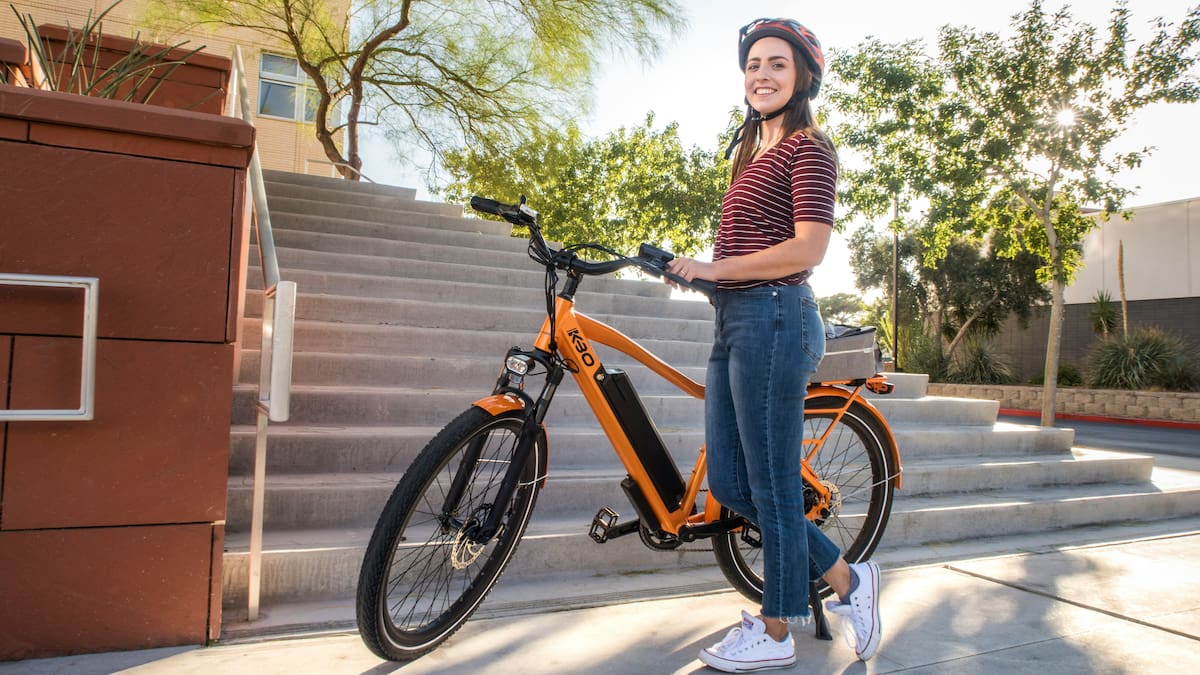
“The cost of filling a tank now is getting pretty expensive for a lot of people, but to fill the tank on an e-bike it’s usually only about 20 cents.”
Maurice Wells, owner of Electric Bike Team, a specialist e-bike retailer near Karangahape Rd in downtown Auckland, said the past month had been one of the busiest on record.
He said many customers had been considering a purchase, but rising fuel costs had sped up their decisions.
“People aren’t necessarily being pushed into it, but higher fuel prices are confirming what they were already thinking,” Wells said.
“A lot of customers got quotes last year and are choosing to go ahead now because the economics stack up.”
Trade Me data shows e-bike searches surged 49% in the five weeks to March 25 compared with the same period last year, while e-scooter searches rose 68%.
Items are also selling faster, with average days-to-sell down 8% for e-bikes and 7% for e-scooters.
As of writing, unleaded 91 was at an average of $3.42, with diesel at $3.80, according to Gaspy.
Cycling in Auckland is leading the pack, with Auckland Transport (AT) data showing cycling across the city rose 6.3% in February and March compared with the same period last year.
Just under 1.24 million cycling trips were recorded over the two months, up from 1.17 million in 2025 – despite a higher number of rainy days this year.
AT head of active modes Tania Loveridge said cycling numbers had been increasing year-on-year, with a noticeable rise in recent months.
“It’s never been a better time for people to be on their bike, both from a health and a cost perspective,” Loveridge said.
Cyclists on the new 3.5km cycleway connecting Māngere Bridge and Māngere Town Centre. Photo / Auckland Transport
The growth was not confined to central Auckland.
Cycling trips on Rathgar Rd in Henderson nearly doubled year-on-year, with AT noting the increase was around school hours.
Strong growth was also recorded in Manurewa and Māngere, where new cycleways were recently built.
AT said it was on track to deliver more than 15km of new cycleways this year.
At the bike shop, Wells said another factor driving an uptake in e-bikes was a relatively new but underutilised bike benefit programme.
Employees can pay for an e-bike from their pre-tax salary.
Employees essentially spend their salary before they pay tax, reducing the overall cost of the bike by about 30%, depending on the scheme.
Deloitte tax partner Robyn Walker said more businesses might be interested in offering this to employees if fuel prices remain elevated.
“It’s really been a bit of a slow burn in terms of getting some traction in the market, and that’s just really an education piece for employees and employers.”
Companies such as The Wheel Deal, North Ride and WorkRide manage the process for employers, making it a low-cost or cost-neutral benefit for businesses.
The model could also help with staff retention, as employees repay the bike cost over 12 or 24 months.
For anyone thinking about getting an e-bike, Tritt said the best place to start was to visit their local store and take a test ride.