
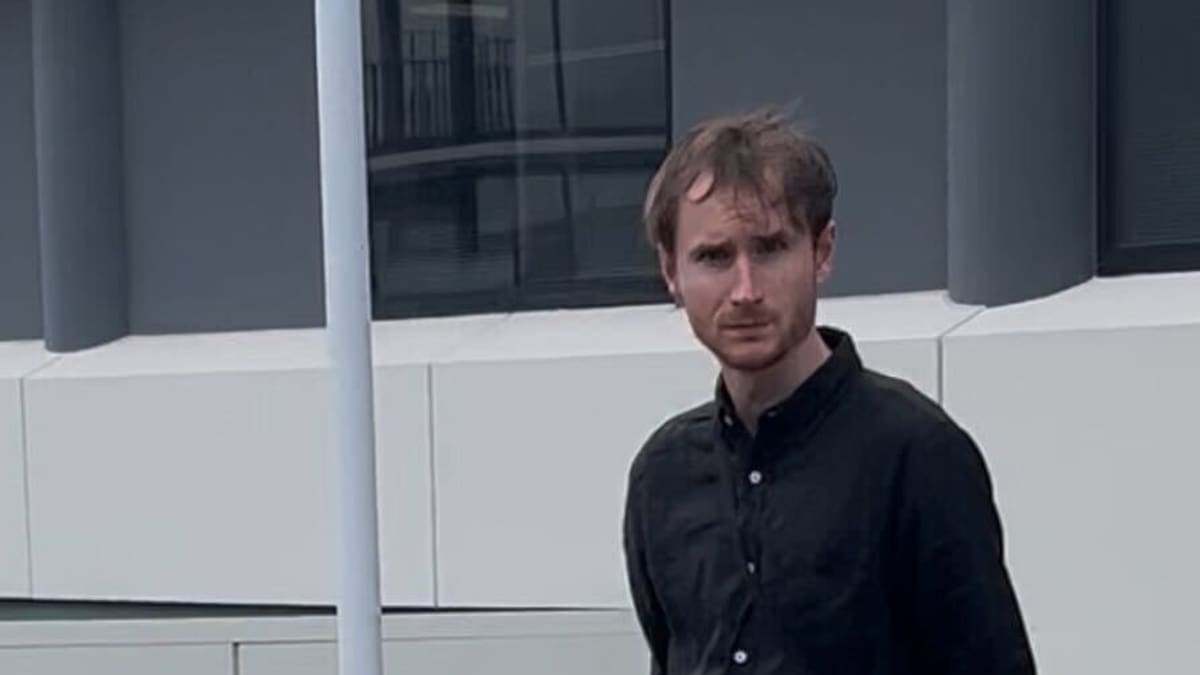
He noted that Barnett, a healthcare assistant, had experienced close to five years of unpredictable seizures or “lock-ups” leading up to the fatal collision.
The judge did not accept that the seizures only occurred at night or when Barnett was anxious, as Barnett claimed.
Judge Tompkins relied on the evidence of several senior doctors who said they had told Barnett not to drive due to the seizure-like events he was experiencing.
In a rare move, the judge issued a recommendation to medical professionals to ensure patients sign a disclosure confirming they are prohibited from driving for a certain period.
Barnett, whose previous name suppression order lapsed upon his convictions, was remanded on bail ahead of his sentencing in June.
The trial, held in the Hamilton District Court, has heard that the 27-year-old recalled he had “blacked out” when driving through the intersection of Whatawhata Rd and Poaka Ave about 1.40pm on the day of the collision.
He crashed into Dawson’s ute then drove up on the kerb, where he struck Bell, who was walking along the footpath, shunting him through the iron gates of a nearby property.
Bell was thrown into a garden, while Barnett’s Volkswagen then crashed into the back of two parked cars which were pushed into the property’s house, causing damage.
Bell died at the scene, while Barnett and Dawson suffered minor injuries.
Many of Bell’s whānau sat through the trial, listening intently to the arguments.
Following the verdict, Manawa Bell told NZME that on the day her brother, 53, died, he had been looking forward to catching up with their sister to celebrate her birthday.
The April 26, 2021, crash occurred at the intersection of Poaka Ave and Whatawhata Rd in Hamilton. Photos / Belinda Feek
He had moved back to Hamilton a few years earlier after more than 20 years living in Australia, and she and the rest of the whānau had enjoyed reconnecting with him, she said.
Her partner, Jordan, said he felt aroha for his own whānau but also for Barnett.
While Bell’s death had changed their whānau, it had also brought them all closer together.
Defence and Crown’s arguments
Defence lawyer Ashleigh Beech had submitted that there was no dispute that the crash happened, but that it didn’t eventuate from dangerous driving.
“Mr Barnett felt that he posed no risk on the road,” she said at trial.
Barnett instead had a condition called somatoform disorder, where an episode looked like an epileptic one but was instead caused by anxiety or stress.
“They’re not understood to be epileptic seizures or anything that would affect his ability to drive or his day-to-day life,” she said.
Beech submitted that despite seeking medical advice, no doctors had told Barnett not to drive, nor had he received discharge notes in the mail.
She said he was unwell and non-verbal during a December 2020 hospital stay, and could not recall being told not to drive on that occasion.
It was not until shortly after the incident that Barnett was diagnosed with epilepsy and soon after had his licence revoked for 12 months.
“On the morning of the 26th of April, [he] had slept well, felt well, and had no warning signs before leaving [home] that day.”
It was then, after turning on to Poaka Ave, that he suffered an undiagnosed epileptic seizure for the first time, she said.
She urged the judge to find Barnett not guilty on both charges.
In relation to the charge of injuring Dawson, Beech categorised his injuries as “trifling”, arguing they didn’t meet the threshold for the offence.
Emergency services pictured at the crash site. Photo / Belinda Feek
The Crown argued that Barnett had been forbidden to drive by medical staff in 2019, and again during his hospital stay in December 2020.
Crown prosecutor Russell Boot questioned Barnett, who gave evidence, about filling out various driver’s licence applications and ticking “no” to having a medical condition that “could” affect his ability to drive.
“Are you saying to me that you don’t think suffering from ‘lock-ups’ had affected your ability to drive?” Boot asked him.
“I considered these lock-ups to be similar to a panic attack as they come on due to anxiety or distress and deemed them to be a relatively controlled symptom,” he replied.
The decision to drive was dangerous – Judge
Judge Tompkins found the Crown’s case proven and concluded that Barnett was told not to drive.
Despite that, and with his history of seizures, which were beginning to increase in severity, he continued to drive anyway, the judge pointed out.
The trial had also heard that three days before the crash, Barnett sought treatment from a doctor for breathing difficulties and concerns that he might have another seizure.
“The seizure events were discussed with the doctor, and three days before the crash, he had been sufficiently concerned that there might be future such events to seek advice,” the judge said.
“I do not accept Mr Barnett’s, and his wife’s, efforts to downplay or minimise these events as being ‘night time only’ or ‘self-contained within anxiety’.”
Judge Tompkins said Barnett’s history provided “ample ground” to support his own fear, which led him to seek medical advice.
He found that despite his disavowal now, Barnett was aware of the “very real possibility” that at any time he might, and without prior warning, suffer an event which would deprive him of consciousness and the inability to control his thoughts and actions.
“That being so, I conclude that Mr Barnett’s decision to drive that day was dangerous in the sense that a reasonable and prudent person who had had the recent series of events over five years would not have taken the considerable risk of driving.”
Belinda Feek is an Open Justice reporter based in Waikato. She has worked at NZME for 11 years and has been a journalist for 22.