
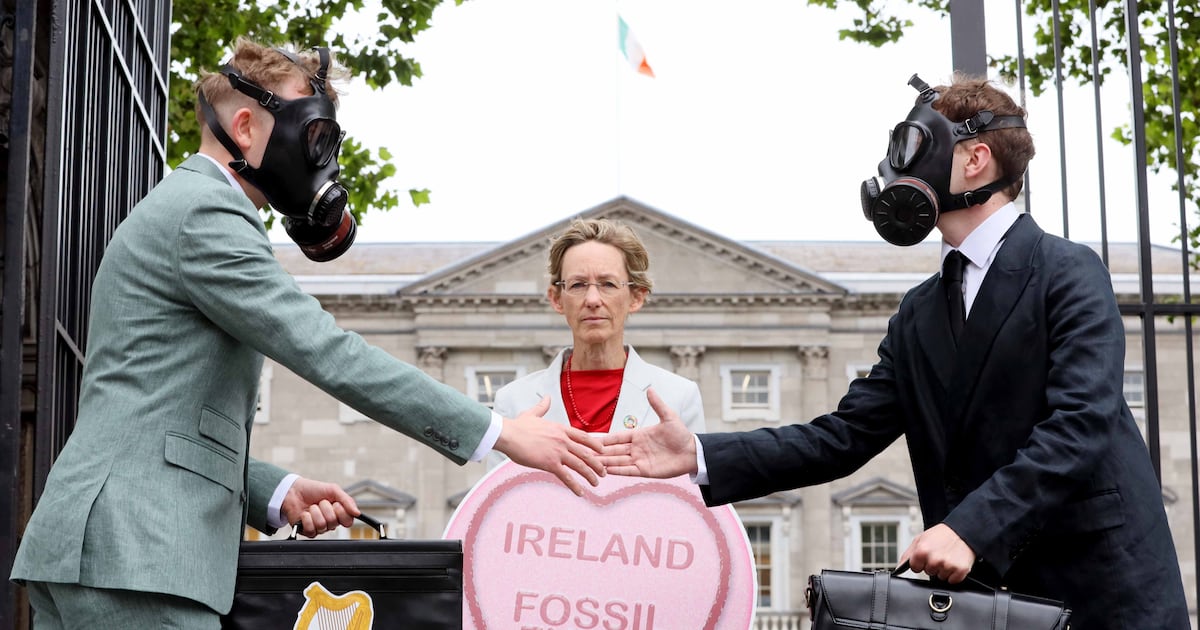
The US-Israel war with Iran exposes multiple dangerous realities about fossil fuels. Not only have fuel shortages and the resulting price spikes revealed the economic vulnerabilities of relying on oil and gas, but the war – and its death and destruction – also exposes the violent geopolitical insecurity associated with fossil fuel dependence.
As governments around the world struggle to respond to the supply shocks causing energy and food insecurity, one thing is clear: those countries, regions, communities, organisations and households that have already made significant investments to reduce fossil fuel reliance are more secure and better insulated from global turmoil than everyone else.
Ireland is among the European countries most reliant on fossil fuels. As a result, the inflation rate in Ireland jumped to 3.6 per cent in March as the price of oil and gas surged. This increase is having devastating impacts on all those already struggling with the high cost of living.
The scale of societal disruption is being compared to the height of the Covid pandemic in 2020. As with Covid, marginalised communities and vulnerable households are suffering the most. The price shocks in fuel and food are exacerbating inequities among communities and worsening disparities across households.
Economic costs stemming from the volatility of fossil fuel dependence are huge. Recent analysis by the UK Climate Change Committee shows that a single fossil fuel price spike is more expensive than investing to achieve 2050 climate goals.
Fossil fuels also produce violent authoritarian regimes that defend their concentration of wealth and power by eroding democratic processes, disregarding human rights and dismissing the needs of the people. The America-First “Energy Dominance” strategy is among the core motivations for war with Iran; Trump has said he wants “to take the oil in Iran” – mirroring the US takeover of Venezuela’s oil.
Fossil fuels are now a weapon of war. Fossil fuel infrastructure is the target of military destruction, with oil and gas facilities being bombed relentlessly. Fossil fuel transportation networks – including the Strait of Hormuz – are being blocked to intentionally disrupt supply.
The exorbitant cost of the current crisis has created a game-changing moment for countries like Ireland. Instead of continuing to invest in a future defined by dangerous and costly fossil fuel dependence, it is time to exnovate away from fossil fuels altogether.
Exnovation refers to the phase-out of products or processes that are no longer serving society well. Exnovation can be understood as the opposite of innovation – while innovation involves developing new products and new ways of doing things, exnovation is about intentionally ending harmful practices or energy sources, such as fossil fuels.
From an ecological and climate science perspective, the devastating costs of fossil fuels have been obvious for decades. Since the 1980s, it has been clear that exnovation away from fossil fuels is essential for stabilising the climate. Now this is also clear from economic and political perspectives – the societal costs of continued fossil fuel reliance have become too high to justify continued dependence. To avoid even worse future vulnerabilities and maintain our independence, fossil fuel phase-out must become a strategic policy priority in Ireland. Transformative investments in exnovation away from fossil fuels are urgently needed.
Although Ireland has made significant investments in renewable energy innovation, we have not yet invested in fossil fuel exnovation. Instead, continued reliance on fossil fuels is supported and assumed as tech companies build more energy-hungry data centres and public money is being invested in fossil fuel infrastructure including a new fossil gas terminal in the Shannon estuary.
The latest report from Ireland’s Climate Change Advisory Committee highlights worsening economic and ecological vulnerabilities in its calls for increased investment in both fossil fuel phase-out and climate adaptation.
If Irish public policy prioritised the economic interests of communities across the country instead of the profit-seeking interests of multinational corporations, Ireland could become a world leader in fossil fuel exnovation, meet legally binding carbon budgets, and strengthen the international movement to phase out fossil fuels.
In the turbulent months and years ahead, Ireland is well positioned to adopt a new strategic approach leveraging its financial capacity to support every household, community and local business to move away from fossil fuels. Alternative renewable technologies are available, and once the initial infrastructure investment is made, the power of the wind, water, sun, ocean, and geothermal is dependable and free.
Continued investment in fossil fuels no longer makes sense economically, politically or ecologically. The current disruption creates an opportunity for transformation toward more peaceful, just, renewable-based futures.
Jennie C Stephens is Professor of Climate Justice at Maynooth University and a co-ordinating member of the Climate Justice Universities Union