
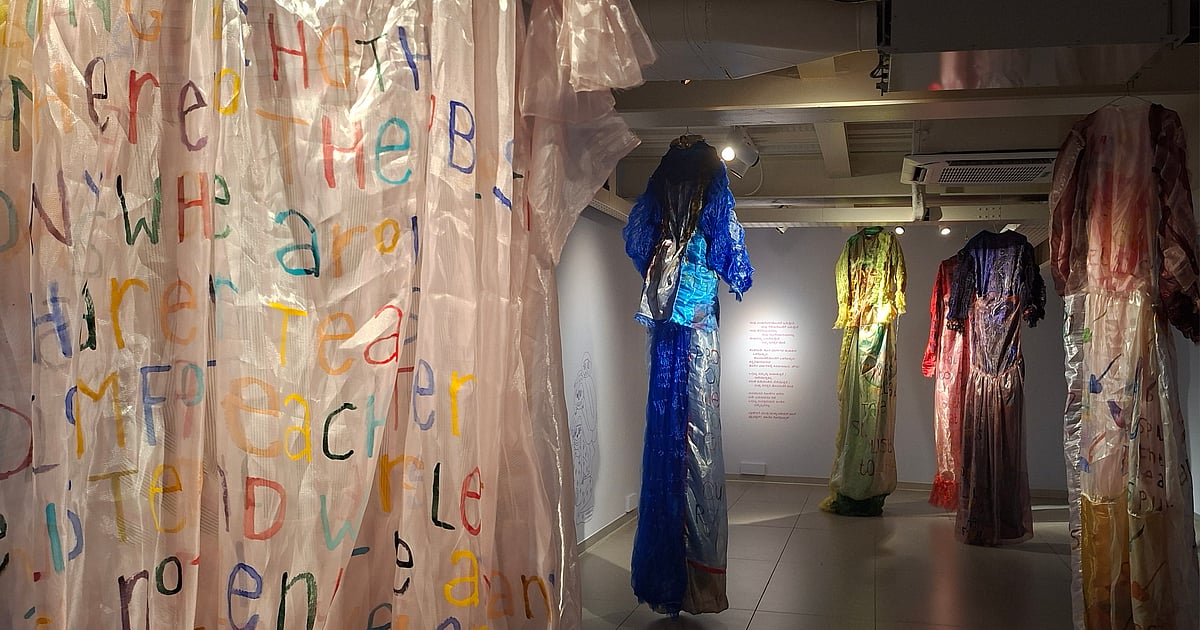
Reflecting on the experiences of survivors of gender-based violence, Gita Chadha said, “The pain of it is… it’s very difficult to contain, I think.” Yet the garments appear playful and even joyous at first glance. “At first sight, they seem more joyous, and when you all of a sudden start reading and maybe take more time with them, you see the deeper and maybe also sometimes more heavier meaning to them,” afra said.
During the #MeToo movement in the Netherlands, afra was a young artist just starting out. When they raised concerns about sharing space with perpetrators, they were often asked to leave instead. In art circles, this was reinforced by the idea of the “great creative genius,” afra said. “When we were in art school, this behavior of the male genius — the man that was untamed, wild and violent — was very much applauded.”
They also pointed out the lack of institutional support. “Within the arts we didn’t have any policies,” afra said, noting that there were few avenues to report misconduct.
“I think people underestimate how much it costs to speak out,” afra said about approaching a local newspaper about their experience, around five years ago. They were initially anonymous.
Their first time speaking publicly about their experiences was in Kochi, during the Mild Tooth of Milk exhibition. “I think we also grow as persons when we are ready to be speaking about these things,” they said.
Dr Chadha observed that “men have started feeling victimised now,” with some male scholars reportedly refusing female PhD students. “It’s quite disturbing the way it’s going,” she said. At the same time, both noted that such movements have increased awareness about sexual crimes and afforded more visibility to survivors.
“Anger can also be something extremely powerful,” afra said. The garments were created as a way to give their anger a physical form, so that they could “be in charge of when I would wear my anger.” They spoke about the out-of-body experiences during anger, and how the garments translate those feelings into something visible. These garments gave them agency, and the process of making it visual also served to heal them.
When asked about the oversized scale of the garments, afra said, “no woman will ever fit into (them).” The exaggerated size reflects how overwhelming emotions can feel.