
TSMC this week posted financial results for the first quarter of 2026 and lifted its 2026 revenue guidance and capital expenditures to the high end of its original expectations. Accelerating sales of AI accelerators and accompanying hardware increases demand for TSMC’s wafers, which is why the company said it would build another 3nm-capable fab in addition to those already planned. But while the company is confident in its long-term prosperity driven by the AI megatrend, it warned about profitability due to the war in the Middle East.
AI megatrend earns TSMC tens of billions in one quarter
(Image credit: TSMC)
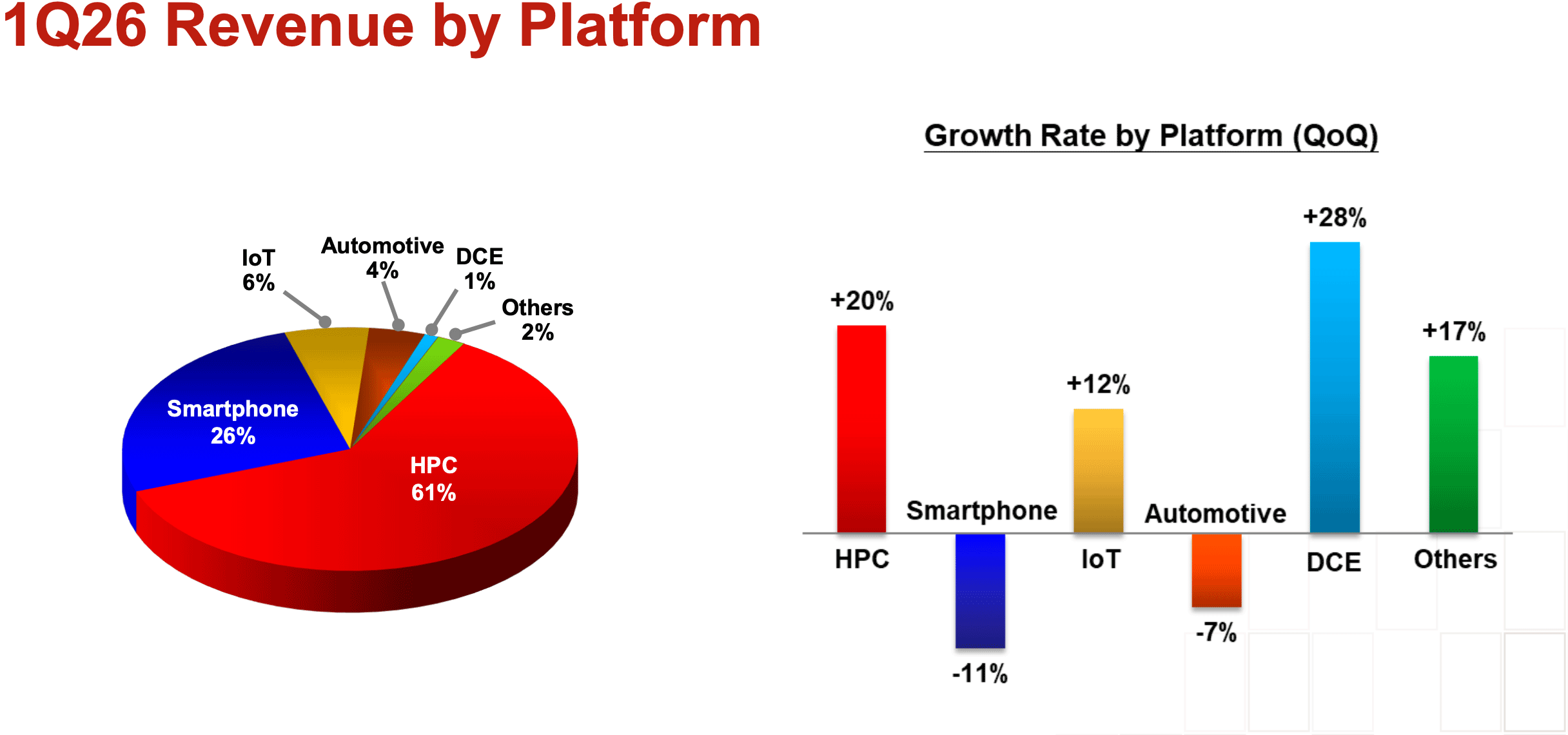
Indeed, the HPC segment (an ambiguous term that TSMC uses to describe everything from client PCs to high-end AI accelerators) accounted for 61% of TSMC’s revenue in Q1 2026 (or approximately $21.9 billion), up from 46% in Q1 2024 (approximately $8.68 billion), which represents colossal growth in just two years. The smartphone segment accounted for 26% of TSMC’s earnings in Q1 2026, whereas IoT and automotive commanded 6% and 4% of the company’s revenue in the same quarter.
Article continues below
You may like
(Image credit: TSMC)
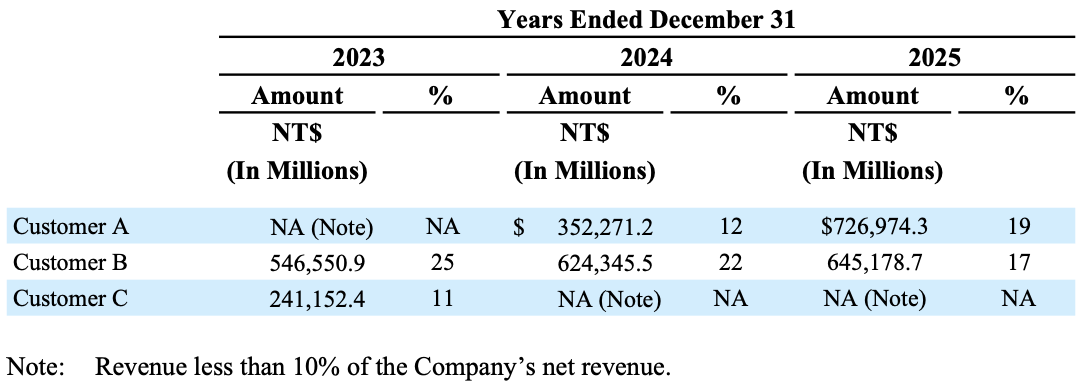
Based on TSMC’s annual report released this week, it looks like Nvidia, with its aggressive capacity booking strategy, has become TSMC’s top customer, accounting for 19% of the foundry’s revenue for 2025, dethroning Apple, which was responsible for 17% of TSMC’s earnings for 2025.
(Image credit: TSMC)
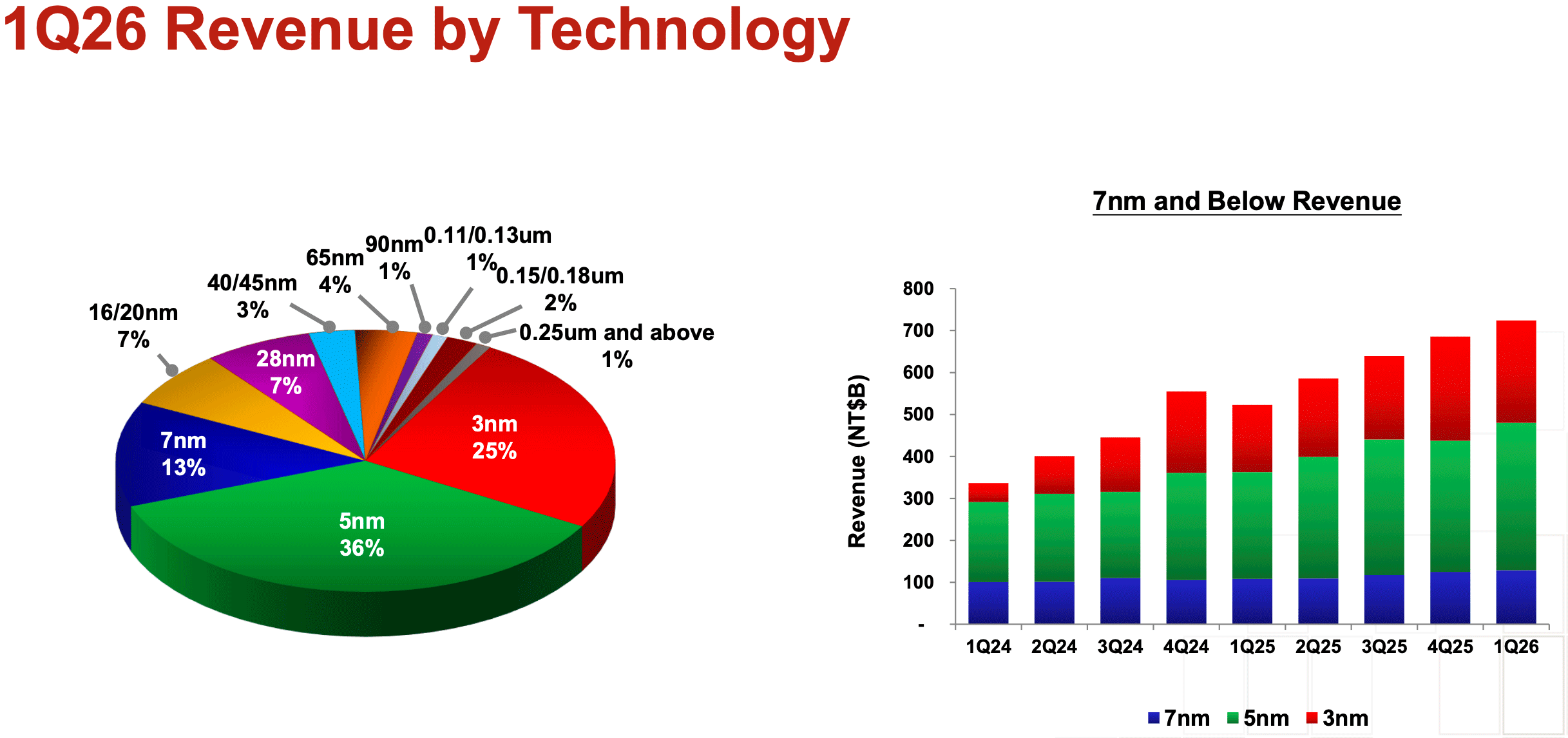
On the fabrication technologies side of matters, TSMC’s 5nm-class nodes accounted for 36% of the company’s wafer revenue in Q1 2026 (driven by the success of Nvidia’s Blackwell AI accelerators), 3nm-class processes were responsible for 25% of the foundry’s earnings, while 7nm-class technologies represented 7% of TSMC’s revenue. In general, advanced nodes (7nm and below) accounted for 74% of the company’s earnings. Yet, keep in mind that while TSMC is mass producing 2nm-class (N2) chips for its customers, it has not formally shipped them to clients and therefore does not recognize 2nm-related revenue.
Capacity additions
As Nvidia’s leading AI platforms, as well as offerings from other vendors, are set to shift from TSMC’s 5nm-class family of nodes (N5, N4) to 3nm-class lineup of process technologies (N3), demand for the latter is going to skyrocket this year and remain strong for years to come. To meet this demand, TSMC will add three N3-capable fabs to its lineup over the next couple of years.
(Image credit: TSMC)
“Historically, we do not add additional capacity to a node once it has reached its target capacity,” Wei said. “However, as a foundry, our first responsibility is to provide our customers with the most advanced technologies and necessary capacity to unleash their innovations. Based on our assessment, to meet the strong demand for AI applications, we are stepping up our CapEx investment to increase our N3 capacity.”
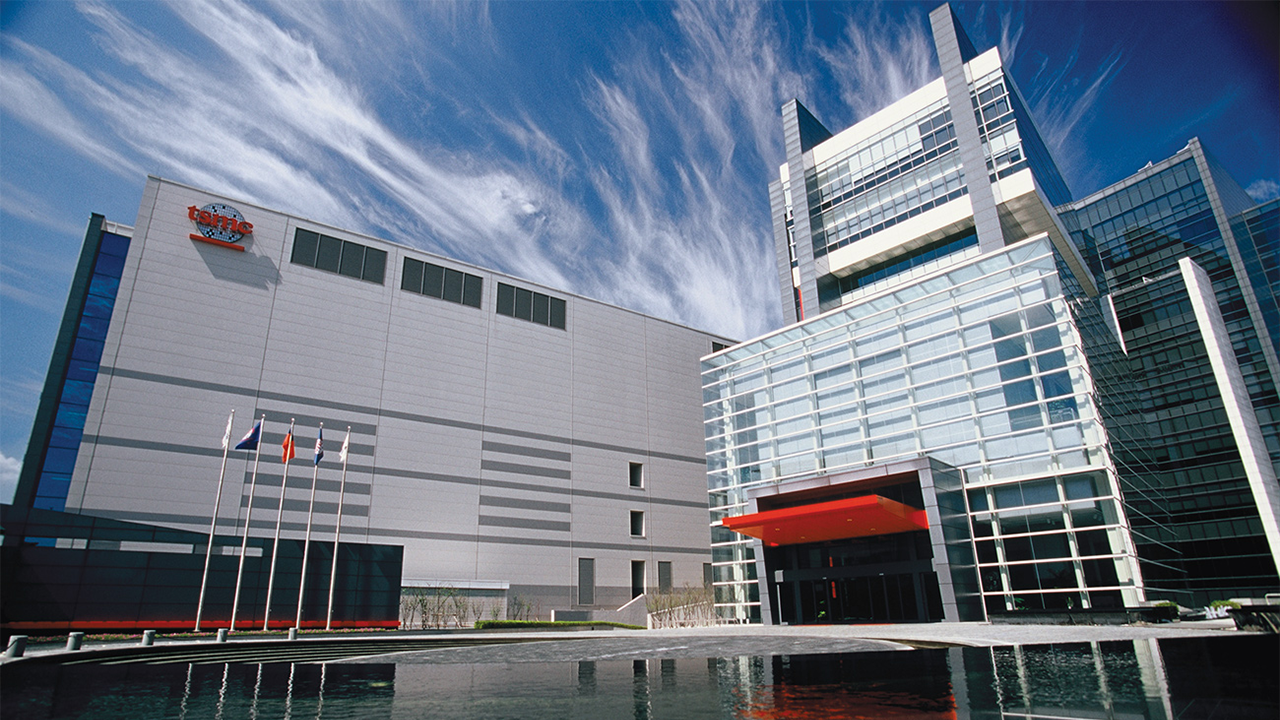
First up, the company will add a new N3-capable fab module to its Gigafab cluster at Tainan Science Park, aiming to start volume production in the first half of 2027. While TSMC has been building the fab module for some time, this is the first time it has disclosed its capabilities.
Secondly, TSMC’s N3-capable Fab 21 phase 2 in Arizona is on track to come online in the second half of 2027. This is the first time the foundry has clarified when Fab 21 phase 2 is set to begin making chips. TSMC’s CEO also confirmed that the company had acquired the second plot of land near Fab 21 to build additional fab modules, though he never confirmed how many fab modules would be built.
Thirdly, the company plans to upgrade the capabilities of its Fab 23 phase 2 (aka JASM phase 2) to 3nm by installing more advanced equipment. Originally, Fab 23 phase 2 was projected to make chips on N6 (6nm-class) and N7 (7nm-class) fabrication technologies, then TSMC pondered upgrading it to N4 (4nm-class). Now, the plan is to make it N3-capable when it comes online in 2028.
What to read next
The decision to add 3nm capacity was not made overnight, though it looks like TSMC expects demand for FinFET-based N3 — its final FinFET node — to remain strong well into the second half of the decade (it takes a year to ramp up a fab, so these three fabs will contribute meaningfully to TSMC’s capacity in 2028 – 2029). Separately, the company will continue converting N5-capable facilities into N3-capable fabs in Taiwan and make some of its fabs capable of building chips on N7, N5, and N3 nodes.
“In addition to all the new fabs, we continue to convert 5nm tools to support 3nm capacity in Taiwan,” Wei added. “We are also leveraging our manufacturing excellence to drive greater productivity across our fab in all locations to generate more wafer output. We are also focusing on capacity optimization across nodes, including flexible capacity support among N7, N5, and N3 nodes.”
One of the main challenges for TSMC’s expansion is to get fab tools to support new capacity as fast as possible, but this is not easy, as leading suppliers of semiconductor production equipment are also constrained in terms of capacity.
“We try very hard to speed it up and pull in all the equipment as we can, [but] our supply is very tight,” Wei said. “Demand is continuing to increase, so we continue to work with our suppliers to speed it up.”
As far as TSMC’s N2 and A16-capable capacity is concerned, the company is currently ramping Fab 20 in Hsinchu Science Park and Fab 22 in Kaohsiung Science Park. While the capacity of the former will remain largely intact in the coming years, Fab 22 will gain capacity aggressively over time, according to Global Semi Research, though TSMC did not touch upon N2 capacity expansion during the earnings call.
Another record quarter, but there may be hiccups
TSMC’s first quarter revenue reached $35.9 billion, an increase of 40.6% year-over-year, and a 6.4% rise over the previous quarter. The company’s net income totaled $18.2 billion, which is the company’s highest net profit for a quarter, while its gross margin was 66.2%. TSMC expects its Q2 2026 revenue to be between $39 billion and $40.2 billion, which is a 32% year-over-year growth.
(Image credit: TSMC)
“Our business in the first quarter was supported by strong demand for our leading-edge process technologies,” said Wendell Huang, Senior VP and Chief Financial Officer of TSMC. “Moving into second quarter 2026, we expect our business to be supported by continued strong demand for our leading-edge process technologies.”
In addition, the company indicated that for the full year 2026, it expects revenue to increase to over 30% (up from its original expectations of around 30%) over the previous year to approximately $158 billion, which gives it an opportunity to increase its CapEx budget towards the high-end of its guidance between $52 billion and $56 billion.
Meanwhile, TSMC warned that its costs may increase due to the ongoing war in the Middle East.
“In addition, given the recent situation in the Middle East, prices for certain chemicals and gases are likely to increase,” said Huang. “Based on our current assessment, there may be impact to our profitability, but it is too early to quantify the impact.”

Follow Tom’s Hardware on Google News, or add us as a preferred source, to get our latest news, analysis, & reviews in your feeds.