
By Lily McCure and Andrew Schmidt
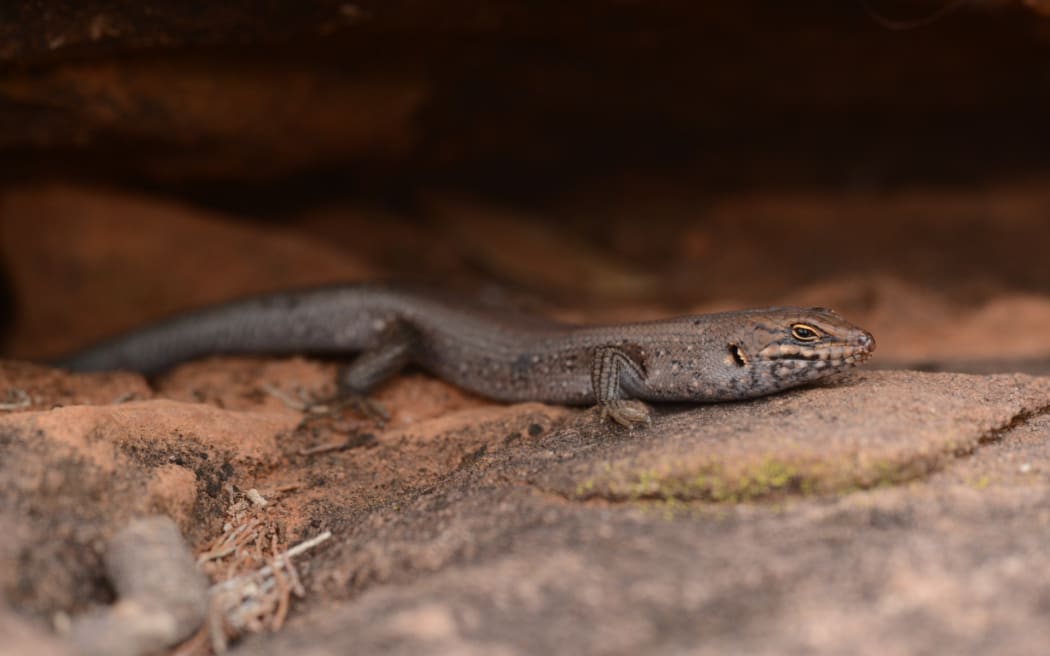
With fewer than 20 kungaka recorded at the national park, the skink has been labelled Australia’s rarest reptile.
Photo: Supplied: Tom Parkin
A skink considered the rarest reptile in Australia has been formally recognised as a distinct species.
It is known as kungaka, which means “hidden one”, to the traditional owners of the lands in Mutawintji National Park.
Researchers say understanding threats to the skink, including pest animals and extreme drought, is essential to ensuring their survival.
In the depths of far west NSW, one of Australia’s rarest reptiles hides.
For the past 25 years, researchers have been studying the kungaka, a rare skink that has only now been formally identified as its own distinct species.
Found in the Mutawinji National Park, kungaka means “hidden one” and was named by Wiimpatja, the traditional owners of the land about 130 kilometres north-east of Broken Hill.
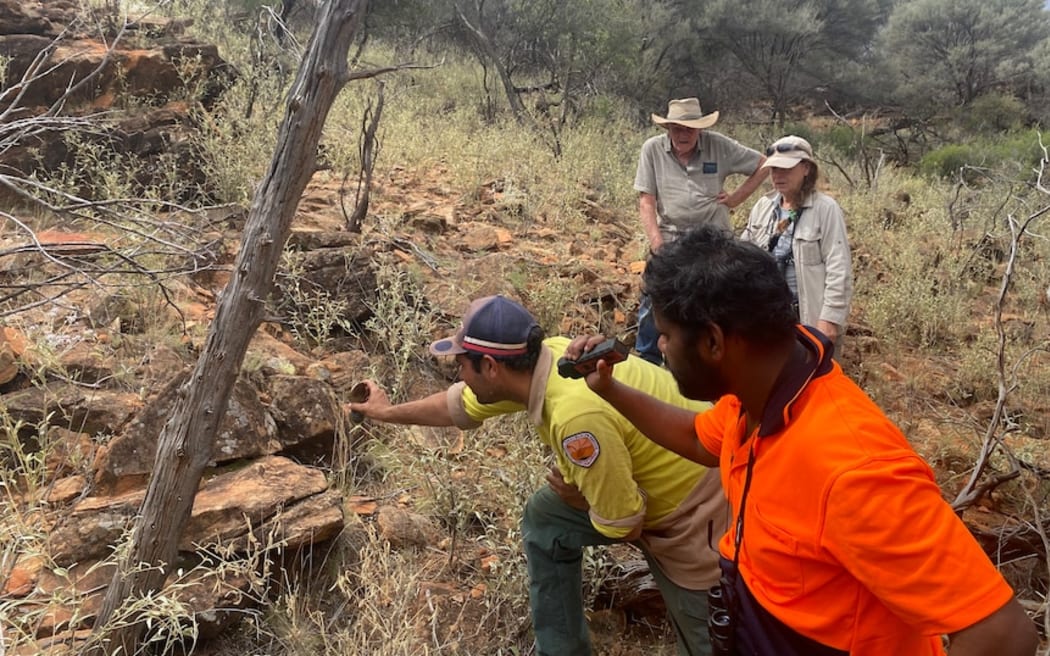
The kungaka monitoring team: Keanu Garni Bates (yellow shirt), Ray Hunter (orange shirt), Gerry Swan (back left) and Lyndy Marshall (back right).
Photo: Supplied / Tom Parkin
With recent surveys discovering there are fewer than 20 of the skinks recorded at the national park, it has now been labelled Australia’s rarest reptile, found nowhere else in the world.
New species
Since formal monitoring of the skink began around 25 years ago, research and surveys have been undertaken to formally identify the species and to tell it apart from the other widespread skink populations.
The amphibian and reptile conservation biology curator at the Australian Museum, Jodi Rowley, has been a part of the research into the kungaka since 2023.
Dr Rowley is among several other researchers and teams that have been working together to document and discover the unique nature of the species.
Through their research on analysing the genetics and body shape, they were able to confirm that the skink is a part of three separate species.
The southern white’s skink (Liopholis whitii) and the northern white’s skink (Liopholis compressicauda) can be found across large areas of south-east Australia, while the kungaka, the third distinct species is isolated to Mutawintji National Park, in far west NSW, around 500 kilometres from its closest relatives.
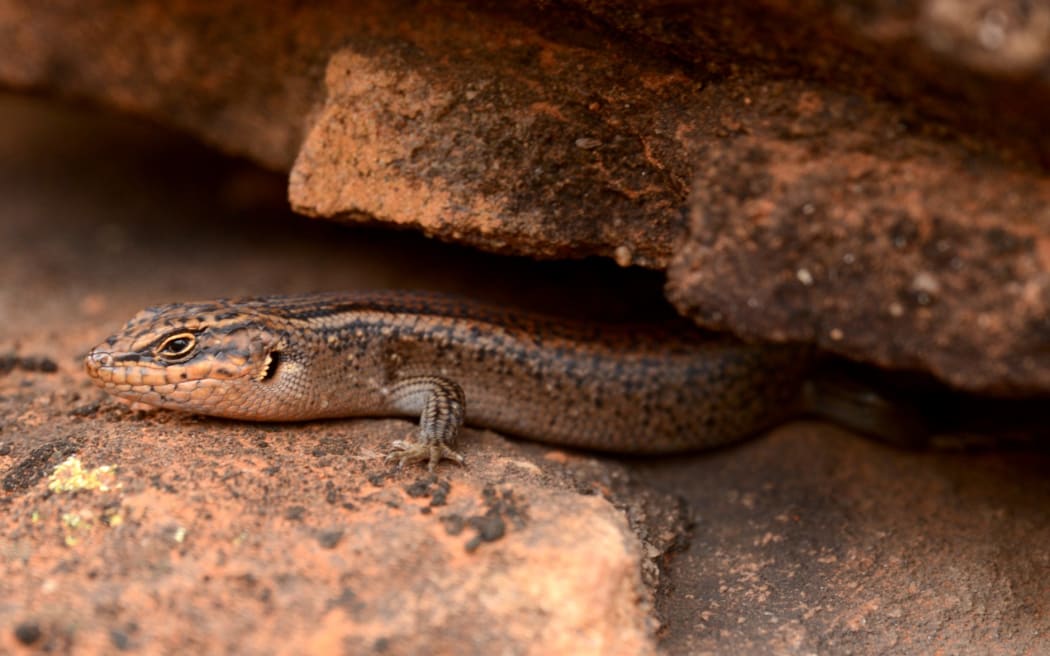
Found in the Mutawinji National Park, “kungaka” means “hidden one” and was named by Wiimpatja, the traditional owners.
Photo: Supplied: Tom Parkin
Rowley said the characteristics of the skinks are not that “remarkable”, but they are “bigger than your average garden skink”.
She also said the nature of the skink is in the name.
“[They are] hard to see, they are very secretive [and] they spend most of their life in shelter,” Rowley said.
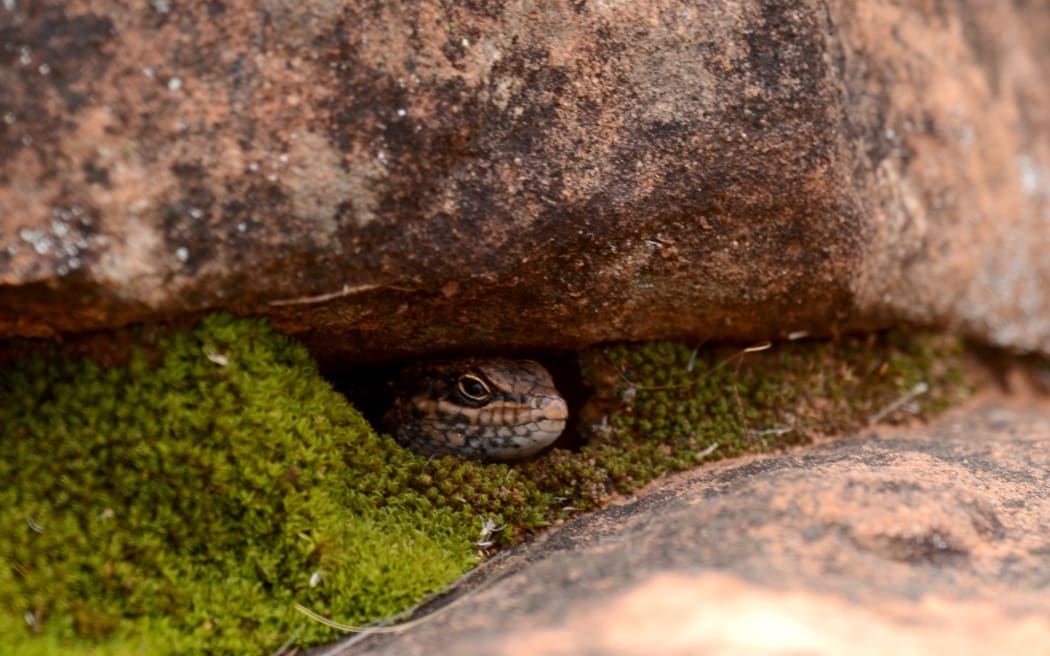
The kungaka skink are hard to see spending most of their life in shelter.
Photo: Supplied: Tom Parkin
The chair of the Mutawintji Board of Management, Warlpa Thompson, has also been part of the journey of discovering the skink species, which he says is a “special” project to be involved in.
With the kungaka considered “functionally extinct” due to how low the numbers are, Mr Thompson said the focus was on preserving and protecting the skinks into the future.
“We want to try and maintain that population while we work out a strategy to raise the numbers,” he said.
“So, we need to take some fairly drastic action over the next five years.”
Skink habitats and threats
The kungaka skinks are known to live in the wettest parts of the Mutawinji National Park, among gorges and in rock crevices, burrowing under rocks seeking moist locations.
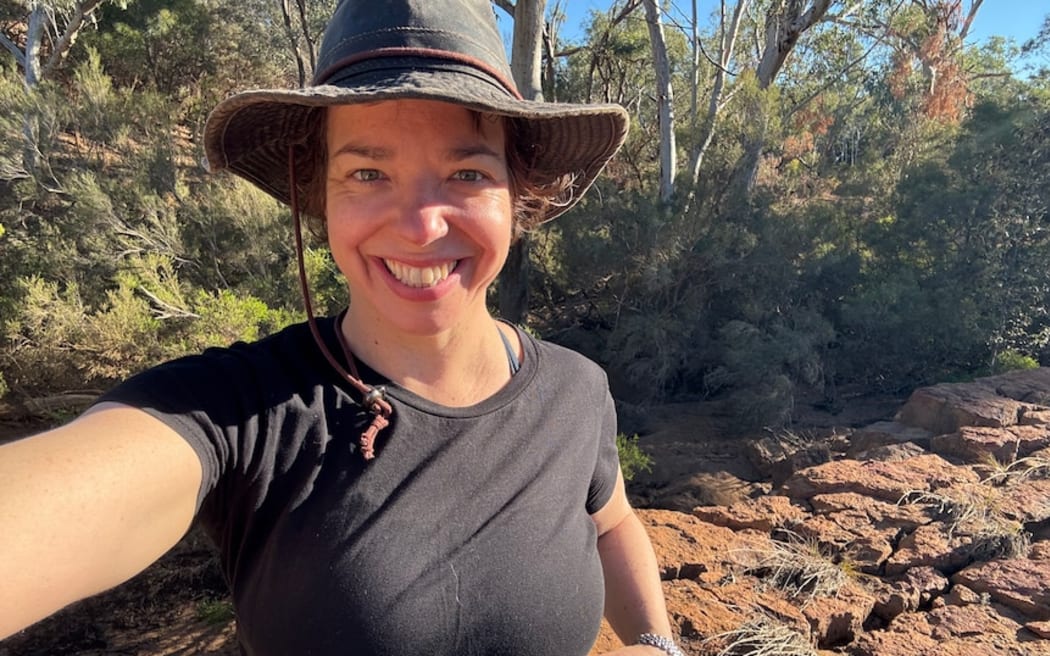
Jodi Rowley says the kungaka skink is a “really scientifically and culturally important animal”.
Photo: Supplied: Jodi Rowley
Rowley said it was “remarkable” they were living there, given they are surrounded by such arid country.
“[It’s] one of the things that makes them incredibly special,” she said.
“This is a really scientifically and culturally important animal.”
Animals such as goats, as well as goannas and snakes, are some of the skinks’ main predators.
With vegetation coverage taken out by goats, the habitat of the skinks is in danger.
Rowley said it was essential to understand the species’ threats, which include predators as well as extreme drought conditions.
“Feral species are a big issue,” Dr Rowley said.
“Goat control will be important to make sure the habitat is protected.”
– ABC