
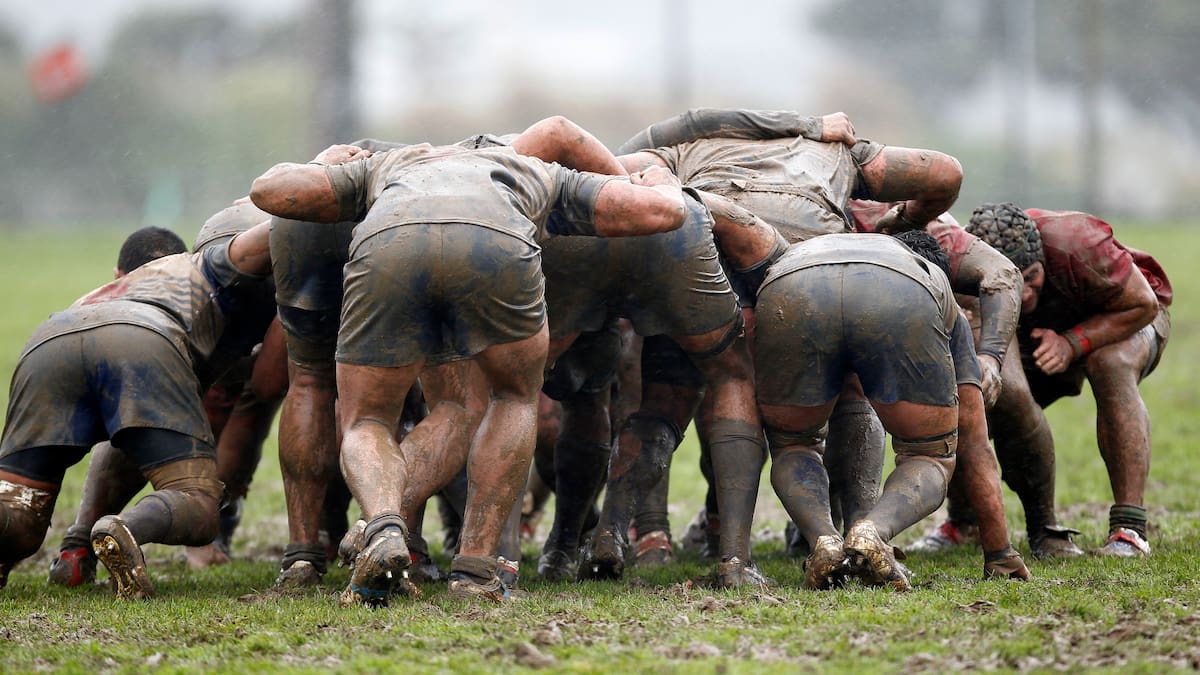
This year, at least half a dozen competitions from around the country have been forced to contract as the 2026 season ramps up. From the West Coast of the South Island to the East Coast of the North, the challenge of fielding a competitive premier team has proven too tough for many clubs that were competing just 12 months ago.
New Zealand Rugby (NZR) is aware of the challenges to premier rugby competitions.
“Over the past decade, there has been a shift in how players want to participate with the demand for offerings that provide a better range of experiences and reduced time commitments,” NZR head of participation Mike Hester says.
“Premier rugby demands a time and physical commitment, and many players are balancing work, study and family responsibilities that make it harder to compete at this level. Other factors include the current cost of living challenges and migration are also contributing to this.”
Hawke’s Bay’s premier rugby competition features 8 teams in its first phase, down two teams from last season. Photo / Emma Rodger
Hester is right, the reasons behind the shrinking premier divisions are varied – and largely blameless. Clubs in both the North and South Islands have been devastated by a change in agricultural ambitions. As some farms have transitioned from sheep and beef to forestry, their workforce has changed dramatically too. Shepherds and farm workers who had been the backbone of the local rugby team have moved on and left gaps too big for their clubs to fill. Others have seen farm employment shrink – and their squads reflect that.
That’s how fragile some clubs are. The price of diesel could be similarly destructive for competitions that require significant travel. How big an impact that has will depend on how long prices remain high.
Other clubs might have the numbers – but not the will. They have players who are still of premier grade ability but no longer prepared to dedicate the time and effort that is required, electing instead to play lower grade rugby where the commitment is less demanding.
Lower grade rugby is proving more appealing for players unable or unwilling to commit to premier teams. Photo / Supplied.
In decline
Buller has lost one team from its premier ranks this season. That one team represents a third of their premier teams from last year. Now they have two teams that compete in a combined competition with West Coast. In 2014, they had five teams and their own competition.
West Coast has also lost a team from last season. They’ve gone from six teams to five and the combined competition with Buller (Jubilee Trophy) includes just 7 teams in total.
Over the Southern Alps, it’s the same story for Ellesmere (Selwyn District) and North Canterbury, sub-unions of Canterbury. Each has lost one premier grade side from their local competitions as well as the combined competition that they play in alongside Mid Canterbury.
Dan Carter in the team huddle at half time during a Luisetti Seeds Combined Country Division One club rugby game between Southbridge (Ellesmere) and Glenmark (North Canterbury) in 2014. Photo / Photosport
Ellesmere now has six teams, North Canterbury seven and Mid Canterbury four. The 17-team country-combined competition makes use of their geographical advantage.
But it was a 22-team competition in 2018 and Ellesmere had 10 teams.
Canterbury’s ‘Metro’ competition remains unchanged – though, as reported by the Herald, they’re not immune to top-level club rugby difficulties. Even some big clubs have found front rowers hard to come by, a shortage that threatens their involvement.
A shortage of front row players has also put pressure on top tier club rugby. Photo / Photosport.
In the North Island, Hawke’s Bay lost two clubs from the first phase of their premier competition – the Nash Cup. Ten teams contested it in 2025, just 8 this season.
Hawke’s Bay is one of the strongest NPC teams in New Zealand and has long been an important nursery for young talent. Hawke’s Bay’s southern neighbours, Wairarapa Bush, have also dropped a side from their premier competition. They had 8 teams in 2025.
Other unions have maintained their numbers this year but have seen dramatic changes in recent years.
The growth
In Otago’s Southern Premier grade, it’s a different story. Clinton, celebrating their 140th jubilee next month, has returned after a year away to stretch the number of teams from 8 to 9. It is not common for premier grades to grow outside of combined competitions, but it is welcomed.
As mentioned earlier, there is a growing trend for quality players to play at a lower level than they are suited to – in order to find competition with a more casual commitment.
Wairarapa Bush’s premier competition has been reduced to 7 teams in 2026. Photo / Supplied
Some provincial unions have significantly more teams in their second division than they do in their first – reflecting a change in attitude from club players who no longer chase the dream of higher honours. That feedback has reached some top-tier, teams who now only train once per week, rather than twice.
Hester points to initiatives like Game On, non-premier which allows non-premier grade games to be played with fewer than 15 players, as reasons why overall playing numbers remain “healthy”.
“The net result of this is that whilst senior player registrations have seen a slight decline since Covid-19, participation remains relatively healthy overall, with more than 33,000 senior players participating in 2025,” Hester says.
NZR is aware of the pressure on premier club rugby competitions and say they are trying to get a better understanding of it. Photo / Mark Mitchell
But the problem at the top end of club rugby remains – and may become a bigger issue in coming seasons. NZR is not blind to these challenges but couldn’t provide the Herald with any concrete plans to stop the bleeding.
“NZR and the provincial unions have observed changing player preferences, which is resulting in fewer premier team numbers in some areas,” Hester says.
“Further work is required to understand this across the 2026 season.”
To be fair to NZR, the problem with many causes will require more than one solution.
Mike Thorpe is a senior multimedia journalist for the Herald, based in Christchurch. He has been a broadcast journalist across television and radio for 20 years and joined the Herald in August 2024.