
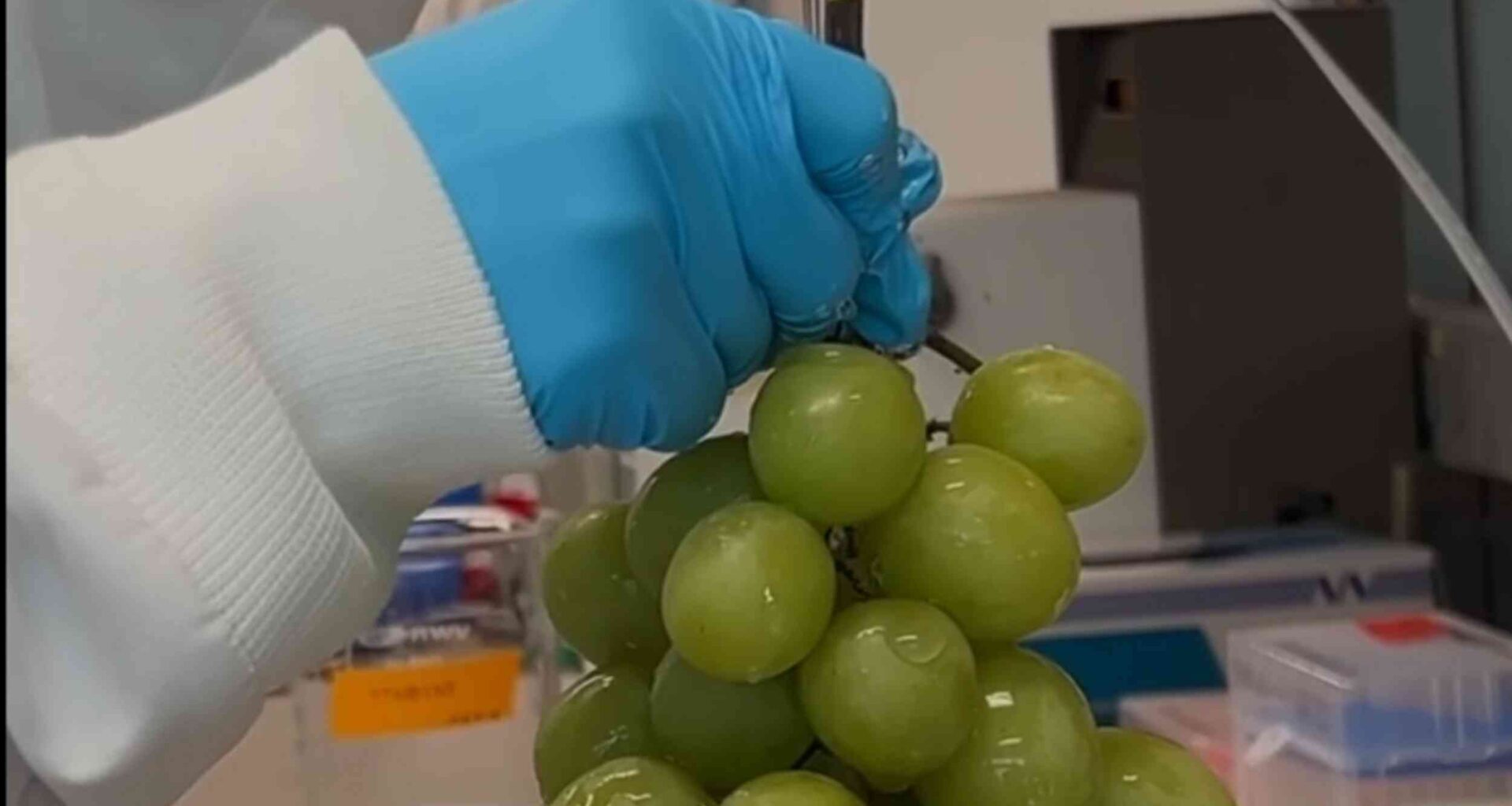
Researchers have found that a new fruit wash strips away most surface pesticides while leaving behind an edible coating that slows spoilage.
That pairing turns an ordinary rinse into a way to make fresh produce both cleaner and longer-lasting.
Residue on the peel

On apples treated with three common pesticides, the finding played out on the fruit’s skin, where the wash removed 86 to 94 percent of the residue.
At the University of British Columbia, (UBC), Dr. Tianxi Yang, an assistant professor, demonstrated that result while testing a rinse built to tackle the contamination people actually bring home.
Plain water, starch, and baking soda also cleaned the apples, but none matched the same level of removal.
That gap leaves the next question in plain view: what in this wash lets it pull so much more off the fruit.
How the fruit wash works
Inside the liquid, tiny starch particles carry iron and tannic acid, a plant compound that gives tea its dry taste.
When those ingredients meet, they assemble into a sticky metal-phenolic network, a web that can cling to pesticide molecules.
Because the network grabs the fruit surface and the residue at once, much of the contamination lifts off.
Using starch matters too, since corn- and potato-derived material breaks down naturally instead of leaving a lasting plastic film.
Why dual action
Fresh produce spoils fast, and global losses for fruits and vegetables reached 25.4 percent in 2023.
Much of that loss happens because bruised, drying fruit keeps breathing after harvest and burns through water and sugars.
Ordinary washing can cut some residue, but it does nothing to slow the drying and bruising that follow.
That left room for a wash that cleans first and then protects fruit during the vulnerable days after purchase.
The protective coat
After the first rinse, a second dip dries into a light edible coat that slows oxygen movement and water loss.
That matters because cut fruit browns when enzymes meet oxygen, and drying speeds the softening people notice first.
“The coating acts like a breathable second skin,” said Dr. Yang. Because the layer still lets gases move, it can slow decay without sealing fruit in low-oxygen conditions.
What apples showed
Fresh-cut apples showed the coating effect quickly, browning more slowly and losing less water over two refrigerated days.
With less moisture escaping, the slices stayed firmer, and fewer exposed surfaces turned the dull brown shoppers usually reject.
Measurements of acidity and natural sugars also stayed higher, which suggests the fruit held onto flavor as well.
That kind of delay is short, but it matters most for cut fruit because spoilage starts almost immediately after slicing.
What grapes showed
Whole grapes told the longer story, staying plump for 15 days at room temperature while untreated fruit visibly shriveled.
That happened because the coating reduced water escape from the skin, which is the fastest path to wrinkling.
The treated grapes also showed antimicrobial activity, the ability to slow harmful microbes, which could further hold back spoilage.
For growers and stores, even a modest gain like that can buy crucial time in transit and on shelves.
Safety of the rinse
Safety depended on dose as much as chemistry, and the extra iron from one washed apple stayed very low.
Adult upper limits for iron sit at 45 milligrams a day, far above what the coating added.
“Our goal was to create a simple, safe and affordable wash that improves both food safety and food quality,” said Yang.
That promise still needs broader testing, because safe intake on one fruit does not answer every diet or every age group.
What scaling may cost
Commercial use will depend on cost, and preliminary numbers put treatment near three cents per apple.
That estimate came from cheap ingredients mixed in water, with tannic acid and iron salts driving only part of the bill.
The calculation did not include equipment, wastewater handling, maintenance, or regulatory work that large packing lines would face.
Even so, matching the price of current coatings while adding pesticide removal could make processors pay attention.
From lab to sink
A home version remains farther off, even though Dr. Tianxi Yang has already described a spray or dissolving tablet that would suffice.
“Imagine a spray or tablet you could add to water right before washing your fruit,” said Yang.
Household use still needs regulatory review and real-world tests across different fruits, peel types, and washing habits.
Until then, plain running water remains the official advice, while this formula stays a promising next step.
Why this could matter
What emerges is a rare food technology that addresses two ordinary annoyances at once, chemical residue and fast spoilage.
If larger trials hold up across more produce, the wash could cut waste without asking shoppers to peel away freshness.
The study is published in ACS Nano.
—–
Like what you read? Subscribe to our newsletter for engaging articles, exclusive content, and the latest updates.
Check us out on EarthSnap, a free app brought to you by Eric Ralls and Earth.com.
—–