
“I am sorry,” she writes, in a draft chapter she shared with the New Zealand Herald ahead of this interview.
“Truly sorry that you have picked up this book because it means you, like 30% of women in the world, have been harmed by sexual abuse, or you have someone in your life impacted by sexual abuse.”
Abuse stories are complicated to report. Was there a police investigation? Has an offender admitted guilt? Is there a risk of defamation or libel?
Sahrawat has never confronted her abusers.
“I’ve been asked, why don’t you take them through the court of law … I’ve thought about it. I am not out for revenge … I don’t need the validation of being right any more, or a ‘sorry’ from them … when the book comes out, they will know who they are.”
The things she alleges began happening to her as a 7-year-old (and continued for many years) are covered in a single chapter. Identities and details are blurred. You could, she suggests, skip that chapter entirely – personally, she finds it difficult to read #MeToo books for fear of being retraumatised.
Sahrawat’s goal is to help women move past sexual abuse. This is the book she wishes she had been able to read decades ago.
“I wanted to make meaning of what my life would be,” she writes. “To know: How can I move forward? Can I still succeed? Will the pain go away? Will I ever enjoy sex? Am I capable of intimacy? Am I broken and damaged forever?”
Restaurateur and life coach Chand Sahrawat, photographed after her 2002 move from India to New Zealand for tertiary study.
Sahrawat was born and raised in India. She met her husband, Sid, when she moved to New Zealand for tertiary study. Her parents had sent their rebellious teenager abroad; they didn’t know her behaviour stemmed from trauma that had engulfed her early years.
“The first thing you need to do is feel safe, physically,” Sahrawat says. “I could never feel safe in India. I used to blame the culture. I would say I was born in the wrong place, I don’t fit into that world.”
Auckland, 2002: “There weren’t many first generation young Indians here … And I actually found security in that … I actually hated my culture. I blamed all Indian men. ‘All Indian men could do this’. The culture actually created the perfect environment for men to do this and get away with it.”
Today?
“Abuse happens everywhere and secrecy just fosters it. I’ve learned that now.”
Sahrawat has a Bachelor of Arts with double majors in psychology and English, a graduate diploma in secondary school teaching (English, health and ESOL), a postgraduate diploma in education specialising in guidance and counselling, and a graduate certificate in coaching. She co-owns the restaurants Sid at The French Cafe and Cassia and the ready-to-eat curry sauce business Cassia at Home, has recently established the life coaching business Goal Getters, runs culinary tours to India and, with husband Sid, has a daughter and son.
She also takes antidepressants daily and functions best when her “to do” list includes the actions many of us take for granted: Eat. Hydrate. Sleep. Shower.
“I need to, because that’s how my brain works. It’s a reminder. To feed myself, to take a break, to go to the gym. It needs to be scheduled because my brain will never pick up the signals my body is giving it, because it is used to telling my body to shut up and get on with it.
“That’s sexual abuse trauma. You shut down feeling. You don’t want to feel. Your brain continues, but your body is left somewhere.”
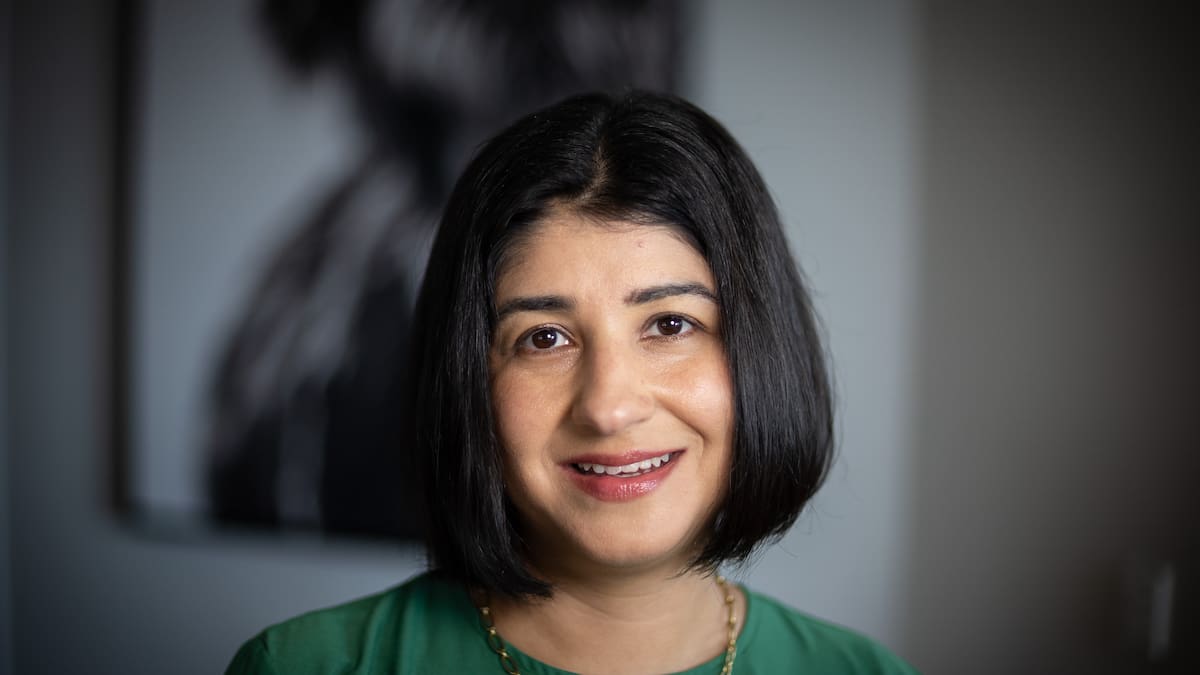
Chand Sahrawat is writing a ‘clear and compassionate roadmap’ for sexual abuse survivors. Photo / Michael Craig
Sahrawat has combined her years of academic research with her personal experience to produce what she hopes will be a practical guidebook for the layperson, sharing the strategies she has used to survive and, ultimately, thrive.
“A clear, compassionate roadmap.”
Because Sahrawat knows, first-hand, that sexual abuse trauma can impact in ways you might not expect.
An example: “I read What to Expect When You’re Expecting to prepare myself for childbirth … ”
She watched the videos, did the antenatal classes and had, according to best practice at the time, come off her medication.
“No book in the world can tell you what the pain is going to be like … and none of them talk about abuse and what can happen if your brain decides to shut the whole thing down.
“My body wanted to push, but she was so big and in the wrong position and my midwife made me push for two hours before I completely passed out and had what I now know as disassociation, where you see yourself floating above your body.
“You’re so stuck in that trauma that the way you cope is by completely disassociating brain and body. That had happened to me through abuse, and it was happening to me again … that entire idea that you have no control, that some other force – whether it be your own child or medical people – has control over what should be yours to control.”
Sahrawat’s voice is calm and steady as she relives an experience that almost broke her.
“Those were not my choices, that was not my birth plan. And it was all unprepared because I had never disclosed to my midwife about the abuse, how that could have impacted on me. I was looking at this baby and there was no immediate bonding.”
Sahrawat remembers going to mother-and-baby sessions in a community library and wondering why she wasn’t feeling like everybody else. She remembers thinking perhaps she could have an accident; drive the car off a bridge.
“The thought in my head, that set off the alarm bells, was ‘they’re going to need the car seat. They will not need the car, but they will need the car seat, so make sure it is out before you do that’. And I was like ‘what the hell is wrong with my thinking?’ I drove straight to my GP.”
Four years, a whole lot of reading, and a very different birth plan later, she was ready for her son.
“I never say ‘I’m healed’ because that would mean I am back to where I was. I can’t go back to being seven … the world changes and the way you navigate the world changes.”
And, honestly?
“I think having a daughter first has empowered me. It’s made me find my voice.
“To know that you have the power to not let that repeat for your child – although, in some ways, you don’t. You can only equip them with all of the tools, create a home to be a safe space, show you’re a fair and reasonable parent … to say ‘I will believe you’, that there will be no universe where I will say ‘this was your fault’ or ‘I won’t stand up for you’.”
Chand Sahrawat in her early Auckland years.
Sahrawat has sought professional mental health assistance at various points in her life, but it was 2023 before she deliberately opted to see a female Indian counsellor.
“I’m solution focused. I’ve always been ‘this is the problem, what is the solution? And the solution should be the same whether you come from India or whether you’re white, so let’s get on with it’.
“I say that I walk between two identities. I’ve got imposter syndrome when I’m in a room full of Indian women, but I’m not 100% Kiwi either … a lot of us alienate our culture and I think that causes problems.”
This time: “You reach a point in your life where you can’t deny who you are. You can’t push that away. It’s actually not that good for you.”
She recounts two recent milestones.
“When I went to India [on a culinary tour] last October, there was a group of women with me and we were inside a temple area and the male gaze – I could feel it. But it was on them, not me. And I went up to those men and confronted them.
“‘Do you have no f***ing shame? You are in a place of worship. Keep your eyes to yourself’. And they just got up and left. They apologised, got up and left … I was in a big group, I probably wouldn’t have done that if I was alone, but I can now stand up for other people.”
In Goa earlier, Sahrawat went to the beach and wrote the word “peace” in the sand.
“It’s so cliche. But that day, I thought ‘I can be alone in the city as a woman. I don’t hate the city anymore. I can be here’.”
For so long, she had lived with the conviction that bad things would happen to her.
“I used to think I attracted trauma. I literally believed that if a meteorite was going to hit Earth, it would come and hit my head. But you can break that cycle.”
Okay, she teases herself, “I still got stuck in a war”.
In March, the Sahrawats were in Dubai, en route to meet the culinary tour they were hosting, when the United States and Israel attacked Iran and the Middle East became a military zone.
“Even though I lived in India for so many years, and India and Pakistan are constantly at each other’s throats, I have never in my life heard missile interceptions or drones … that’s happening outside, the building is literally shaking, but there’s nothing on the news … people are going to the mall and our friend took us out to eat shawarma.”
In New Zealand, a friend suggested she use the time to work on her book.
“I was constantly refreshing Al Jazeera and Flightradar looking for a way to escape!”
Sid went to the gym and Chand went for coffee with old school friends who were, coincidentally, also in Dubai.
“The universe works in mysterious ways. I hadn’t seen these women for 18 years … and they knew of an Indian repatriation flight out of Fujairah.”
In the middle of the night, the Sahrawats drove 1.5 hours to catch a 3am flight from the port city. They didn’t know the name of the airline and they’d fronted up with $3000 for tickets via a WhatsApp paylink.
“Am I doing the right thing …? Twenty minutes into the flight, Sid said ‘I think we’re safe now, there are no missiles outside’.”
The irony of being so happy to see India was not, she says, lost on her.
Sid and Chand Sahrawat were engaged in 2006.
Back in 2022, Sid and Chand Sahrawat shared their “meet cute” story with the Herald on Sunday. She was flatting with one of his friends, he came over for biryani, and she thought it was a one-night stand.
Chand: “We were together for about a month and then I was going back to India and he texted me, ‘love you forever, you live in me’. When we got married, I had those words engraved inside his ring.”
Sid: “It was just the chemistry, her personality – we just gelled straight away. I was single, so she was maybe the right person to come along. It was perfect timing. I would say that, in moments, I can be romantic, and I can be a little bit aloof as well. We definitely had a romantic start. It was quite fiery, in a good way.”
The impact of sexual abuse on future relationships is just one of the topics Sahrawat’s book covers in detail. Today, she outlines some common scenarios to the Herald.
“One is avoidance, which most people are easily able to digest – you’ve been abused, you don’t want anything to do with sex again. The other, that people find very hard to deal with, is hypersexuality or promiscuity. They don’t understand that women or men could be finding self-worth in the very act that was a form of abuse for them, but a lot of us do, and that is what happened to me … ‘I’m only worthy of a relationship if someone is able to enjoy sex with me. So I have to make myself available to them’.”
While she disclosed her childhood experiences to her future husband very early on, it took her at least six months to tell him she wanted to write a book.
“What if he wasn’t supportive of this? Because I’m headstrong, I’m still going to do it …”
His response?
“He was like ‘I’m so proud’ … he knows I love supporting other people, so that was not the new part of it, but this is going to be in the public eye – and it’s not about the restaurants.”
Chand Sahrawat and her chef husband Sid, photographed in 2020, in Cassia’s original subterranean space. Photo / Dean Purcell
The Sahrawats first made their name with the fine dining Ponsonby restaurant Sidart (opened in 2009, sold to a staffer and subsequently closed). In 2014, they introduced Auckland to modern, high-end Indian dining via Cassia, the restaurant they opened in a Fort Lane basement. Multiple floods would eventually force a shift to SkyCity. Earlier this year, the couple announced June 5 would be the final service in that venue, with plans to shift Cassia to a new site on the corner of Albert and Wyndham Streets.
Sahrawat says the 2023 Auckland anniversary weekend floods forced a complete reassessment.
“I’d been living Sid’s dream for so long … I know I don’t want to dive 100% into hospitality anymore, but what is it that aligns with me?”
She worked for Victoria Coffee and the Breast Cancer Foundation and trained towards a certificate in coaching.
“People say ‘why aren’t you doing business coaching?’ I don’t want to be traumatised by anybody’s P&L but my own!”
Her clients are, typically, female business owners looking for direction and fulfilment.
“The business is supposed to be the gas to your car. It should be the means to the end.”
In 2020, says Sahrawat, “I burnt out. I had to be sedated for three days.”
Covid disruptions. Production issues with the new take-home sauce venture. A feeling of personal failure.
“There’s this crisis, and the next crisis and then you wake up and what is all this for?
“Everyone’s burnout looks different. Mine is not drinking, eating, sleeping, showering. Just going on working. Until my body shut down.”
Three years after that, when the Sahrawats had to relocate a flood-hit Cassia, she recognised the warning signs.
“I took a week off and sat at home and knitted and watched Netflix. Sid thought I’d lost it, because he’d never seen me knit. At the end of the week, I resigned.”
Self-care and a homemade jumper?
“It didn’t go beyond a scarf, because I wasn’t that good!”
Why, Sahrawat asked herself, had she spent so much of her life investing in qualifications?
“Why did I get educated in all these things? What do I know and what is it that I really want to do?’ And I want to help other women. I want to show them that a life beyond the victim is possible.”
And then she started writing.
“I don’t go about questioning anymore, ‘why me?’ That was the stance I took for a lot of years. I had to literally grieve for my childhood. It stole my relationship with my parents.”
While they had some knowledge of what had happened, she has only recently shared the full extent.
“They feel guilt and responsibility which, I think, I was trying to protect them from. ‘It’s my burden to carry’. I think their world has been rocked and, for a while, they were trying to figure out if I was angry. But nothing’s really changed for me. I’ve been living with it for decades.”
After the Valentine’s Day social media post, she says some people were concerned about the potential for reputational damage. Growing up, abuse was not openly discussed; girls were shamed into keeping quiet.
“Men, unfortunately, are still considered the superior sex in India … When I put the post out about the book, some people were ‘oh, it’ll damage the reputation of the family or Sid’s reputation’. I see it from a different lens. I see that he is such a supportive man.”
Sahrawat has met with publishing companies but, so far, does not have a signed deal. She may, she says, go down the self-publication route, potentially releasing the book with an appropriately aligned organisation.
“There is life after survival,” she wrote on Valentine’s Day. “There is something after ‘me too’.”
On a comfortable cream couch, with its comfortable views over the Waitematā Harbour, she chooses her words very carefully; she’s aware she could be misconstrued.
Sexual abuse, she says, has given her a purpose.
“I would have been such a different person if I didn’t have purpose.
“I don’t shy away from it anymore. You have that label inside you, but you don’t want others to know. And now I’m comfortable with that label and I’m comfortable with that part of my identity.”