
NEED TO KNOW
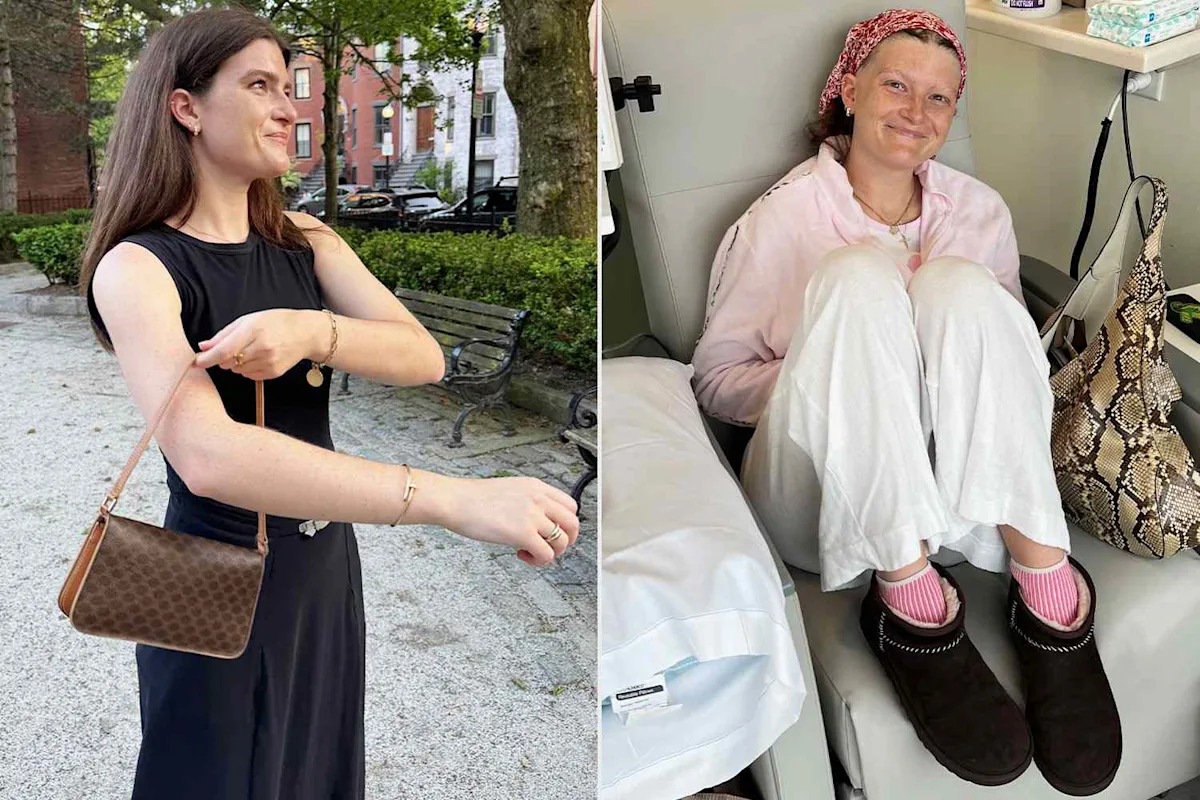
Maddie Squire was diagnosed with invasive ductal carcinoma after initially mistaking her symptoms for nothing more than skin irritation
Her treatment included a bilateral mastectomy, chemotherapy, radiation and participation in a cancer research study
Now, Squire talks to PEOPLE about her cancer journey, one year after first noticing her symptoms
When Maddie Squire first noticed dry, flaky skin on her breast, she didn’t think anything of it.
Squire, then 25, tells PEOPLE she originally thought it was from chaffing, so she “just put Aquaphor on it.”
The “dryness,” which was only on one breast, persisted for about a month or so, but still, Squire “didn’t think there was anything wrong.”
However, everything changed when she “felt it and realized that I had a lump” in April 2025.
“Then I found a lump, I was like, ‘Okay, I need to go to the doctor. This isn’t gonna go away on its own,'” she recalls.

Credit: Maddie Squire
Squire made a last-minute doctor’s appointment at the nearby hospital in Boston, and she was referred to its breast health center.
Without any family history of breast cancer or other cancers, the doctors believed she had an abscess or infection. After an ultrasound, they prescribed her antibiotics and sent Squire on her way.
“Then I came back after those antibiotics were done and the lump didn’t go away,” she shares. “It was still the exact same. There was a radiologist there who really advocated for me to get a biopsy, and she said, ‘I don’t think this is breast cancer, but we just want to check that off the list.’ ”
Squire got a breast biopsy that very day, and doctors told her she’d get her results within five to seven business days.
Two days later, however, she looked at her phone and saw a missed call from her doctor.
“I saw that I had a message from my hospital with a test result, so I logged into my portal and saw that I had invasive ductal carcinoma,” she tells PEOPLE.
Her official diagnosis was progesterone and estrogen-positive, HER2-negative invasive ductal carcinoma (IDC), which is the most common form of breast cancer, accounting for 80% of all breast cancer diagnoses, according to John Hopkins Medicine.
When she got in contact with her doctor, they were “really nice and eased my anxieties,” Squire says.
Squire, now 26, feels “really lucky” that “the doctors really took me seriously the entire time,” noting that “the whole process from when I found the lump to getting diagnosed was four weeks, so it was pretty quick.”
“I advocated for myself, but if I didn’t have that one radiologist who said, ‘Let’s do this biopsy, right now, schedule it’… She said ‘What are you doing this afternoon?’ I was like, ‘I have work,’ She said, ‘No, we’re doing the biopsy right now. You’re here,'” Squire recalls. “I’m genuinely so grateful for her because I don’t know what would have happened if she didn’t go the extra mile for me.”
Credit: Maddie Squire
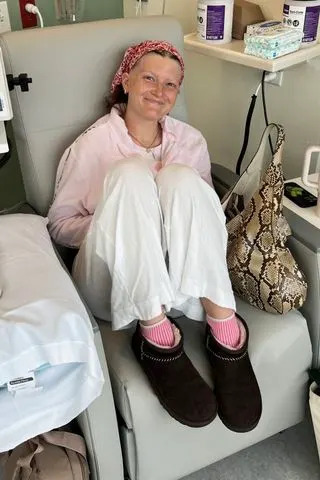
After she got her diagnosis, she met with surgeons and oncologists to get multiple opinions before figuring out a treatment plan.
“I had to get an MRI with contrast to see if the tumor had spread to my lymph nodes or if it also spread to my other breast,” she explains. “They wanted to confirm the size of it because that would’ve changed my treatment plan. It was found [that] the actual tumor was pretty small.”
Squire was diagnosed on May 23, 2025, and on June 11, 2025, she got a bilateral mastectomy.
While the cancer “didn’t go to the other breast,” doctors “discovered breast cancer in my lymph nodes and gave me a stage 2 diagnosis.”
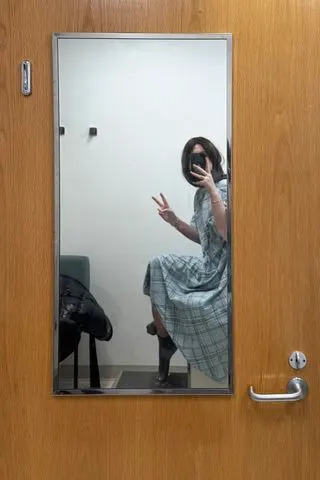
During this same time, doctors tested to see if she would be receptive to chemotherapy, which she was. She recovered from the mastectomy for six weeks and had tissue expanders put in. However, one of them deflated as a “manufacturing issue,” so two and a half weeks after her mastectomy, Squire had a second surgery to replace the tissue expander.
Credit: Maddie Squire
A few days later, she underwent an egg retrieval process before officially starting chemo.
“Three days after that surgery, I started chemo on July 23, and I did eight rounds of chemo. It took three months,” she shares. “After chemo, I did 16 rounds of radiation. That got me to the end of 2025. I finished chemo at the end of October, right before Halloween weekend, and then I did radiation three weeks after that.”
Squire took two weeks off from treatment, and then in January 2026, began hormone treatment.
Never miss a story — sign up for PEOPLE’s free daily newsletter to stay up-to-date on the best of what PEOPLE has to offer, from celebrity news to compelling human interest stories.
“Because my breast cancer is hormone positive, they have to keep my ovaries asleep and put me in a menopausal state so I don’t release any estrogen or progesterone because that could feed any small micro cancer cells that could still be remaining,” Squire explains.
Squire also joined a research study for a pill called ribociclib.
“My oncologist recommended it anyway. It was originally used to treat metastatic breast cancer, but now there are research studies that show it can be helpful in earlier stages,” she shares, noting that they are tracking her “blood, heart and everything.”
“I’m very excited to participate in that just because my life is proof that cancer research works, so I’m excited to participate in that in some way,” she continues. “The research study is three years, so hopefully that pill works out and I can continue with it until the end of the study. Then I’ll be on this letrozole, the aromatase inhibitor that I started in January, I’ll be on that for five to seven years.”
Credit: Maddie Squire
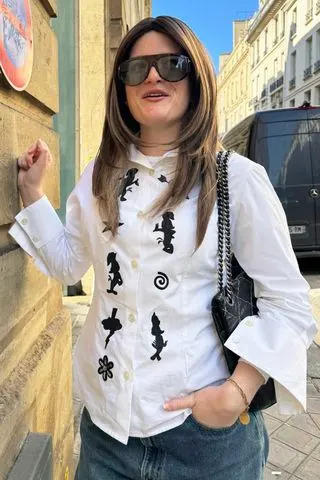
Facing such a “life-threatening illness” has taken a toll on Squire, who notes that her whole cancer journey was “definitely jarring.”
“One of the hardest parts, looking back, is having those first meetings with my doctors and getting a timeline for what everything will be, because you go from zero to 100,” she shares. “You’re living your normal life, getting this diagnosis and then the life that I thought I was gonna lead is gonna be completely different. That was a hard thing to grasp.”
However, she was able to rely on a close family friend who had previously had breast cancer and advised her to create a checklist during treatment.
Every round of chemo, she would cross something off. The whole process “was really helpful,” Squire shares.
“It also made me feel more productive, especially over the summer when I was getting different surgeries and doing IVF, crossing things off and getting one step closer to being done really helped me compartmentalize each stage,” Squire explains.
“Even looking back, I’m getting my reconstruction surgery [this] summer, almost a year after my mastectomy, it went by faster than I expected,” she shares. “It definitely slows at points and it’ll probably be the next decade of treatment, but it does feel closer and closer to ending every day in a really positive way.”
Read the original article on People