
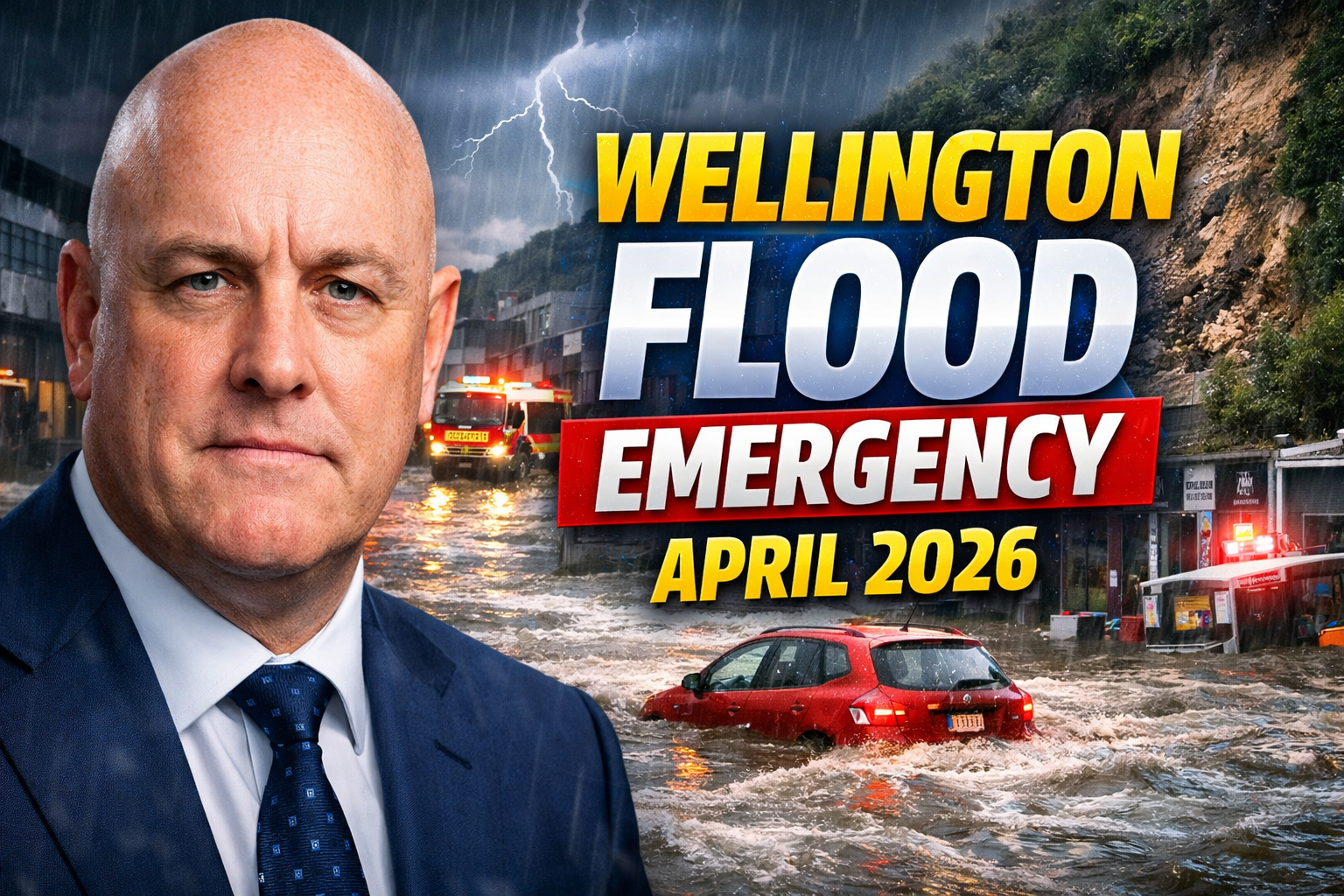
Wellington, New Zealand’s windy capital, faced its most severe flood threat in years on April 18, 2026. Torrential rains battered the region, triggering emergency evacuations in Stokes Valley and prompting MetService to issue urgent heavy rain warnings. Residents woke to blaring sirens and rising waters, as swollen streams turned quiet neighborhoods into raging rivers. This crisis highlights the growing ferocity of weather events in a changing climate, testing the city’s resilience and emergency systems. What began as a routine weekend quickly escalated into a full-scale disaster response, affecting thousands and underscoring vulnerabilities in urban planning.
The Onset of the Storm
A powerful low-pressure system swept across the Tasman Sea, colliding with warm moist air from the north. This meteorological clash unleashed relentless downpours starting late Friday evening. MetService forecasters had tracked the system for days, noting its unusual intensity—fueled by record ocean temperatures. By Saturday morning, radar images showed a stationary front dumping water at rates exceeding 50 millimeters per hour in parts of the Hutt Valley.
The storm’s ferocity stemmed from a “blocking high” over Australia, which stalled the system and amplified rainfall. Winds gusted up to 120 kilometers per hour, whipping rivers into froth and toppling trees across the lower North Island. In Wellington, the combination of steep terrain and saturated soils created perfect conditions for flash flooding, transforming culverts into cascades and roads into impassable lakes.
Stokes Valley: Ground Zero for Evacuations
Nestled in the Hutt Valley foothills, Stokes Valley became the epicenter of the chaos. Narrow roads and densely packed homes amplified the danger as the Stokes Stream burst its banks around 6 a.m. Emergency services ordered immediate evacuations for over 800 residents, with helicopters airlifting families from isolated cul-de-sacs. Mudslides buried driveways, and sewage overflows contaminated low-lying areas, forcing civil defense teams into round-the-clock operations.
Local volunteers played a heroic role, distributing sandbags and ferrying the elderly to safety via four-wheel drives. One resident described the scene: “The water rose so fast—it was knee-deep in minutes, carrying away fences and cars.” By midday, temporary shelters at Hutt City gyms housed displaced families, with authorities warning against returns due to ongoing landslide risks. The valley’s history of flooding, including a major event in 2004, made this response swift but revealed persistent gaps in drainage infrastructure.
MetService Warnings and Official Actions
MetService’s alerts began rolling out Thursday night, escalating from a “watch” to “orange” warnings by Friday. Their app pushed notifications to 250,000 devices, urging preparations like clearing gutters and stockpiling supplies. Prime Minister Christopher Luxon activated the National Emergency Management Agency, deploying 500 personnel and resources from across the country.
Wellington Mayor Tory Whanau coordinated with police, who closed key routes like State Highway 2. The Hutt City Council declared a state of local emergency at 8 a.m., enabling mandatory evacuations. Drones monitored water levels in real-time, while the NZ Defence Force stood ready with flood barriers. These actions prevented worse outcomes, though critics noted delays in rural outreach.
Key Statistics and Impacts
The floods delivered staggering numbers, painting a picture of widespread disruption.
CategoryStatistic/DetailsRainfall Totals280 mm in 24 hours (Stokes Valley); 450 mm over 48 hours region-wide—triple the April average.Evacuations1,200 people; 400 properties uninhabitable.Road Closures75 km affected, including SH2 and local arterials.Power Outages15,000 homes blacked out for up to 12 hours.Economic Cost (Est.)NZ$50 million in immediate damages (infrastructure, homes, agriculture).Rescue Operations250 calls; 180 swiftwater rescues by 2 p.m.
These figures, drawn from real-time Civil Defence reports, reveal the scale. Agriculture suffered too—fruit orchards in the Hutt Valley lost entire harvests to silt, while wastewater treatment plants overflowed, releasing pollutants into the harbor. No fatalities were reported, a testament to early warnings, but mental health support lines lit up with calls from traumatized families.
Human Stories from the Frontlines
Amid the deluge, stories of grit emerged. Sarah Thompson, a Stokes Valley mother of three, waded through chest-high water to save her neighbor’s dog, later recounting the terror on local radio. Firefighter teams worked 18-hour shifts, pulling a stranded motorist from his submerged ute just as it floated away. Community hubs buzzed with shared meals and updates, fostering solidarity.
Elderly resident Bill Hargreaves, 78, credited a neighbor’s knock at dawn for his escape: “I thought it was just heavy rain—until the lounge flooded.” These tales humanize the stats, showing how ordinary Kiwis banded together. Social media overflowed with #WellingtonFloods posts, from drone footage of submerged parks to fundraisers for rebuilding.
Broader Implications for Wellington
This event exposed Wellington’s Achilles’ heel: its rugged geography. Steep slopes accelerate runoff, overwhelming aging stormwater systems built for milder rains. The city’s ports, vital for trade, halted operations, delaying shipments worth millions. Environmentally, sediment plumes discolored Wellington Harbour, threatening marine life and fisheries.
Economically, small businesses in Lower Hutt face weeks of closure, with insurance claims projected to strain providers. Tourism took a hit too—cancellations rolled in for weekend hikes in the Rimutaka Ranges. On a positive note, the crisis accelerated talks on “sponge city” designs, incorporating green infrastructure like permeable pavements to absorb future deluges.
Lessons Learned and Future Preparedness
Past floods, like the 2023 Auckland deluge, offered blueprints ignored at peril. This time, MetService’s upgraded AI models provided precise predictions, buying critical hours. Yet, experts call for investment in resilient housing—elevated foundations and flood-proof basements could mitigate repeats.
Government pledges NZ$200 million for nationwide upgrades, prioritizing at-risk valleys. Community drills, now mandatory in schools, build muscle memory. Climate scientists link the storm’s intensity to warming oceans, urging emission cuts. For Wellington, retrofitting drains and planting native vegetation emerges as key defenses.
Conclusion
The April 2026 Wellington floods serve as a stark wake-up call, blending natural fury with human vulnerability. Stokes Valley’s evacuations and MetService’s warnings saved lives, but the scars linger. As waters recede, rebuilding must prioritize sustainability—fortifying homes, infrastructure, and resolve. Kiwis’ spirit shone through, proving that unity turns crises into catalysts for change. Stay prepared, support recovery efforts, and watch the skies—New Zealand’s weather shows no signs of mercy.

Nirti Singh is a news writer and digital content contributor at KorakoSpecklePark, covering key stories and regional developments across New Zealand and Australia. Her work focuses on clear, fact-based reporting, ensuring readers receive accurate and timely information.