
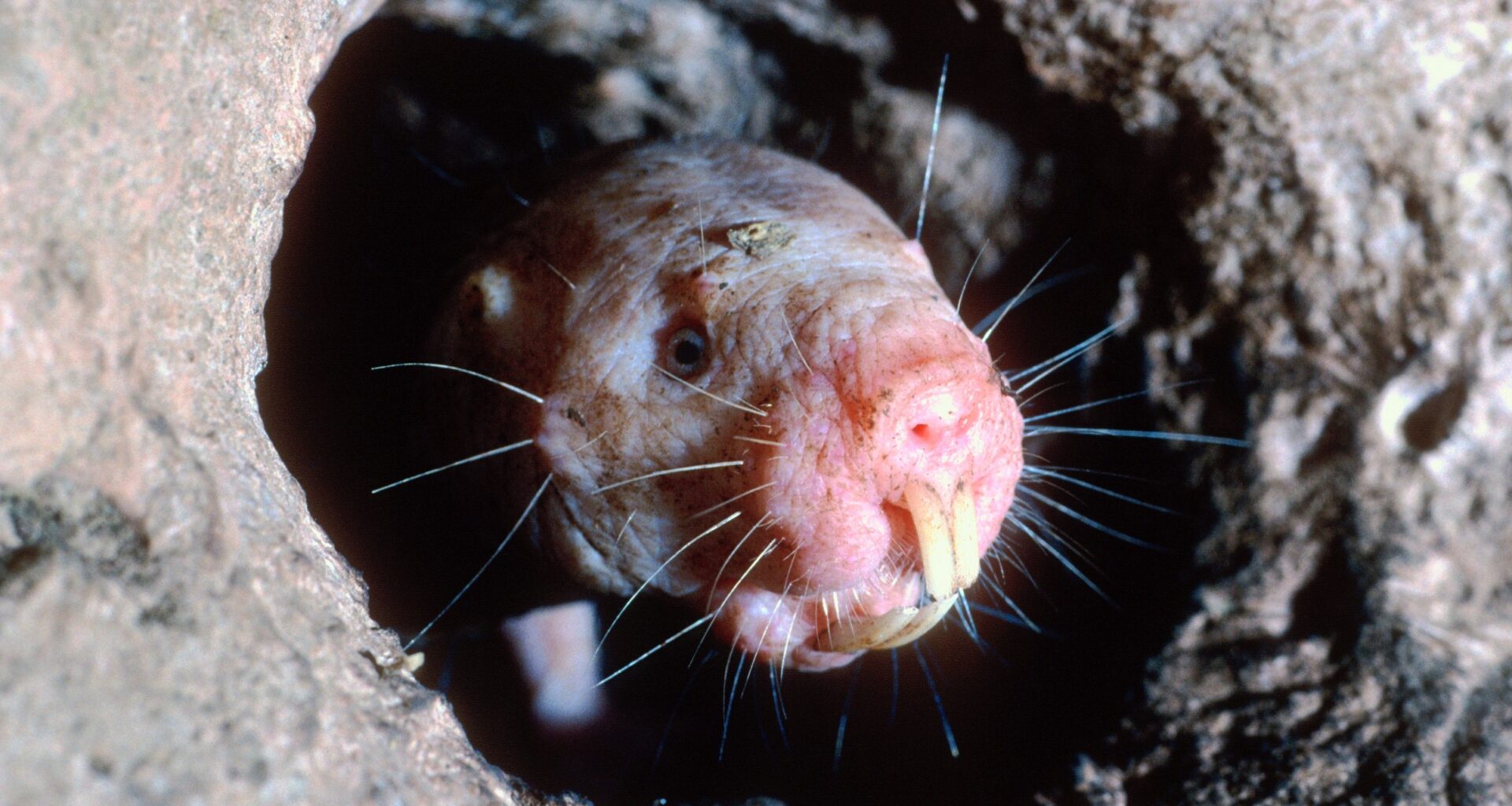
Deep underground in parts of Africa, naked mole rats run their world like a tightly controlled kingdom.
One queen produces all the offspring, while the rest work nonstop. They dig tunnels, gather food, and care for the young. Everything depends on that one female.

For a long time, scientists believed that when a queen could no longer reproduce, the colony fell into chaos.
Fights would break out. Rivals would battle for control. It sounded harsh, but it made sense in a system built around a single ruler. But now, researchers have discovered a different side of this story.
When order doesn’t break
Scientists recently tracked a colony of naked mole rats for six years. They watched what happened when the queen’s ability to reproduce started to fail.
What they saw was unexpected. Instead of violence, the colony adjusted in a calm and steady way.
The study points to something many researchers had overlooked: these animals can cooperate even during stressful moments that threaten their social structure.
“Resilience is the ability of biological systems to recover or return to their normal state after stress and is central for our understanding of health and disease,” explained Dr. Janelle Ayres, a professor at the Salk Institute.
“While much research focuses on conflict, my lab studies cooperation as a fundamental organizing principle. We’ve studied this primarily in host-pathogen systems, and have expanded to complex social systems like the naked mole rat.”
“By investigating how cooperation drives resilience, we can uncover mechanisms that allow biological systems to recover and function effectively after challenges.”
Significance of naked mole rats
Naked mole rats may look unusual, but they have kept scientists interested for decades. They were first brought into labs in the 1960s because of how well they survive underground.
About ten years later, researchers realized they shared something rare with ants and bees. They are eusocial mammals. That means they live in colonies with strict roles and a single breeding queen.
Naked mole rats also live much longer than most rodents, often more than 30 years. They show resistance to cancer and don’t feel certain types of pain linked to inflammation.
These traits make naked mole rats valuable for studying aging and disease. In this case, their social system offered a new question.
“For years we’ve known that only one female, the queen, reproduces, and that queen succession occurs through violent queen wars. We wanted to see if multiple queens could peacefully exist,” said Shanes Abeywardena, co-first author of the study.
Stress changes the rules
In the wild, these colonies live in fairly stable conditions. That stability may allow them to rely on strict and sometimes aggressive rules about reproduction.
One queen keeps things simple by reducing conflict and focusing resources on one group of pups at a time. But there are downsides. If that queen struggles, the entire colony is at risk.
To test what happens under pressure, researchers changed the colony’s environment. First, they increased the number of animals in the group.
The queen still gave birth, but fewer pups survived. Then the colony was moved to a new location. That change had a stronger effect.
The queen stopped producing litters entirely, and this is where things took a turn.
A calm transfer of power
Instead of a violent fight, a slower process began. Over the next year, a subordinate female started to step into a new role. She didn’t push the queen aside. The two worked in parallel for a time, with overlapping pregnancies that helped keep the colony going.
Later, another female rose in rank. She eventually replaced the queen. The former queen didn’t fight back. She shifted into a nonreproductive role and stayed within the group.
The colony held together. No chaos. No collapse. This finding suggests that naked mole rat societies are more flexible than once thought.
“The models for naked mole rat colony reproductive dynamics that we had before were not fully capturing the complexity and flexibility of these colonies,” said Dr. Alexandria Schraibman, co-first author of the study.
“Our study reveals a ‘hidden’ side of reproductive organization in naked mole rat colonies, which opens an entirely new line of inquiry when studying naked mole rats.”
The idea of peaceful succession changes how scientists think about these animals. It shows that cooperation can take over when survival is at stake.
Lessons beyond naked mole rats
The study goes beyond mole rats. It touches on a bigger idea in biology. Systems that survive tend to have ways to recover from stress. Sometimes that means competing. Other times, it means working together.
“Resilience is the core principle for health and disease. By studying resilience in various biological systems, the principles can be applied to other systems to better understand health and disease,” said Dr. Ayres.
Beneath the surface, these small animals are showing how groups can adapt without falling apart. Even in a strict hierarchy, there’s room for change when it matters most.
The full study was published in the journal Science Advances.
—–
Like what you read? Subscribe to our newsletter for engaging articles, exclusive content, and the latest updates.
Check us out on EarthSnap, a free app brought to you by Eric Ralls and Earth.com.
—–