
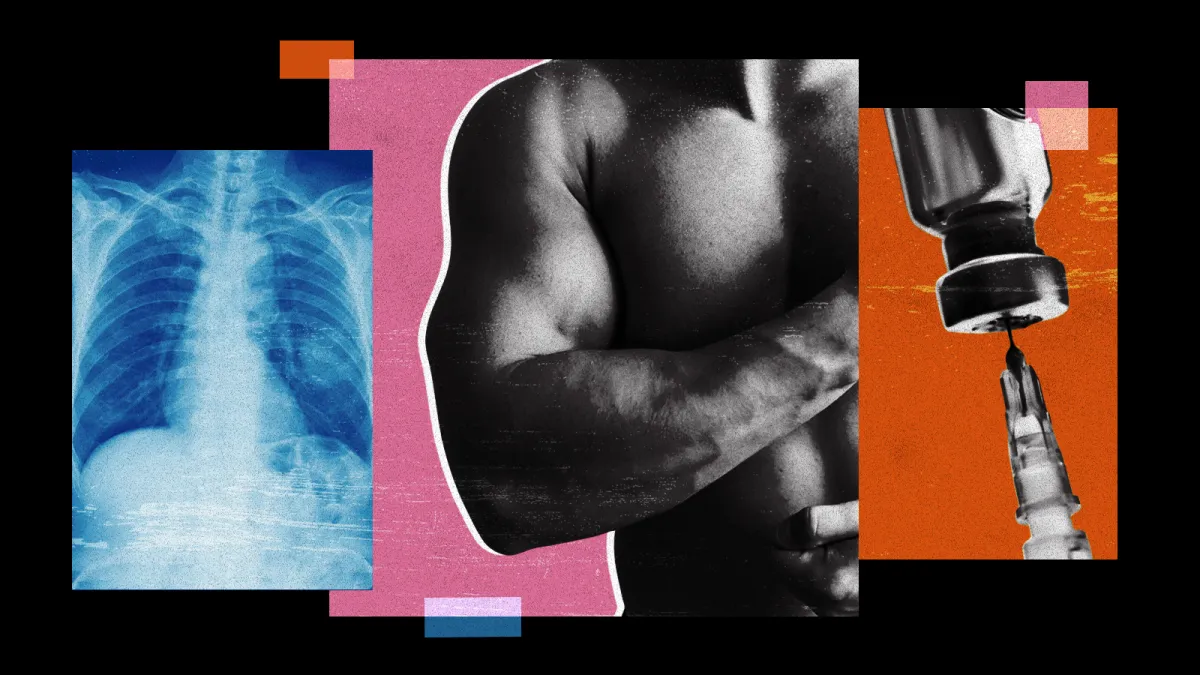
The patient, to look at him, was in the prime of his life: in his late thirties, fit and toned from hours spent in the gym.
But the scans told a different story. Growing on his liver was a malignant tumour the size of a bowling ball. The obsession that had given him his chiselled physique had handed him a death sentence. The patient — like thousands of other gymgoers in the UK — had been taking anabolic steroids.
The cancer was inoperable. There was nothing his doctors could do for him.
“His life expectancy is probably about six or seven months,” said Stephen Wigmore, regius professor of clinical surgery at the University of Edinburgh. This was not the first young man whom Wigmore, who is also the head of surgery at the Royal Infirmary of Edinburgh, had treated for liver cancer after heavy steroid use.
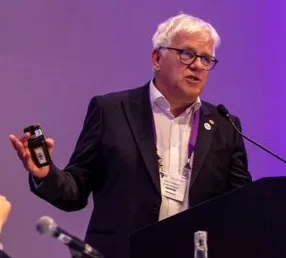 Professor Steven Wigmore
He said the illegal trade in steroids in gyms, taken by predominantly young men pursuing the ideal of a masculine body, had created a “silent killer”. And he said this was encouraged by social media and the “manosphere” — a loose collection of online influencers and chat forums pushing misogynistic views and a new idea of masculinity.
A new debate about the manosphere has arisen since the documentary maker Louis Theroux released a Netflix film about the phenomenon last month.
But Wigmore said the debate had neglected the risk of liver cancer that comes with widespread steroid use. He described the growing obsession with muscular body image among young men as “a side-effect” of toxic masculinity “allied to the cult of the manosphere”. He added: “There’s a group of people trying to drive male culture and behaviours in a particular way and this is one manifestation of that.”
He said his patients had become so obsessed with their image that they were reluctant to stop taking the drugs even when the cancer had been diagnosed and the cause identified.
In one patient, in his early thirties, Wigmore and his colleagues removed two tumours each the size of a grapefruit in a long and complex operation, saving the man’s life. “He potentially has a good outcome as long as he stays off the steroids,” the surgeon said. “But whether he will or not is uncertain.”
It is hard to tell the scale of the threat. “We are not talking about an epidemic,” Wigmore said. “This is very rare, but I’ve seen two cases in the last six months. And across the country each liver unit is seeing small numbers of young men in similar situations.
“The irony of taking drugs to make oneself more beautiful but ultimately shortening one’s life is inescapable,” he said, comparing the phenomenon to the obsession of some young women with risky cosmetic surgery such as Brazilian butt lifts.
 Louis Theroux: Inside the Manosphere brought the debate into even more householdsNETFLIX
He said most patients were oblivious to the risks. “They’re completely unaware that anabolic steroids can cause this sort of problem. I think people know about irritability and frontal balding and things like — but they don’t know about the cancer risk.”
The link between steroid use and liver cancer was first raised in the 1970s and there have been sporadic reports on the subject in the medical journals ever since. Yet the message seems to struggle to get through.
In 2019, surgeons in Cardiff reported two recent cases of body builders — one aged 28 and one 39 — who had developed huge tumours on their livers after taking steroids. The younger man had a cancerous mass removed weighing 4kg. Those surgeons, writing in the Annals of Hepato-Biliary-Pancreatic Surgery, called for a public campaign to “highlight this potentially lethal complication” of anabolic steroids.
They said the practice was widespread, citing data from 2015-16 that suggested 48 per cent of those using the Welsh clean needle and syringe provision service were doing so for performance and image enhancing drugs.
In 2019, the UK Anti-Doping agency estimated that more than a million people were using steroids, the vast majority of them male. The agency described the typical steroid abuser as a thirtysomething white-collar professional. A panel of 55 experts in 2022 estimated the number of steroid users was about 500,000.
Liver surgeons are not the only ones to have warned of the growing use of steroids. Last year, Italian cardiologists, writing in the European Heart Journal, talked of an escalating “gymdemic” that they said was caused by “the diffusion of hypertrophic ideals and steroid use into mainstream youth culture”.
They said this was risking a surge in heart problems, citing data that suggested a five-fold increase in sudden cardiac deaths among body builders globally over 15 years. “Social media promotes unrealistic body images, normalises compulsive training, and even facilitates illegal access to anabolic-androgenic steroids and supplements,” they wrote.
Wigmore said the vast majority of liver cancers developed in those with diseased livers — a result of cirrhosis caused by alcohol abuse or hepatitis or fatty liver disease. Occasionally cancer will arise in an otherwise healthy liver as a result of a mutation, but usually only among patients in their seventies or eighties.
“So to see people in their twenties, thirties, forties with primary liver cancer is really exceptionally rare,” he said. “There are a few genetic conditions which can predispose people to it. But in young men the association with anabolic steroid use is strong. Often they are slightly ashamed of talking about steroid use and when you drill down and uncover what’s been going on it turns out that often they’ve been taking drugs for several years and they are not under medical supervision.
“They have no idea what dose they’re taking — sometimes they don’t even know what drugs they are taking.”
Because the liver does not feel pain there are often no side effects until the tumours have grown extremely large. “The only thing that they can feel is the capsule of the liver being stretched. That’s the only awareness they have. And so often people can develop large tumors without ever having any symptoms until quite late. They don’t suffer from jaundice or any of the other problems that you might expect with liver failure.”
When the tumours get so large — 20cm in diameter or more — removing the tumour and saving the liver is not always possible. And patients with tumours bigger than 5cm are not eligible for a liver transplant. “They really, really have very few choices for treatment.”
Steroids are not the only drugs encouraged by the online manosphere. Last year The Sunday Times revealed a booming trade in knock-off versions of an unlicensed and unproven next-generation slimming jabs called retatrutide, which is particularly popular among gym goers. And young men are increasingly targeted for testosterone replacement therapy, which can risk infertility.
Wigmore said: “These are fit otherwise healthy young men at an early stage of their lives. And they are left with a potential lifespan measured in months rather than years.”