
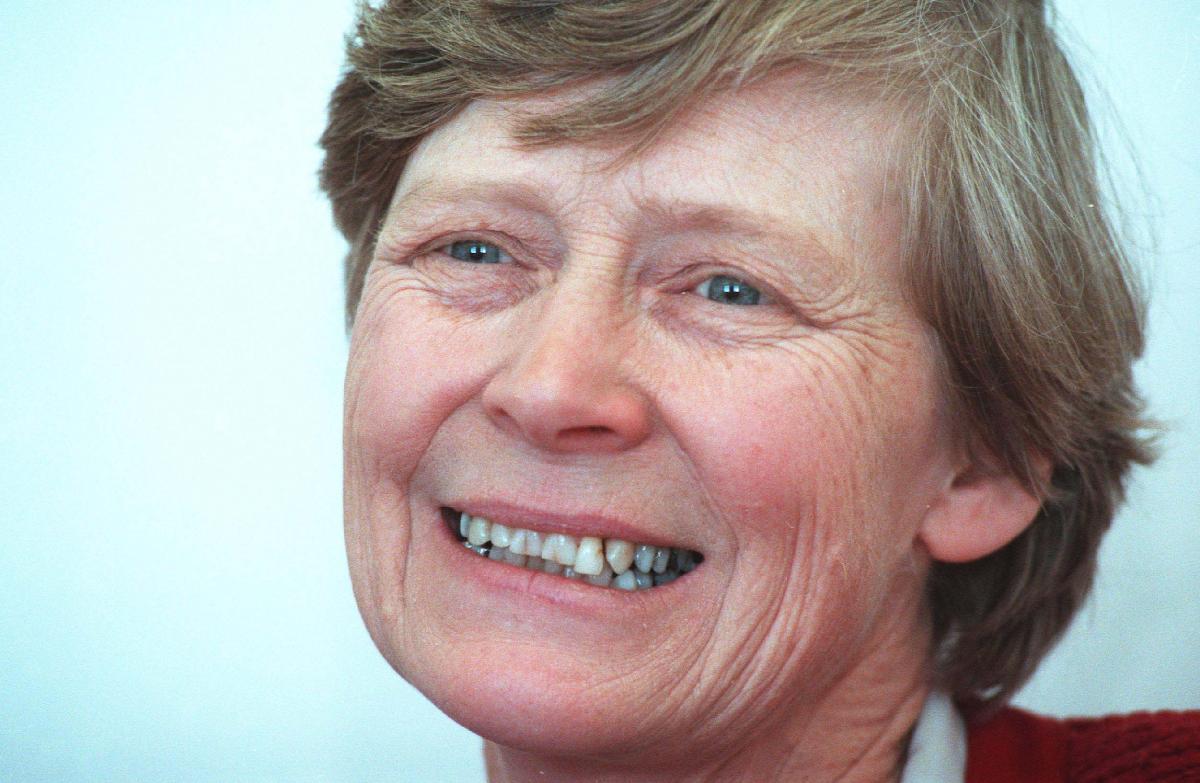
An outstanding leader in New Zealand healthcare, Dame Dr Karen Poutasi tackled grim and complex subjects.
She guided the nation’s early response to HIV/Aids and led implementation of recommendations from an inquiry into cervical cancer treatment after shocking revelations about doctors’ ethical practices.
Dame Karen, raised in Gore, was the first woman to serve as director-general of health, overseeing reform in primary care.
Her medical career had its roots in Otago — she studied at the University of Otago and became deputy medical superintendent at Dunedin Hospital.
She would later lead a review of children’s sector agencies after the murder of 5-year-old Malachi Subecz.
This identified five critical gaps that could result in a child at risk becoming ‘‘invisible’’ to the system.
Dame Karen made 14 recommendations and the government announced last year all had been accepted.
She was also the New Zealand Qualifications Authority (NZQA) chief executive for 14 years and had a series of other leadership or board roles.
A rather different role at one time was as a panellist in the Beauty and the Beast television programme hosted by Selwyn Toogood.
She was made a Dame Companion of the New Zealand Order of Merit in 2020 for services to education and the state.
Labour Party health spokeswoman Dr Ayesha Verrall, a fellow Southlander and Otago Medical School graduate, said she recognised in Dame Karen qualities that defined her career — professionalism, humility, and a no-nonsense approach to getting things done.
‘‘She instilled confidence at times of turmoil, while remaining true to the facts of any situation.’’
Dame Karen died on January 1 this year, aged 76.
Her eldest daughter, Catherine Poata-Smith, said her mother had a 20-page curriculum vitae, yet she was firmly focused on family.
‘‘She was our mum who was always there for us, any time of the day or night,’’ she said at the funeral in Wellington.
‘‘One of her greatest joys was watching her grandchildren grow and sharing stories about them.
‘‘Those of you who know Mum know fundamentally that she really was just a girl from Ranfurly who grew up in Gore.
‘‘She was consistently that person for her entire life.’’
She was born Karen Olive Davidson on July 12, 1949, in Ranfurly, the daughter of John and Gladys Enid Davidson.
She became the Gore High School head girl.
Dame Karen said in an Otago University article in 2020 she had wanted to be a veterinarian while growing up.
Her interest in medicine began before high school.
She met her future husband Samuelu Fa’apoi Poutasi ‘‘over some lab mice’’ at university and they married in 1972.
They had four children, but later divorced.
One of her lasting memories of her time at Otago was listening to the moon landing in 1969.
She gained her postgraduate diploma in public health at Otago and completed a master of business administration in 1984.
She then received a Harkness Fellowship to study at the Harvard School of Public Health.
Her next role was medical superintendent at Middlemore Hospital in Auckland.
Day-stay surgery worked well in Boston and Dame Karen and her team made it a reality at Middlemore.
She was appointed chief health officer at the Department of Health and served as director-general of health from 1995 until 2006.
Dame Karen was at the helm when district health boards were established.
She was made a Companion of the New Zealand Order of Merit in 2006 for services to health administration.
Former Public Service Commissioner Peter Hughes described her as caring, authentic and reliable — ‘‘a fine public servant, a very fine human being, a standout leader of her generation’’.
‘‘She knew how to read and manage context,’’ he said.
‘‘To lead, you have to wrangle. And wrangle Karen did very successfully.’’
The New Zealand Nurses Organisation said she sought to close health equity gaps, particularly for Māori and Pacific people.
It was relatively early in her career, in 1987, when an explosive article ran in the Metro magazine about ‘‘an unfortunate experiment’’ at National Women’s Hospital in Auckland.
Judge Dame Silvia Cartwright then identified failure to adequately treat cervical cancer in some patients and failures in doctors’ ethical practices.
As chief health officer at the Department of Health, Dame Karen was required to implement recommendations from the Cartwright inquiry.
This led to establishment of the national cervical screening programme and other outcomes included establishment of ethics committees and the office of the Health and Disability Commissioner.
Debbie Chin worked with Dame Karen for more than 30 years.
She highlighted free doctor’s visits for children under 6 came in under Dame Karen’s watch as health director-general and primary health organisations were set up.
She implemented the first national electronic immunisation register.
Mrs Chin referred to some of her most impactful later work — the 2022 review of the children’s system response to abuse.
It was set up after the murder of Malachi Subecz by his caregiver.
Dame Karen found agencies did not interact effectively and Malachi fell through safety nets.
‘‘That work has made a lasting difference to the safety of our mokopuna,’’ Mrs Chin said.
She added Dame Karen was proud of her Scottish Presbyterian heritage and adored her pets.
Dame Karen headed up NZQA from 2006 to 2020.
Various other roles included being part of the panel for the Havelock North drinking water inquiry after the 2016 outbreak of gastroenteritis, chairing the inaugural board of drinking water regulator Taumata Arowai, a stint as chairwoman of Health New Zealand Te Whatu Ora and contributing to governance of the Covid-19 vaccination programme.
Dame Karen had a sister, Robyn Dunphy and, in addition to four children, she had 10 grandchildren.