
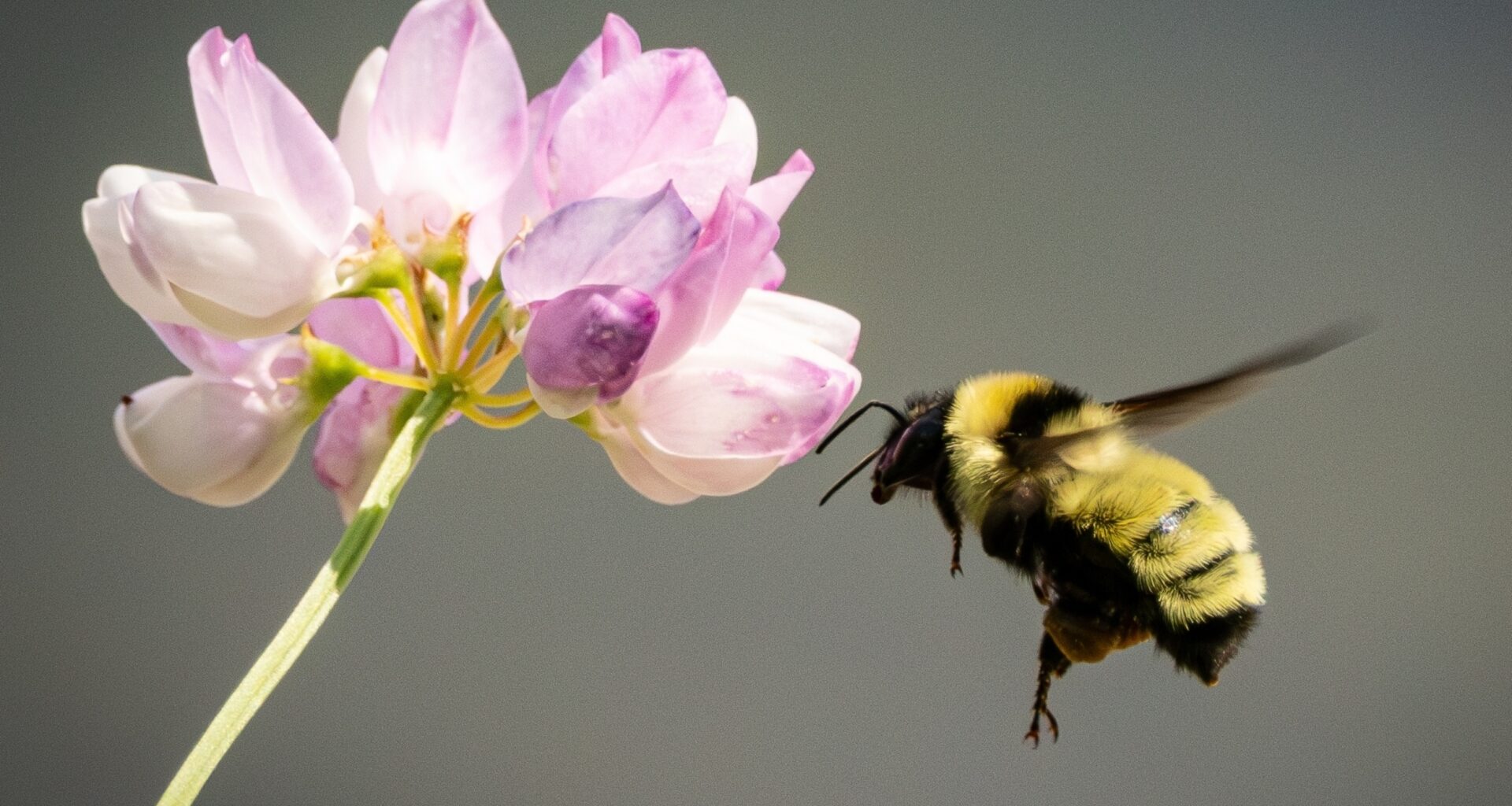
A mosquito repellent designed to make warm evenings more pleasant may be causing an invisible problem for bumblebees.
A new study suggests that even short exposure to a common insecticide can make it much harder for them to find their way back to the nest, and that could quietly put an entire colony at risk.

The research was carried out by scientists at the University of Turku and the University of Oulu in Finland. The team focused on prallethrin, a pyrethroid-based insecticide released by Thermacell devices.
What the researchers found is troubling. The substance did not appear to kill bumblebees outright after brief exposure, but it seemed to interfere with something just as important: their ability to get home.
Why getting home matters
For a worker bumblebee, getting back to the nest is not a small detail. It is the whole job.
A bee that cannot return does not bring food with it and thus cannot help feed the larvae, support the colony, or keep the nest functioning.
One missing worker may not sound dramatic, but if that happens again and again, the effect can build fast.
“For bumblebees, returning to the nest is no small matter, on the contrary, it is essential to the survival of the entire colony. If the workers cannot find their way back, the nest will not get any food,” said Olli Loukola from the University of Turku.
The issue is not just that a chemical may affect bees in some vague way. The problem is that it may disrupt one of the basic tasks their whole social system depends on.
In summer, plenty of people use these devices simply to make patios, balconies, and gardens more comfortable. Thermacell devices, in particular, have become popular because they are easy to use and seem fairly unobtrusive.
From a human point of view, they can feel like a small convenience. From a bee’s point of view, the air around them may be carrying something far less harmless.
How the study was conducted
To test what prallethrin was doing, the researchers studied 167 buff-tailed bumblebees, Bombus terrestris. The design was simple, but effective.
The bees were exposed to the insecticide using a consumer mosquito repellent device for one minute, ten minutes, or twenty minutes.
After that, they were released one kilometer away from their nest, and the researchers followed whether they managed to return over the next three days.
This is important because it gets at a more realistic problem than a standard lab toxicity test. A bee can survive exposure and still be in real trouble if its navigation is affected afterward.
Among the bees in the control group, which had not been exposed to prallethrin, 37 percent made it back to the nest. Bees exposed for one minute did not differ in a meaningful way from that group.
But longer exposure changed the picture sharply. After ten minutes of exposure, only 17 percent of the bees returned, while after twenty minutes, the number dropped to just 5 percent.
This finding suggests that once exposure lasts long enough, the bees become far more likely to lose their way.
Lost, but not dead
One of the most interesting parts of the study is what did not happen.
For the bees that did manage to return, the trip home did not take noticeably longer. That suggests the insecticide was not just making them weak, sluggish, or physically worn out.
The researchers also ran laboratory tests and found that exposure did not increase mortality. In other words, the bees were not dying in larger numbers from the short-term exposure used in the study.
At first glance, that might sound reassuring. But in some ways it makes the result more disturbing.
A dead insect is easy to count but a disoriented one is much easier to miss. If a bee stays alive but cannot find its nest, the colony still loses a worker.
“Bumblebee colonies depend on workers collecting food, so if they cannot find their way back to the nest, the colony’s ability to obtain nutrition deteriorates,” said Kimmo Kaakinen from the University of Turku.
“Over time, this can weaken the nest, reduce the number of new queens and, in the worst-case scenario, result in the death of the entire colony.”
Broader risk to pollinators
In Finland, Thermacell devices are allowed, but their use is limited to the immediate area around homes, such as yards and patios. They are not meant to be used indoors or in natural environments like forests or national parks.
Even so, the researchers say the findings raise broader questions about how safe household insecticides really are for pollinators.
“Prallethrin-based repellents are used in many countries primarily for convenience. In some situations, their use may be justified, for example, in the prevention of diseases spread by mosquitoes,” Kaakinen said.
This is not a simple argument that mosquito repellents should never be used. In places where mosquitoes spread disease, the balance may look very different.
But when these products are being used mainly to make an evening outside a little more pleasant, the trade-off starts to feel less trivial.
What seems like a minor comfort for people may carry a hidden cost for pollinators that are already facing a long list of pressures.
The study is published in the journal Biology Letters.
—–
Like what you read? Subscribe to our newsletter for engaging articles, exclusive content, and the latest updates.
Check us out on EarthSnap, a free app brought to you by Eric Ralls and Earth.com.
—–