
Sources told the Herald that, at that point, a purchase price in the region of $5m was sought, in addition to buyer capability to fund the team’s annual operating costs.
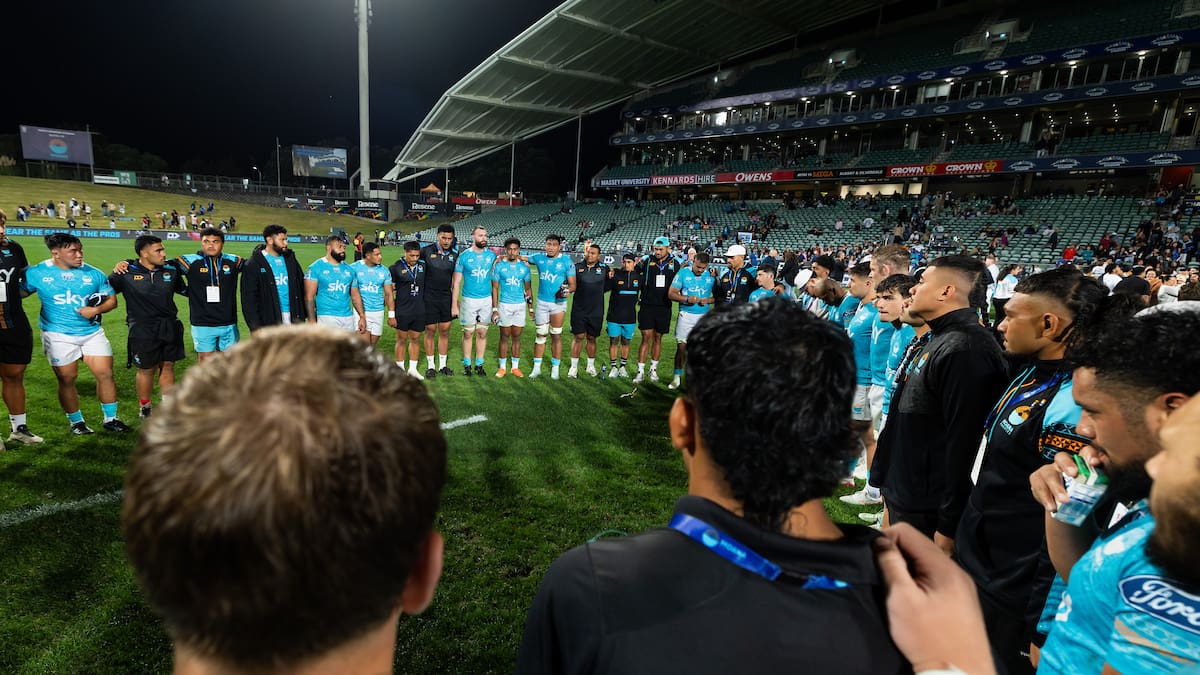
Debbie Sorensen is chief executive of Super Rugby team Moana Pasifika and its shareholder, Pasifika Medical Association. The team is to be disbanded at the end of the 2026 season. Photo / Supplied
Debbie Sorensen is CEO of Moana Pasifika and also of its shareholder, the charity Pasifika Medical Association (PMA).
Sorensen did not respond directly to questions, but a PMA spokeswoman told the Herald, “the investment process [previously undertaken by Deloitte] is confidential, so we are unable to make any comment.”
In a statement on the PMA website, Moana Pasifika chairperson, Kiki Maoate, called the decision to disband the Super Rugby franchise following the conclusion of the 2026 season a “difficult and heartbreaking decision”.
New Zealand Rugby has indicated that options for keeping the financially troubled club alive have not yet been exhausted.
However, the Government has ruled out offering the team further public funds.
Minister for Sport Mark Mitchell told the Herald that the Government “does not have a role in providing funding for professional sports franchises, and it’s important that any longer-term financial arrangements are worked through independently”.
Beyond public help, the team’s funding has come through New Zealand Rugby, World Rugby, sponsorship revenue and more modest cash streams such as ticket sales.
Minister for Sport Mark Mitchell has ruled out providing further public funds to keep Moana Pasifika afloat. Photo / RNZ, Mark Papalii
Moana Pasifika Ltd was established in 2021 and the team played its first Super Rugby Pacific season in 2022.
Public help has included the $3m Sport NZ loan and grants of $1.5m: $1m of which went to Moana Pasifika Ltd, and $500,000 of which went to its original shareholder, Moana Pasifika Charitable Trust.
The funds flowed originally from the Ministry of Foreign Affairs’ (MFAT) Pacific Sports Diplomacy programme.
MFAT also stumped up an additional $300,000 for the team’s establishment, including some $85,000 for the original business case, produced by Deloitte, which relied, optimistically, on pre-Covid figures despite its completion in the middle of the pandemic.
Moana Pasifika has struggled financially since inception. While the Sport NZ loan bears a notional interest rate of 5%, no interest has ever been paid on it: interest of $20,000 was forgiven in May 2023, further interest of $166,000 was forgiven in February 2024, and a subsequent “grace period” deferred interest of $183,000.
As the Herald has previously reported, taken together, the concessions provided to Moana on its loan have long cast repayment in doubt and raised questions about the financial footing of the team.
In March, the team missed a principal repayment obligation of $150,000 and an interest payment of $67,500.
It has previously repaid $300,000 in principal owed and, in addition, deferred a further $450,000 through a loan variation in 2024. This pushed the repayment period out to late 2034.
Moana Pasifika, to be disbanded at the end of the season, has missed principal and interest payments on a public loan, the repayment of which is now in doubt. Photo / Photosport
The Charities register shows that PMA is currently late filing its annual accounts for its last fiscal year (to June 2025). These were due at the end of December.
A spokeswoman for the Department of Internal Affairs, which regulates charities, said that while PMA has requested an extension on the filing obligation it is currently under assessment and the return “remains outstanding at this time”.
“Compliance with reporting requirements is one of the factors considered as part of Charities Services’ ongoing regulatory decision‑making,” she said.
PMA has previously emphasised that it had sufficiently deep pockets to fund the professional rugby team, despite the expiry of a significant number of its large public contracts.
Chief among these was the Whānau Ora commissioning contract to buy health and community services for Pasifika.
PMA-owned entity Pasifika Futures held the contract for over a decade; it expired in June 2025 and totalled $44m in the last year alone.
The contract allowed the charity to retain substantial management and administrative costs of up to 20% of the contract value.
A government review of PMA spending last year found no evidence the charity misspent money from the Whānau Ora contract, but it left considerable unanswered questions.
It noted four areas where Whānau Ora commissioning funds were applied “for the benefit of Moana Pasifika entities”, and it was unable to establish “whether and to what extent” spending met the Whānau Ora purposes.
The review also raised questions, ultimately unresolved, about how PMA funded a $3m loan to the team.
It highlighted a $2.9m loan from Pasifika Futures to its parent PMA, and a $3m loan made by PMA to Moana Pasifika Ltd.
Pasifika Futures said none of the loan funding was derived from Whānau Ora commissioning funds.
Stay ahead with the latest market moves, corporate updates, and economic insights by subscribing to our Business newsletter – your essential weekly round-up of all the business news you need.