


In recent years, some active fund managers have delivered returns up to half that of passive managers.
Photo: RNZ / Quin Tauetau
Some of New Zealand’s big-name fund managers are under pressure over their KiwiSaver returns.
In recent years, some active fund managers have delivered returns up to half that of passive managers.
Active managers make investment decisions that are intended to improve their funds’ outcomes, while passive managers generally track an index.
Data to the end of March that showed Milford’s balanced fund returned 5 percent over a year and 7.56 percent over three years.
Generate returned 6.8 percent over a year and 8.85 percent over three years.
Fisher Funds returned 3.7 percent over a year and 7.4 percent over three years.
In comparison, passive managers such as Simplicity returned 8.85 percent in a year and 9.42 percent a year over three years.
Kernel returned 12.09 percent in a year and 11.68 percent over three years.
Among high-growth funds, Milford returned 6.81 percent in a year and 10.31 percent a year over three years.
Generate returned 9.34 percent over a year and 13.13 percent over three years.
But Kernel returned 17.53 percent over a year and 15.61 percent a year over three years. Simplicity returned 12.97 percent in a year.
SuperLife, another passive manager, returned 13.23 in a year and 12.34 a year in three.
Morningstar earlier said Kernel’s High Growth was the best performing fund in the category over the year of 2025, returning 15.2 percent.
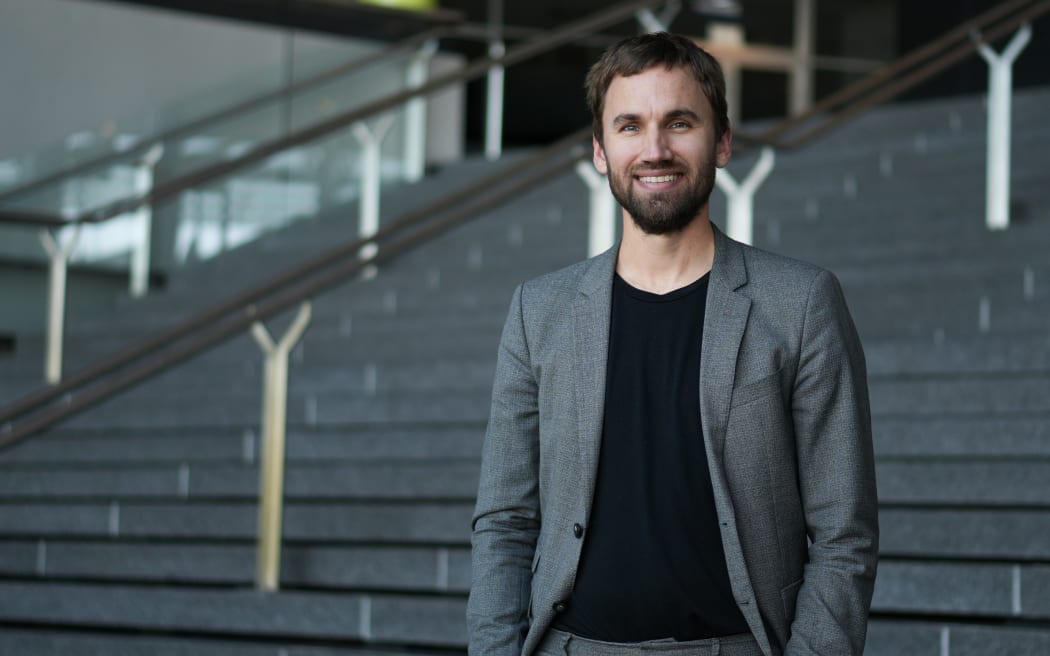
Gertjan Verdickt, University of Auckland, Business School.
Photo: University of Auckland
University of Auckland senior finance lecturer Gertjan Verdickt said people who believed in active management could argue that the results were driven by managers and investors chasing returns.
People who did well in a year would find that others copied their strategy, which made it harder to out-perform and not every strategy could handle the extra money.
He said people who did not believe in active management would argue that periods of out-performance were luck.
“It’s hard to deliver returns after taking into account costs. So, to me, the natural state of managers is a slight underperformance.”
Active managers tend to charge higher fees because of the resources involved.
Kernel founder Dean Anderson said it was challenging to outperform in the long term.
“Typically the argument has been made that in periods of high volatility or when markets are going down, that’s when active managers would shine.
“What the data has shown, particularly over the past year, is that that hasn’t been the case.”
A small number of companies have done extremely well, and if managers did not have as much exposure to them, they would have missed out on some of the returns.
If the companies had not done so well, a smaller exposure to them could have meant they did better.
He said three-quarters of stocks had underperformed the market average in the past 20 years and the index was pulled up by a small handful of names.
“The odds of picking those winners in advance are genuinely stacked against you….If you were underweight the big tech names and missed the AI run, that hurt. And with everything going on in the Middle East right now – let’s be honest, none of us know what headline or tweet is coming tomorrow that could move markets in either direction. Trying to position around that is more guesswork than strategy.”
Because a large amount of KiwiSaver is invested offshore, Anderson said it could also be hard for New Zealand managers, without the direct access to those companies, to compete.
“The argument is often made, that these managers are able to go and grill the CEOs of the companies to really understand what is happening, be it with Mainfreight or Fisher & Paykel.
“Now, that is an edge that does give you a bit more strength in terms of information to make an investment decision. But when the funds start to get so big, and we have a stock market that’s not ultimately growing in terms of new listed issuers, new listed companies, and the trading volumes aren’t growing, then it’s harder and harder as a manager to really move around the pot of money and continue to outperform.”
Milford head of KiwiSaver Murray Harris.
Photo: Supplied / Milford
Milford Asset Management head of KiwiSaver Murray Harris said passive funds had been driven recently by a very small concentrated group of stocks.
“As you know, we actively manage risk which means we don’t manage our client’s money in highly concentrated ways such as this, we diversify and spread risk which is why our short-term performance is lagging in these conditions.
“That said, our approach has been honed from managing our clients’ money through the investment cycle – this three-year period doesn’t capture a complete investment cycle where you would expect corrections, where our risk management approach has, in the past, stood out and provided those market leading long-term returns.
This three-year period started off the back of a meaningful correction in 2022 and early 2023 and doesn’t include that period. We won’t get every stock pick right, but we always seek to provide strong long-term returns over the full investment cycle and we encourage investors to think long-term with their investing as well.”
Generate investment specialist Greg Smith said short-term performance could move around a lot and was often driven by market conditions or positioning at a specific point in time.
“Over the past few months in particular, there’s been a lot happening globally, with some headwinds for growth-focused managers, which can influence shorter-term returns. That’s why we don’t think one or even three-year results are the most meaningful way to assess a manager.
“We are proud that Generate has been among the most consistent top KiwiSaver performers over the past decade.”
He said what mattered was long-term performance over a full market cycle, so consistency over a decade or more was a better indicator of a manager’s ability to deliver outcomes.
“When you look at the data over that timeframe, the picture is quite different. Analysis of Morningstar’s 10-year KiwiSaver quarterly rankings shows that sustained outperformance is actually very rare and concentrated among a small number of managers. Generate has been among the most consistent top performers over the past decade, appearing in the top three 97 percent of the time.
“That consistency is important because it reflects a repeatable investment process rather than short-term market timing. It’s also reinforced by Disclose Register data, where over the past eight years Generate is amongst a small group of active managers which have delivered compound annual growth rates of around 10 percent per annum after fees, well ahead of the broader peer group, when looking at their most popular growth funds.”
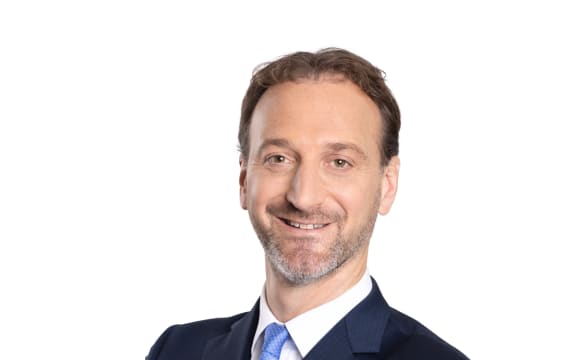
Fisher Funds chief investment officer Ashley Gardyne.
Photo: Supplied / Fisher Funds
At Fisher Funds, Ashley Gardyne chief investment officer said performance had been weaker in the short term for active mangers.
“Periods like this can occur in actively managed portfolios and have often been followed by stronger performance as market conditions shift.
“We continue to actively review our portfolios, reassess our investment assumptions, and adjust positioning where the long-term outlook has changed. We know investors pay close attention to how their investments are performing, and we believe our portfolios are well placed to deliver strong outcomes in the years ahead.
“Our job is to stay disciplined, look through short-term noise, and build portfolios of quality companies that we believe will deliver strong long-term outcomes for clients.”
Sign up for Money with Susan Edmunds, a weekly newsletter covering all the things that affect how we make, spend and invest money.