
New Zealand has been in closed-door discussions with the US on the supply of critical minerals but no deal has been signed off.
Photo: GNZ Science
From electronics to batteries to weapons, the critical minerals to be found in New Zealand are in hot demand.
Harry Potter star Daniel Radcliffe made the periodic table sexy when he recited it in rap form on The Graham Norton Show but now there’s a new line-up of the elements that’s even sexier and in hot demand around the world.
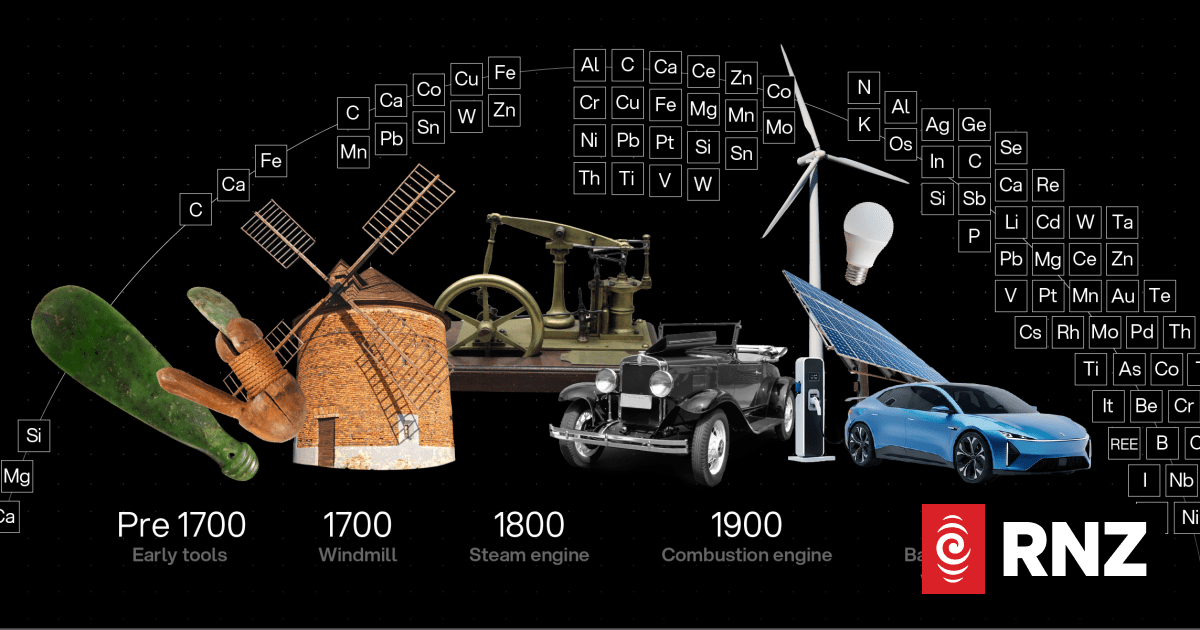
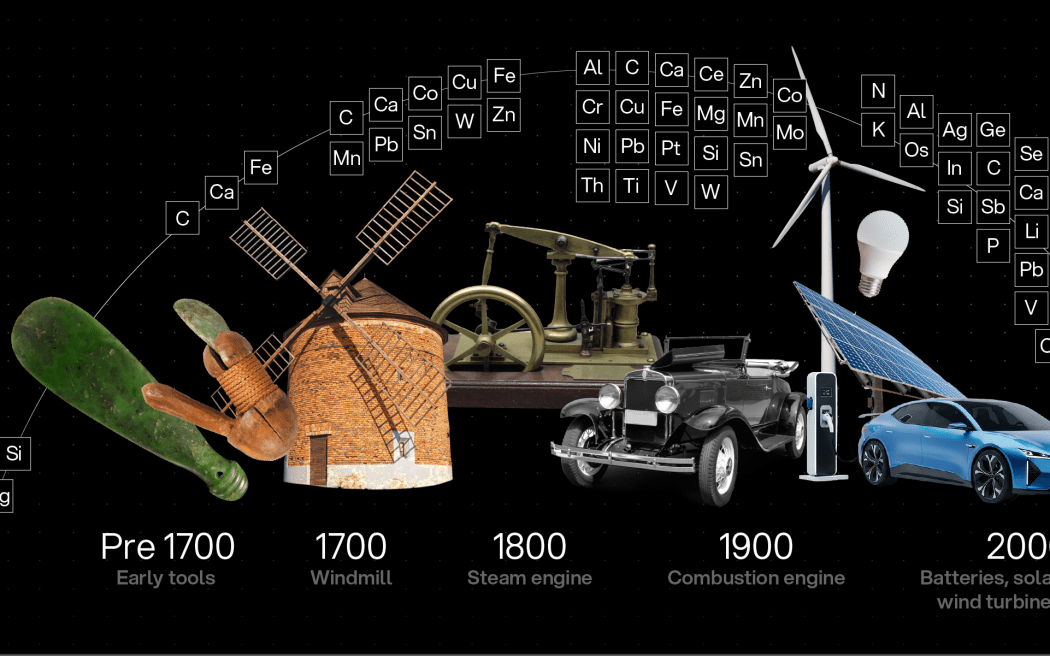
They are critical minerals, and New Zealand has its own list of 37 – from aggregate to zirconium, described as “funky little rocks” that are essential in building electronics, including military technology.
How we extract them and who we sell them to is so sensitive that secretive New Zealand-US talks were going on for months before anyone knew about them.
New Zealand has been in closed-door discussions with the US on the supply of critical minerals but unlike Australia, we have not signed a deal. The US is keen to lock in supplies from other countries to tackle China’s dominance in the critical minerals market.
The nitty-gritty of the US New Zealand negotiations is still secret after a government ministry had to backtrack on information it had accidentally sent to the NZ Herald under the Official Information Act.
The Ministry of Business Innovation and Employment asked chief political reporter Jamie Ensor to destroy some details it had sent him, saying they should have been withheld.
“Most importantly, there was one reason that they gave that if this information was released or part of this information was released it could prejudice the security, defence or international relations of New Zealand,” he says.
Ensor tells The Detail that he’s seen the sensitive documents and the Herald did consider publishing them.
“We can’t legally put out what that information was but what we can say is that it provided some commentary on recent deals that the United States has made with other countries as well as a potential area of cooperation between New Zealand and the United States.”
No framework has been finalised, says Ensor, but he’s seen parts of a draft deal that include supplies of raw and processed critical minerals to help the commercial and defence industries of both countries.
He says the government and officials may be wary of the timing of any announcement, given the minerals may be used in defence technologies.
“Would it be good to announce that, while the focus of many people is on the ongoing conflict in Iran?” he asks.
Greenpeace says mining companies claim they are extracting the minerals for green tech.
“Yet many of the minerals listed by the USA as “essential” have military applications, including vanadium which is found off the coast of Taranaki,” the organisation says in a statement.
Earth Sciences, which has published maps showing where the critical minerals are found here, says vanadium is used by NZ Steel for steel manufacture. It says it is needed for “strong, lightweight, and durable materials in construction, aerospace, and defence”.
Ensor says the documents he’s seen from January highlight uncertainty or risks for New Zealand. However talks have continued and in latest developments US secretary of state Marco Rubio and foreign minister Winston Peters both confirmed they’d discussed cooperation on critical minerals when they met early this month.
New Zealand officials have also been talking to mining companies and other stakeholders about potential investments, says Ensor.
Geologist turned Newsroom political reporter Fox Meyer says the critical minerals are needed for building a range of electronics from medical devices and autonomous weapons systems to batteries.
“They’re minerals not rocks and actually these are elements. Elements build minerals, minerals build rocks, like Legos.”
Many are found during the extraction of gold but have been ignored because they have not been of use, until recently.
“When you’re mining gold odds are that you are also accidentally mining a critical mineral and if you can add in a step in your processing of that gold to also strip out the critical mineral, that’s money that’s just been left on the table.”
They are highly prized but volatile, says Meyer.
“Go Google the price histories of vanadium for example. Look at how volatile that is and compare it to something like gold, which granted does go up and down as well but not nearly to the same degree as something like vanadium or lithium even.
“It’s a question of how secure the miner can feel and the reason people haven’t been doing this historically is because there’s another player in this, China, who has been doing this for years and is able to keep the prices of these things low enough that it doesn’t make sense to mine it somewhere else.”
Check out how to listen to and follow The Detail here.
You can also stay up-to-date by liking us on Facebook or following us on X.