
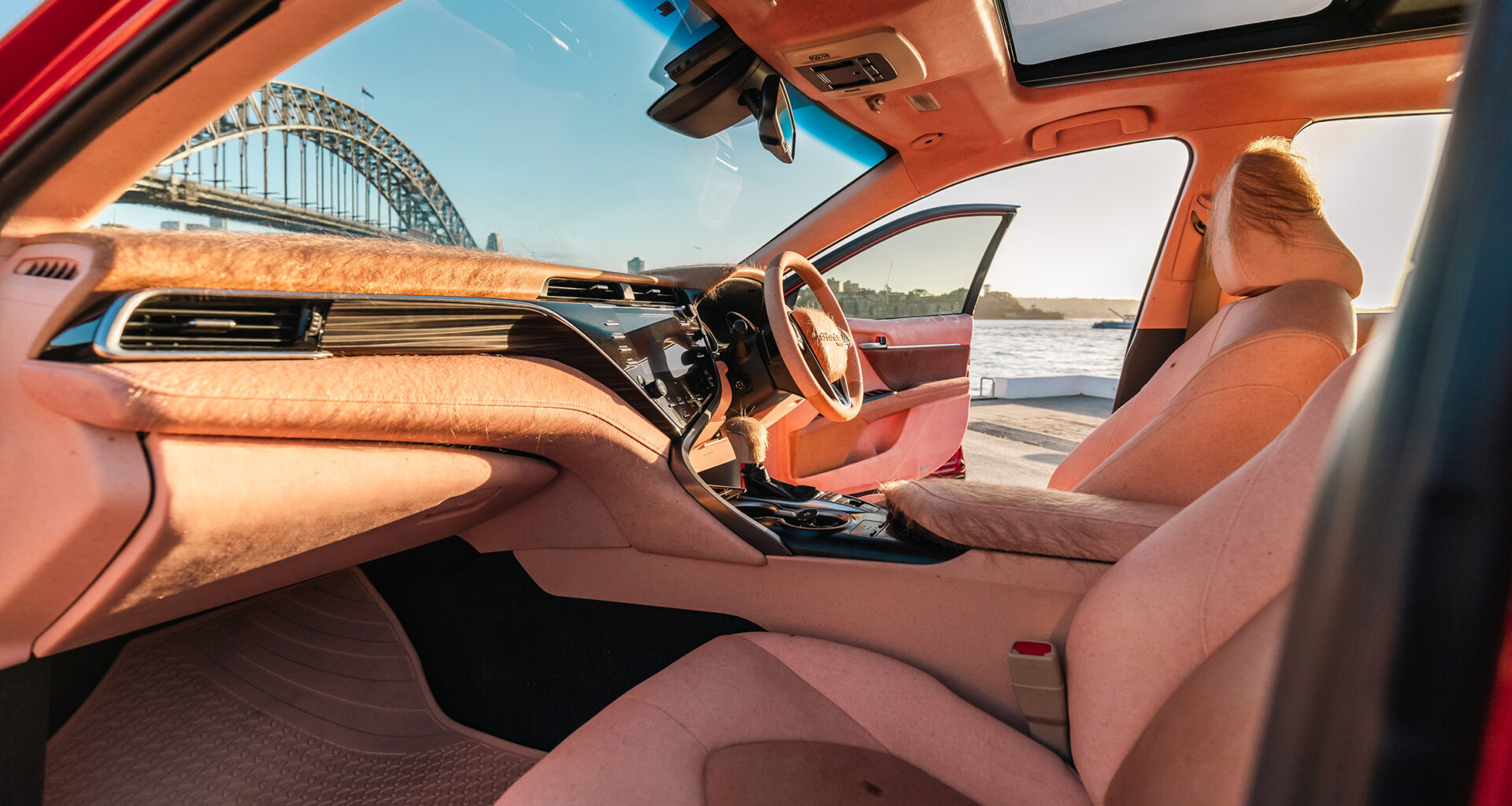
Australian creative agency TBWA\Eleven and creature effects designers Odd Studio have upholstered a car in human-like skin that reddens in the sun, aiming to raise awareness about the dangers of UV exposure while driving.
Designed to look uncannily realistic, the Sunburnt Car features a dashboard, interior panelling and seats crafted from silicone “skin” with colour-changing ink that responds to ultraviolet light.
Hair, freckles and moles – some of them suspiciously shaped as if they could be cancerous – add disconcerting levels of detail.
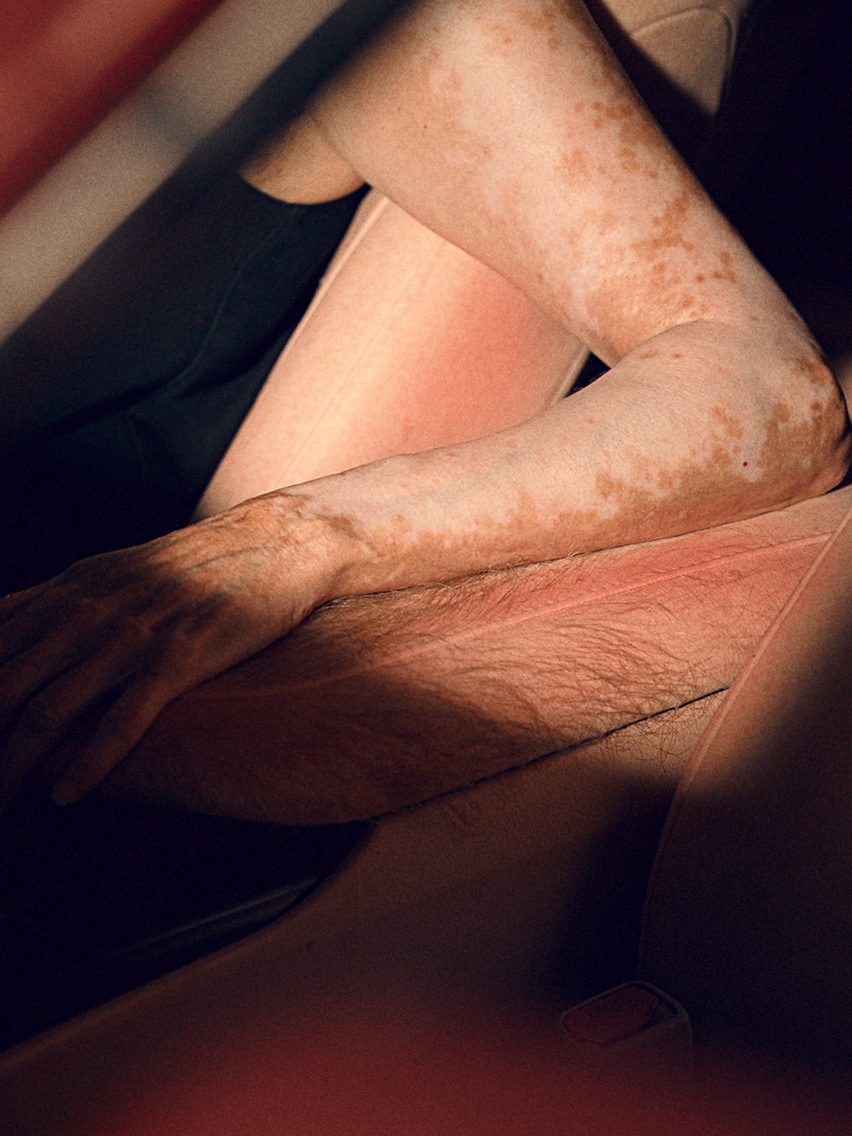 The Sunburnt Car is upholstered in human-like silicon skin
TBWA\Eleven created the Sunburnt Car as part of a campaign for national car servicing company mycar Tyre & Auto, which every year does a “people first” initiative tackling an issue facing Australian drivers.
This year, TBWA\Eleven worked with them to choose in-car sun safety – a significant public health issue in Australia, which has the highest skin cancer rates in the world due to its high UV radiation levels and fair-skinned population.
“The idea was to make the invisible UV risk we take every day visible in an unignorable – and frankly, unhinged – way,” said TBWA creative director Simon Hayes.
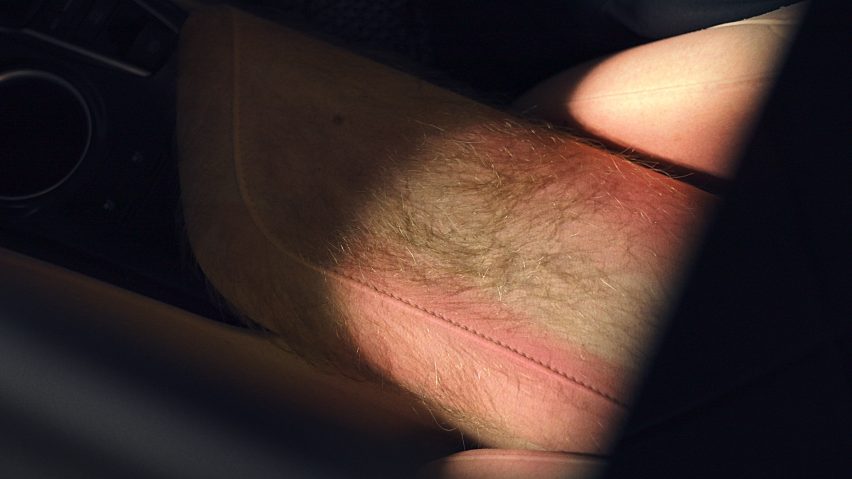 The silicon is coated with photochromic inks that change colour in the sun
While sun safety awareness outdoors is high among Australians, this typically does not extend to car trips.
According to research conducted as part of the campaign, 70 per cent of Australians believe they are protected from the sun while in the car, even though car windows do not block all UV rays.
According to Hayes, once the team at TBWA/Eleven had the idea to reupholster a car in realistic skin, they couldn’t get it out of their heads.
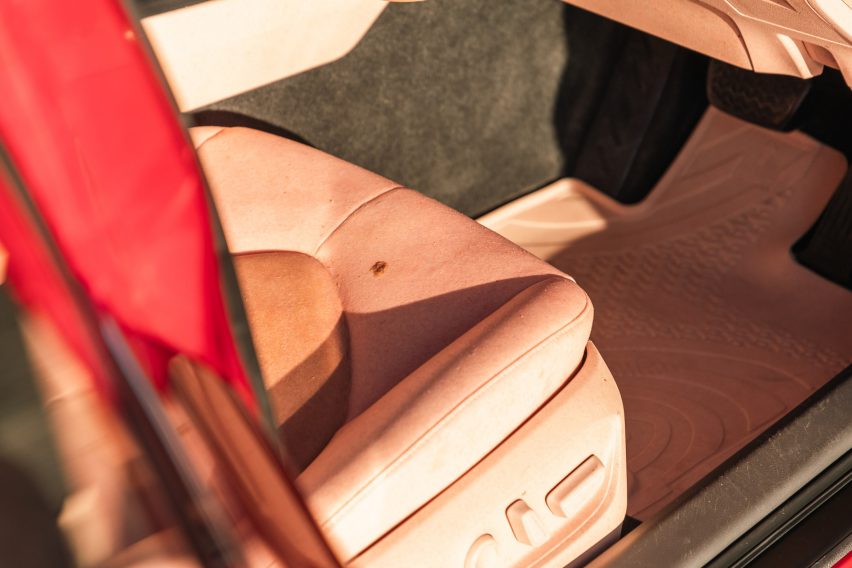 The car is intended to raise awareness about skin cancer risk
“We knew we had a tight media budget, so we needed something unignorable to make our public health education message hit, but then also be shared,” Hayes told Dezeen.
“[This was] an idea striking, unsettling and powerful enough to prompt real action. And to bring it to life for maximum impact, it had to be crafted to the hyperreal max.”

Pangolin seating changes colour like a mood ring in response to touch
To execute this vision, they worked with Odd Studio, a Sydney-based prosthetic makeup and creature effects company. The studio has been emulating skin for years, in creations that have won it an Oscar and a Bafta, but TBWA/Eleven’s insistence that it had to change colour as a human’s would when exposed to UV was a new requirement.
Burns and reconstructive surgeon Joanneke Maitz was brought in to advise on scientific accuracy and guided the team in understanding how different skin tones respond to UV, using the Fitzpatrick Scale as a reference.
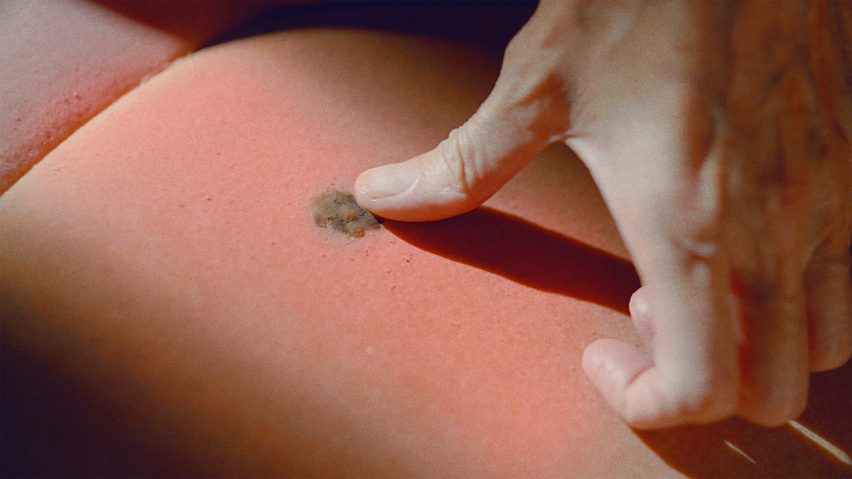 Each mole and freckle was individually applied
To achieve the colour change, the studio coated the silicon skin in photochromic pigments – UV-activated colour-changing inks – and tested variations over several weeks.
They carefully glued and stitched the silicon into the interior, and added each freckle, mole and strand of hair individually.
“We knew that this almost uncomfortable level of realism would create a visceral response and make the car undeniably shareable,” said TBWA creative director Archana Murugaser.
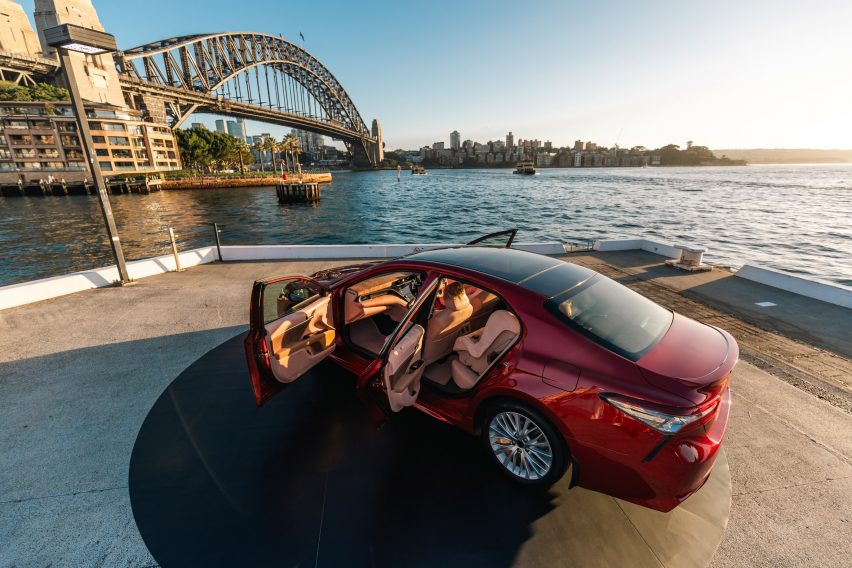 The car was displayed at Sydney’s Circular Quay
“A more sanitised approach simply wouldn’t have delivered the same impact or earned attention for such an important public health message,” Murugaser added.
TBWA/Eleven describes the Sunburnt Car as combining behavioural insight, practical utility and technical craft.
The car was installed in the public piazza of Sydney’s Circular Quay, and the agency says it will continue to be displayed for educational purposes after the campaign is over.
It is not revealing the make or model of the car used, but say it is one of the most popular on Australian roads and was bought second-hand.
Photochromic inks are commonly used in glasses for transition lenses or in passports as a security feature, but are occasionally put to more novel uses.
Slovak design studio Crafting Plastics used it in a 2023 Milan design week installation called Sensbiom 2, also aimed at increasing awareness around sun exposure.
In 2018, skincare brand L’Oréal launched a wearable UV sensor to help people protect themselves against skin cancer.