

Relief not imminent, as investment channeled toward high-bandwidth AI memory
 Visitors explore LG Electronics’ newly released 2026 Gram Pro AI laptops at the company’s D5 flagship store in Seoul on Jan. 26. (LG Electronics)
Samsung Electronics and LG Electronics have each raised notebook prices twice in three months, pushing some models up roughly 50 percent on-year as a worsening memory chip shortage inflates costs across consumer devices.
Samsung’s Galaxy Book 6 Pro (32GB RAM, 1TB SSD, 16-inch) now retails at 4.19 million won ($2,847) in South Korea. A comparable model sold for 2.81 million won last year. The company had already set January launch prices well above the previous generation before adding a second increase this month of up to 900,000 won. Its top-end Galaxy Book 6 Ultra starts at 5.53 million won.
LG followed the same pattern. The 2026 Gram Pro 16-inch (16GB, 512GB SSD) launched in January at 3.14 million won, about 500,000 won above its predecessor, then climbed another 400,000 won in April to 3.54 million won.
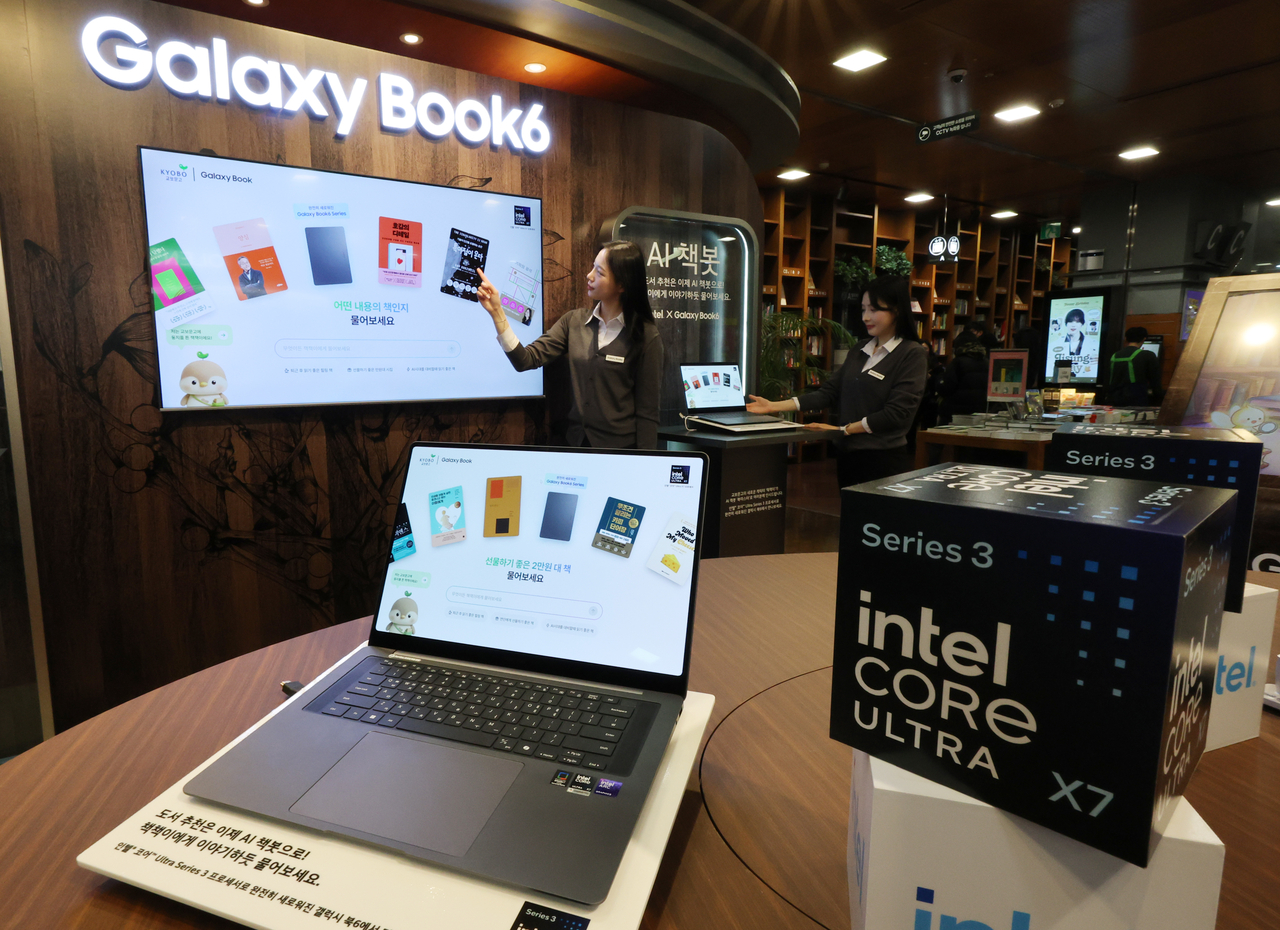 A Samsung Galaxy Book 6 laptop is showcased at Kyobo Bookstore in Gangnam, Seoul, on Jan. 28. (Newsis)
Smartphones are absorbing similar pressure. Samsung’s Galaxy S26 series launched in March at roughly 100,000 won more per model domestically and $100 more in the United States for the base and Plus variants. The company also retroactively raised prices on its Galaxy Z Fold7 and Flip7 foldables in April.
Memory historically accounted for 10 to 15 percent of a smartphone’s material costs, according to TrendForce. That share has now surged to 30 to 40 percent. For notebooks, TrendForce projects that combined memory and CPU price increases could push a mainstream $900 laptop’s retail price up nearly 40 percent if brands maintain current margins.
Underlying component prices explain why. Omdia data shows 16GB DDR5 module prices rising from $72.20 in Q4 2025 to $119.20 in Q1 2026, with a forecast of $167.60 by Q4. Counterpoint Research separately reported that broad memory prices jumped 80 to 90 percent quarter-on-quarter in early 2026.
Relief is not imminent. Samsung, SK Hynix and Micron, which together hold about 90 percent of global DRAM production, have channeled investment toward high-bandwidth memory for AI applications at the expense of the general-purpose chips used in phones and PCs.
Counterpoint estimates that closing the gap would require 12 percent annual production growth through 2027, but current plans amount to 7.5 percent.
Some buyers are not waiting. Global PC shipments rose 3.2 percent year-on-year to 64.8 million units in Q1 as consumers and businesses purchased ahead of further increases, according to Omdia.
“This is future demand being pulled forward,” an industry official said. “Once prices cross psychological thresholds in the second half, we are likely to see spending contract across both private and public sectors.”
By Moon Joon-hyun (mjh@heraldcorp.com)