
Separately, Meridian Energy said it had seen a 30% increase in customers actively using its Zero Charging Network and a 20% increase in charging sessions.
Petrol prices were up 18.6% in March while diesel prices increased 42.6%, according to Stats NZ data.
The increases were the largest for both fuel types since Stats NZ started publishing monthly price movements for vehicle fuels in July 2011.
Total EV registrations surged to 4600 in March – three times the monthly average.
Registrations of BEVs – battery-only powered vehicles – increased to 66% of registrations from a 50% year-to-date average.
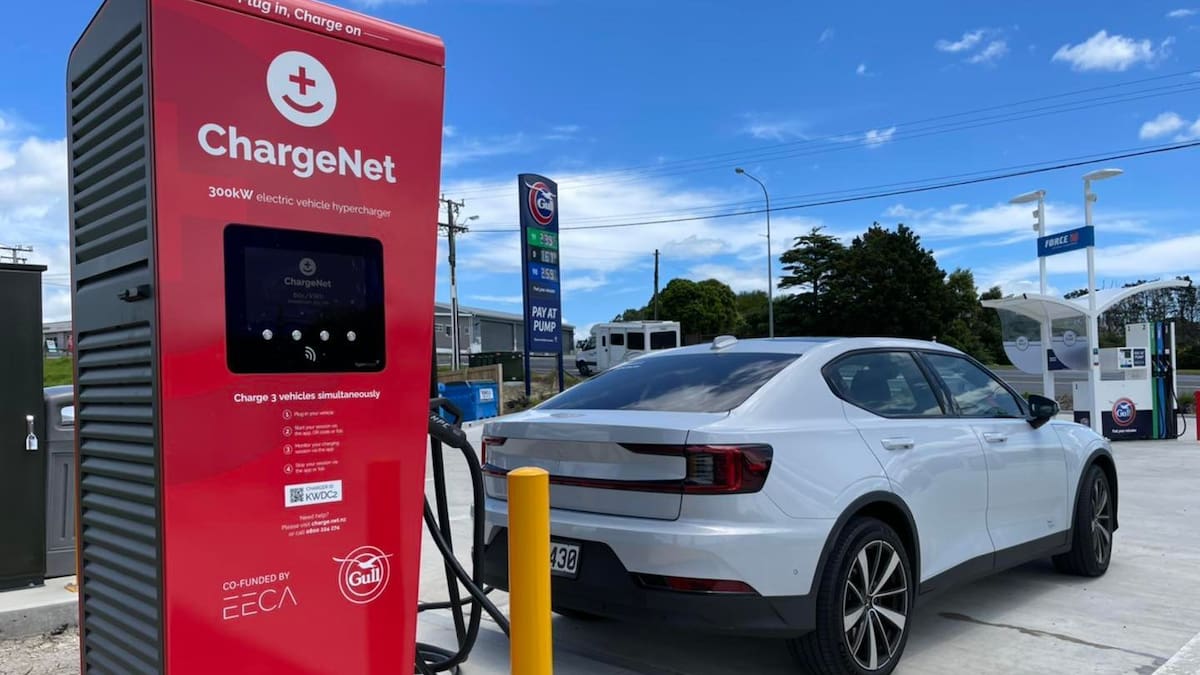
ChargeNet said it attracted 1700 new users in March, up 58% year-on-year or 45% month-on-month, the strongest acquisition month since January 2024.
“With the fuel supply constraints that we’re all experiencing, I think a lot of Kiwis are driving their EVs more, and many people have taken the opportunity to step into an EV,” ChargeNet chief executive Danusia Wypych said.
“Normally, we’d see a Christmas high season with everybody out on the roads for the holiday, and then we’d expect things to calm down quite a bit, through March and April, with a bump around Easter,” she told the Herald.
“For us, we are seeing new users – new people who haven’t had accounts – coming out and not only driving the EV but charging in public for the first time.”
ChargeNet has 150,000 registered customers.
It has 525 DC charging points, 300 charging stations and almost 100 AC charging points.
Customers typically face far higher charges at a charging station than they would do at home, reflecting the high cost – $200,000 to $1 million – of building a station.
“We need to pay for the infrastructure to support public charging so there is a price differential on that,” Wypych said.
“What we do know is that people don’t use public charging necessarily for all of their charging.
“There’s a few people who need to use public charging all of the time, but most people can charge at home.
“It’s really typical for our users to do 80% of their charging at home and use us for the top-up or use us when they’re on holiday.”
Wypych said prospective EV owners now face an improved selection of second-hand EVs.
“There are some fantastic vehicles coming to market at what we call price parity – the same price as a petrol car or a diesel van – and they are good for small New Zealand businesses,” she said.
ChargeNet has been investing in stations over the last 10 years.
Over the next four years, it is looking at putting in 1700 more points.
“In terms of EV adoption, I’m seeing some very positive things from car manufacturers in terms of their commitment to bring vehicles into the market,” she said.
Wypych said New Zealand could learn from the Australian and UK example where vehicle leasing is more common for everyday drivers.
Meridian principal product manager Tim Calder said the conversation around EVs was beginning to turn.
“Concerns once centred on charging availability, affordability and range anxiety, but those issues are being addressed and now it’s the reliability of petrol supply that’s being questioned,” Calder said.
“With more chargers than ever before, more range and much more awareness, many people are now appreciating that an EV may be perfect for their needs,” he said.
There are already more than 400 charge points in Meridian’s charging network and the company is planning for another 900 fast-charge points over the next three years.
For EV owners who do their charging at home, a typical overnight charge costs just a few dollars, he said.
“Even when road user charges are factored in, EVs are significantly cheaper to run than petrol vehicles for most drivers, alongside lower servicing and maintenance costs,” Calder said.
Jamie Gray is an Auckland-based journalist, covering the financial markets, the primary sector and energy. He joined the Herald in 2011.
Stay ahead with the latest market moves, corporate updates, and economic insights by subscribing to our Business newsletter – your essential weekly round-up of all the business news you need.
.