
By Tuesday morning, however, he had not arrived on any of the flights into Wellington. It appears he had decided to stay put for this “longstanding appointment” that for some reason had been scheduled at a similar time to the standing Tuesday morning caucus meeting, one of the most important engagements for a whip.
Smith also put out a statement commenting on a story that broke in the Herald on Friday that he had sought a meeting with the Prime Minister to communicate Luxon’s flagging support in caucus. Luxon did not respond to that request and the meeting never took place.
The story was attributed to four sources, including multiple MPs.
National deputy leader Nicola Willis says only the scrutineers of the confidence vote know the actual outcome. Photo / Mark Mitchell
The statement came after days in which Smith would neither confirm nor deny the story and during which Luxon claimed not to know about the episode, while also saying it was not true.
On Tuesday, Smith said he “did not contact the Prime Minister or his office seeking a meeting”.
This got heads scratching.
Why issue a half-denial after days of refusing to comment? And can it really be true that Smith, hours after confirming he was trying to fly to Wellington, discovered he had a longstanding personal commitment (potentially in a different island – Smith represents the South Island electorate of Kaikōura).
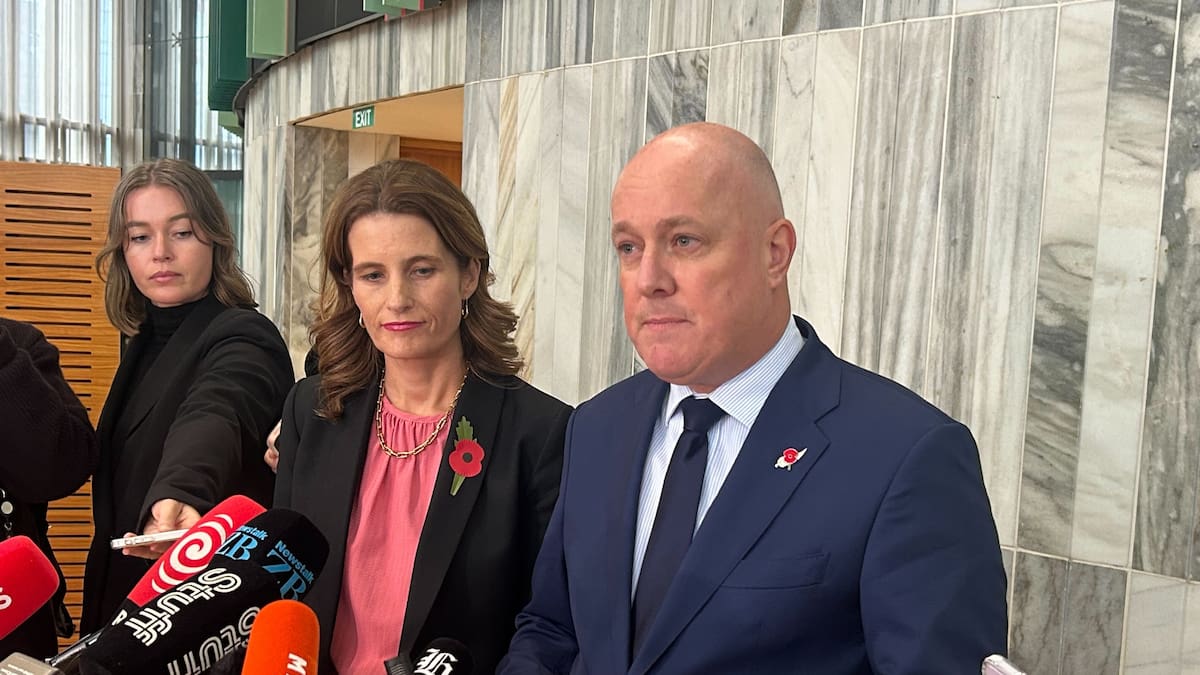
There are other questions. On the tiles, Finance Minister Nicola Willis reiterated the longstanding National Party position that only the scrutineers of the vote (usually the whips) know the actual outcome. This means no one should know whether Luxon won the vote unanimously or by a single vote.
Yet in the House, Luxon affirmed he had the unanimous support of caucus members. The Herald has good reason to believe this isn’t the case.
What is going on?
National MPs seem frightened.
Publicly, MPs including big beasts like Luxon himself, Simeon Brown, Simon Watts and Chris Bishop claim to have heard nothing about Smith’s efforts and disunity.
And publicly there have been great shows of support for Luxon. Bishop told media he voted in favour of Luxon during the confidence motion (he had been speculated as a potential contender to replace the National Party leader).
He also used patsy supplementary questions to come to Luxon’s aid during Question Time, a well-known way of publicly demonstrating support for someone.
He’s not the only one. MPs are practically skipping around Parliament proclaiming their loyalty to the leader, including those like Katie Nimon and Vanessa Weenink who are likely to lose their seats and disappear from Parliament on current polling.
What is being said in public is not the same as what is being said in private.
Can the National Party continue to sustain this kind of double life? Already, the mask seems to be slipping. Tim van de Molen, when asked about rumours he had authored a letter potentially expressing a loss of confidence in Luxon’s leadership, failed to deny the rumour.
Luxon’s combative tactics have quietened the doubters today.
Prime Minister Christopher Luxon has the public backing of senior minister Chris Bishop. Photo / Michael Craig
Allies to the Prime Minister appear to have been driving the allegation that van de Molen, Joseph Mooney, Barbara Kuriger, Andrew Bayly and Sam Uffindell are behind the leaking (a similar list circulated online weeks ago).
It’s a baller tactic and may quiet dissent for now, but Luxon is likely to know those names only scratch the surface of dissent. Outing those five simply means a handful of MPs now have nothing to lose should instability resurface.
Currently, all 49 MPs are saying they’re behind the Prime Minister (although some are not saying whether they voted for him in the confidence vote). There’s reason to wonder whether this unity will survive for long. Forty-nine MPs is a lot of people to keep in line, particularly when National’s polling continues to suffer.
Someone, probably multiple people, are likely to break ranks again – especially if polling doesn’t improve.
And it’s the polling that is really the problem. Pollster David Farrer, whose Curia does polling for National, published an average of recent polls showing the party averaging a very low 29.6% (but returning to power).
Luxon’s personal polling is incredibly low, too. The 16% notched up in the TVNZ-Verian poll on Sunday is one of the worst performances by a sitting Prime Minister. A sitting Prime Minister who scored lower was Jim Bolger, who, in the year before being rolled, scored 15%, 13%, 8%, then 7%.
Everyone else, who survived, scored over 20%. Other sitting prime ministers to poll below 20% in office were David Lange, who polled 18%, 14%, 15%, 16% and 17% before being rolled and only surpassed 20% in a poll published days before he resigned, and Geoffrey Palmer.
Luxon’s personal polling is heading towards the death zone. It’s miles away from the likes of Helen Clark, Sir John Key and Dame Jacinda Ardern, who regularly polled in the 30s, 40s, and 50s.
Though not quite in the dreaded single digits, it’s heading there. He is certainly closer to the likes of Opposition leaders Phil Goff and David Cunliffe, who both peaked at 14%, or Simon Bridges, who peaked at 14%, than he is to the likes of Ardern or Key, who left office on 29% and 36% respectively.
This is a massive issue for Luxon and his leadership will be under strain until the polling improves, not just from MPs who want his job but from those who will lose their jobs if he doesn’t do a better one.
It’s certainly not been lost on anyone in Parliament that Luxon, a famously outcomes and accountability-driven leader, seems so relaxed about his own.
The confidence vote will calm things this week. It may well put things to bed for a few months. The Budget goes to Cabinet later in April, usually, and in May it will be delivered and most analysts expect rolling a Prime Minister during Budget month would cause as much damage as it would solve.
But if the polling continues to suffer, then unity will, too.
It may be unprecedented for a sitting Prime Minister to call an unscheduled confidence motion in themselves under these circumstances in New Zealand.
Internationally, however, these rarely end well. Australian Prime Minister Malcolm Turnbull called a confidence vote in himself and won. Days later, he was gone.
British prime ministers Boris Johnson and Theresa May faced confidence motions in their leadership. Johnson was gone a month later. May lasted six months.
Luxon is far from being out of the woods.