
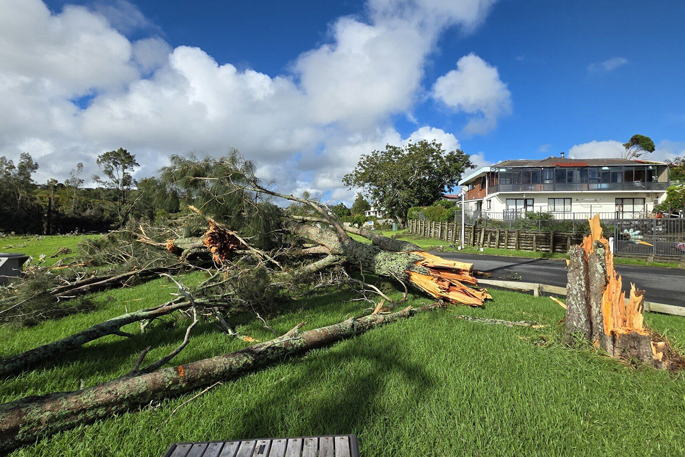
MetService says Tauranga has been hit by one of the first confirmed tornadoes of the year, with one or more striking early on Sunday.
New Zealand only has about 10 to 12 a year.
They’re usually brief and smaller than those overseas – but can still unleash violent winds and serious local damage.
But what exactly are they?
Tornadoes are rapidly rotating columns of air that extend upward into deep storm clouds known as cumulonimbus clouds.
MetService meteorologist John Law said these are the same clouds responsible for thunderstorms and hail.
Most thunderstorms – and therefore most tornadoes – are near the coast.
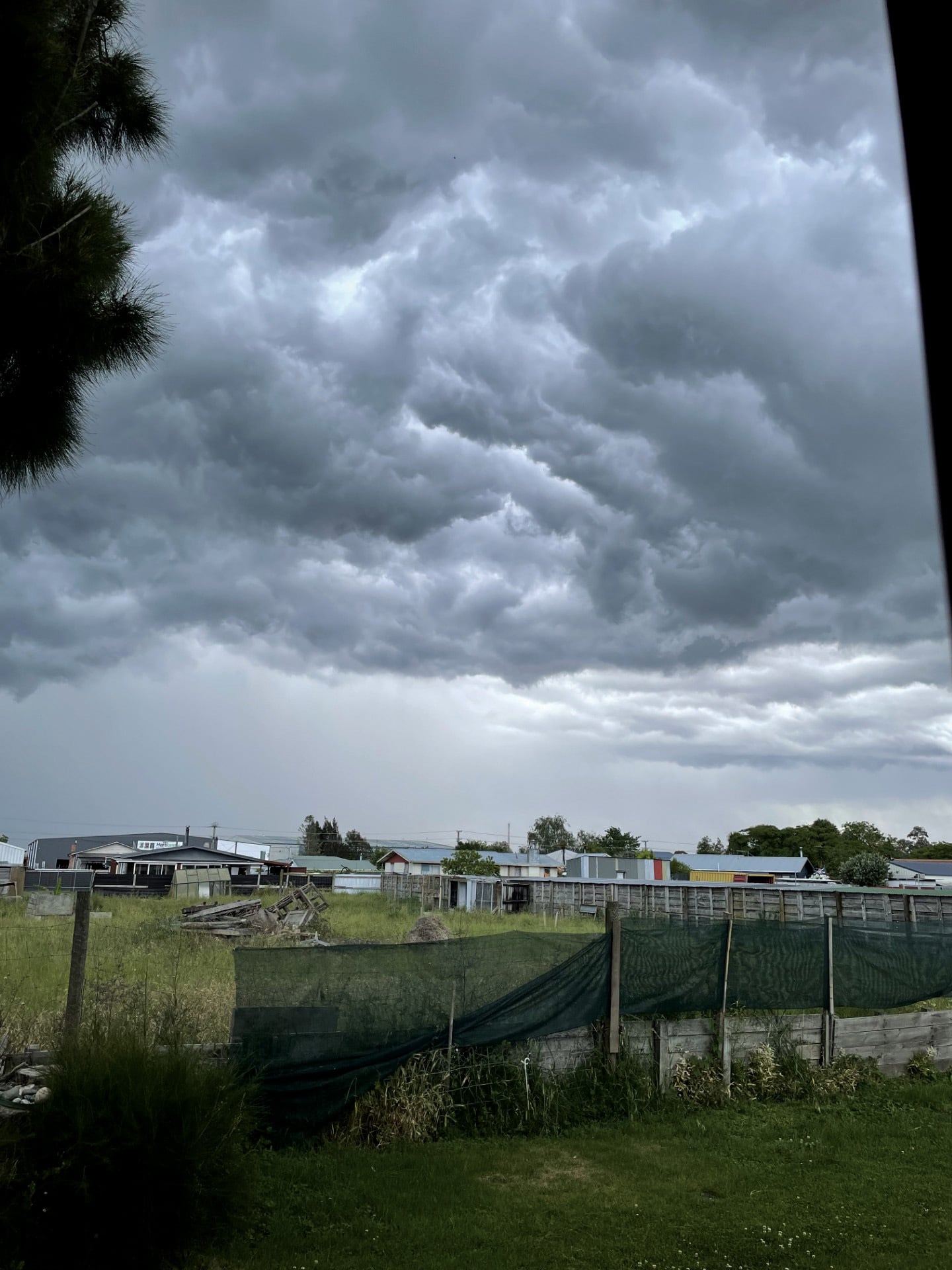
Thunderstorm clouds at Whakatu, Hawke’s Bay. Photo / Supplied
Western coastal areas of the North and South Islands are particularly vulnerable, as coastal influences can help generate rotational movement where winds converge.
“Tornadoes in New Zealand are generally much smaller in scale than the large, destructive tornadoes seen in places like the United States,” Law said.
“However, despite being short‑lived and affecting relatively narrow areas, they can still produce violent winds and cause significant damage, as we saw in Tauranga over the weekend.”
Their small size makes New Zealand tornadoes difficult to detect using radar or satellite imagery.

Maungatapu resident Hotu Frew’s home was damaged when a tornado – or possibly tornadoes – touched down in Tauranga from about 1.30am on Sunday. Photo / Rosalie Liddle Crawford
Meteorologists often rely on witnesses’ and post‑event damage assessments to confirm their occurrence.
“Tornadoes are usually associated with thunderstorms and sudden gusty winds,” Law said.
“If people see a funnel cloud or hear thunder nearby, the safest option is to get inside immediately.”
Their highly localised nature makes forecasting tornadoes challenging.
Instead, forecasters focus on identifying weather conditions that are favourable for their formation, similar to how thunderstorms are forecast.
If there is a significant threat, the risk is highlighted in the daily Thunderstorm Outlook | MetService.
Recent Bay of Plenty tornadoes
April 2026: One or more tornadoes struck from about 1.30am as a thunderstorm moved over Tauranga. Damage was reported in Ōtūmoetai, the CBD, Maungatapu and Welcome Bay.
October 2025: An afternoon tornado damaged several properties in Awakeri.
April 2023: A “violent” tornado in Katikati caused $100,000 damage to a kiwifruit orchard.
February 2023: A tornado damaged homes and cut power to about 2000 properties at Waihī Beach.
June 2020: A tornado ripped through Papamoa sending roof tiles, trampolines, and roadworks signs flying and bringing down fences.
Annabel Reid is a multimedia journalist for the Bay of Plenty Times and Rotorua Daily Post, based in Rotorua. Originally from Hawke’s Bay, she has a Bachelor of Communications from the University of Canterbury.