
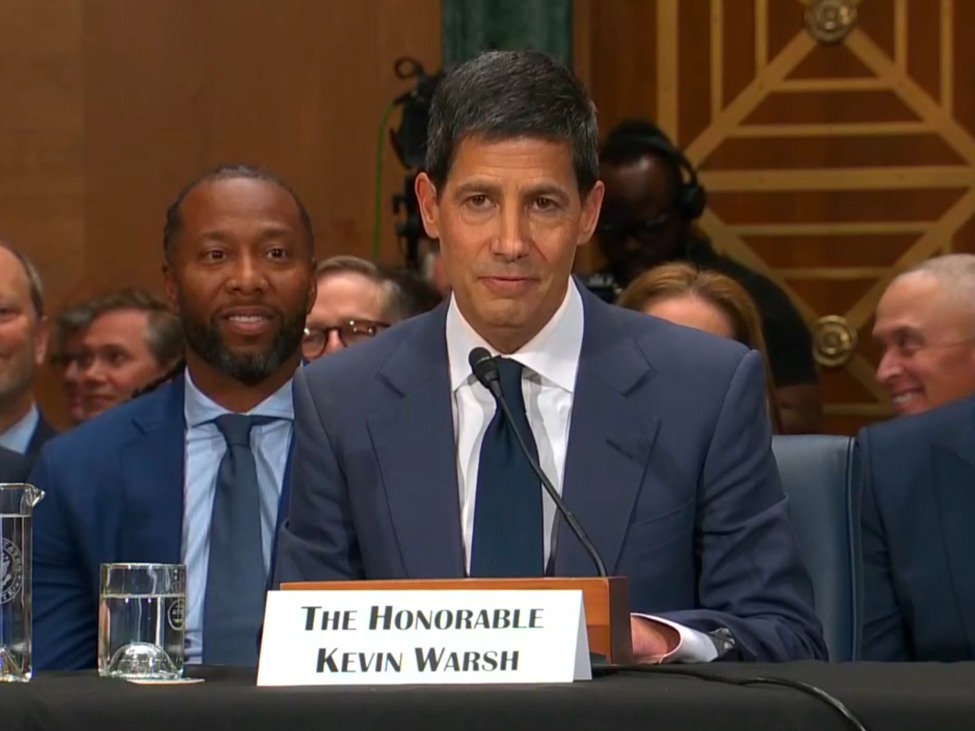
We are still dealing with the legacy of the policy errors in 2021 and 2022 Once you let inflation take hold, it’s harder to bring downWe need fundamental policy reforms to fix inflationInflation is less severe but Americans are still feeling itSays he wants a new inflation frameworkWe need new toolsWe need new communication Mentions forward guidance, forecasts and dot plotSays Fed should wait until meetings as forecasts hurt decision makingTrump never asked me to commit to any interest rate decision, nor would IOne of the first projects at the Fed would be to review Fed data on inflationPrior experience at the Fed will allow me to hit the ground runningThe Fed needs robust reformThe Fed must stick to its knittingEconomy close to full employment nowWe’re going to need to find a way to make the Fed’s balance sheet smaller
Trump Fed nominee Kevin Warsh was getting grilled about his independence by Senator Warren, who asked him if Trump won the 2020 election. Warsh responded: “This body certified that election.” He was asked a few times and never answered. He was also asked if there was a single part of Trump’s economic policy that he disagreed with and didn’t answer.
And somehow gold is down $75 to $4744 today.
For background on Kevin Warsh, here’s the quick version.
He’s not a new face. Warsh sat on the Federal Reserve Board of Governors from February 2006 to March 2011 — sworn in by Dick Cheney at age 35, the youngest governor in the Fed’s history. Before that it was Morgan Stanley M&A, then a stint in the Bush 43 White House as executive secretary of the National Economic Council. Stanford undergrad, Harvard Law. Central casting, as Trump might say.
But it’s the Governor years that matter here, because that’s the résumé he’s running on — and the one Elizabeth Warren is running against.
Warsh was Ben Bernanke’s guy on Wall Street. Full stop. He was the Fed’s liaison to the banks when everything broke in 2008, which means his fingerprints are on just about every major crisis-era decision: the Bear Stearns fire sale to JPMorgan, the AIG bailout, Lehman, and the emergency conversion of Goldman and Morgan Stanley into bank holding companies. That last one is awkward given Morgan Stanley wrote his paycheck before Washington did.
Supporters call that battle-tested. Markets have long given him credit as a steady hand who earned his stripes in the trenches. Critics — and Warren has the receipts queued up — point to his July 2007 testimony that subprime didn’t pose systemic risk, and a pattern of protecting the big banks at taxpayer expense.
The other thing to remember: he dissented against QE2 in 2010. The $600 billion Treasury buy was a bridge too far for him, and he walked a few months later. He’s spent the decade since arguing the Fed’s balance sheet is bloated, its communications are too loud, and the institution has drifted out of its lane.