
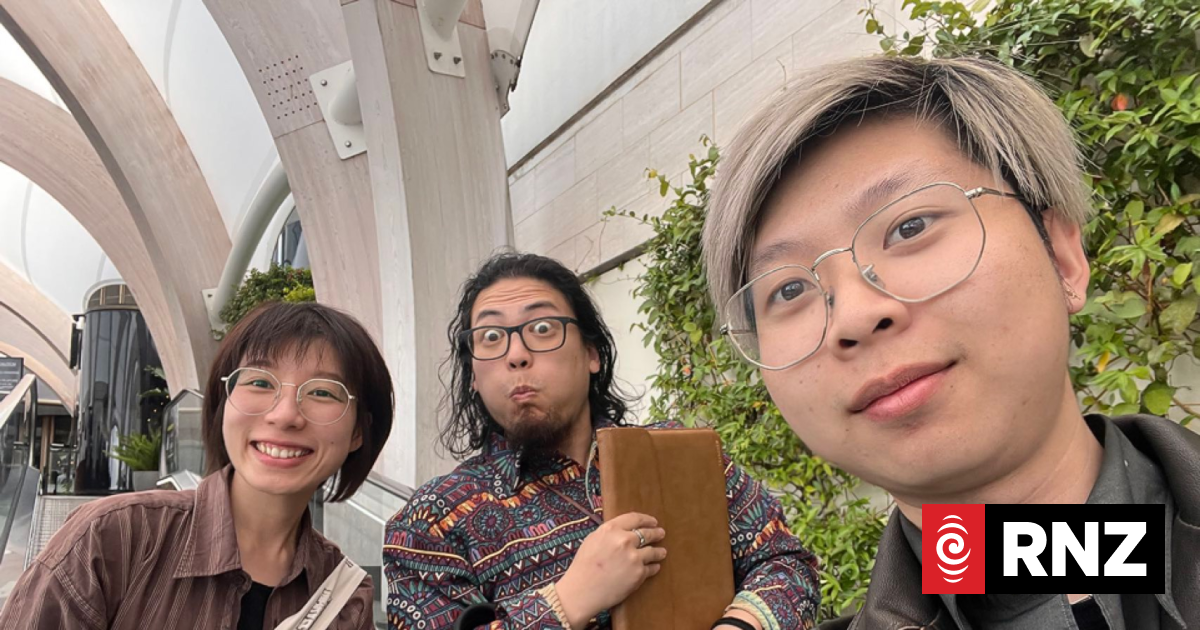
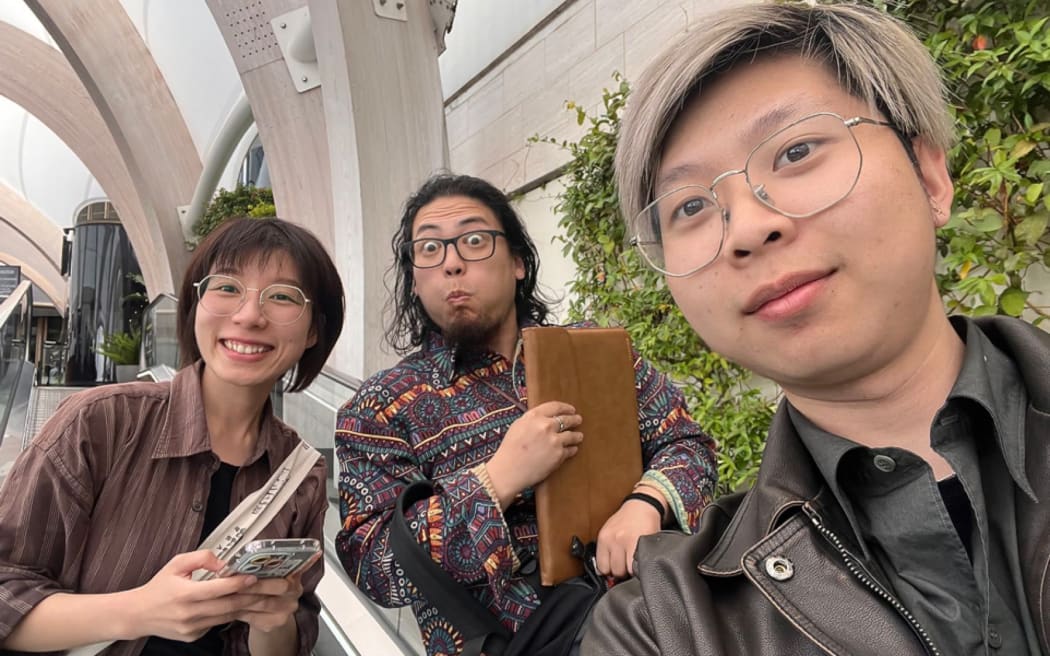
From left to right: Shijia Chen, Sam Gao and Jacky Zheng
Photo: Supplied
The recent release of a music video for the title track of mandopop star Jay Chou’s 16th studio album, Children of the Sun, has reinforced the attention to detail Wētā Workshop puts into its projects, drawing attention to a trio of Chinese creatives working behind the scenes.
Led by Sam Gao, the creative media department at Wētā Workshop was tasked with translating ideas into visual language in Chou’s new work.
Senior creative director Gao said being able to work at the internationally renowned studio was like a “dream coming true”.
Growing up in Jilin province in northern China, Gao enjoyed arts and drawing as a child but was told to put the hobby on hold and focus on academic studies in his intermediate years.
“But I really enjoyed drawing, and I drew things all over my exam papers and my desk,” Gao said. “Later on, my family had no choice but to compromise and let me study arts.”
After graduating from Beijing Film Academy in 2010, Gao worked in China for a few years at a film concept design and collectables studio before joining Wētā Workshop as a sculptor in 2014, becoming its first full-time artist from China.
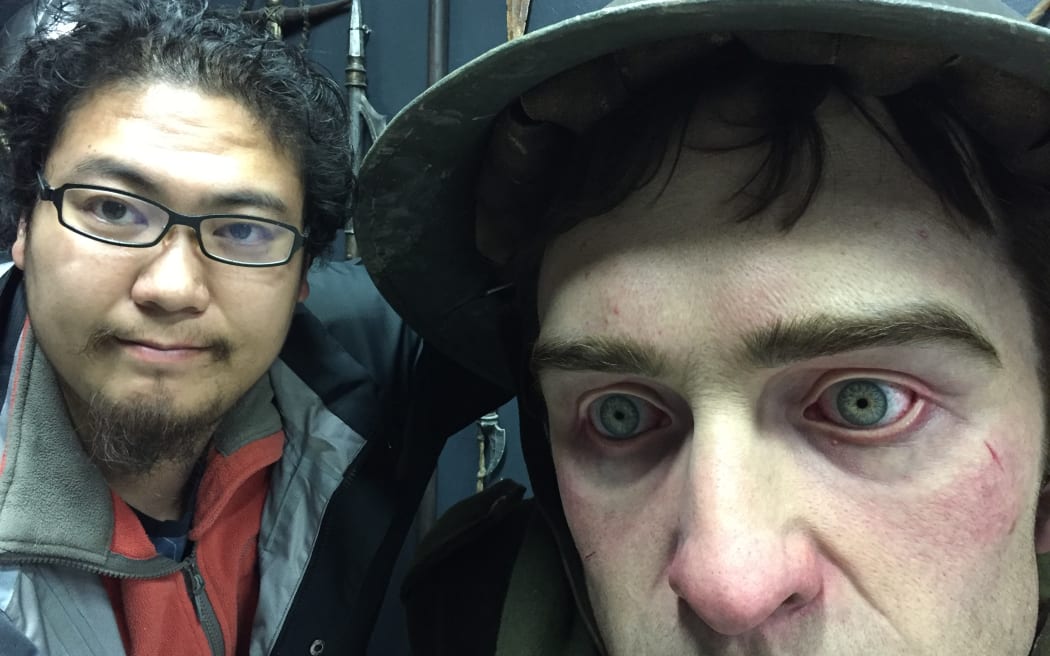
Sam Gao and the Cecil Malthus sculpture at Te Papa’s award-winning exhibition Gallipoli: The Scale of Our War.
Photo: Supplied
He was asked to work on what was eventually to become the award-winning exhibition Gallipoli: The Scale of Our War.
Gao ended up handcrafting the last of the eight sculptures at the Te Papa exhibition showing serviceman Cecil Malthus in a muddy shell hole.
“It’s a sculpture of 2.4 times human size,” Gao said.
“Just the head alone is over 1-metre tall. This project was a huge challenge for me as I’d never taken on something so complex before.
“The other challenge was that my English was very poor. I spoke very little English when I first joined.”
But Sir Richard Taylor, co-founder and creative lead of Wētā Workshop, and the wider team supported Gao through the job, which was eventually recognised by the museum as well as a wider audience, he said.

A behind the scenes image of mandopop star Jay Chou from the “Children of the Sun” music video.
Photo: Supplied
Gao has also been involved in the second and third Avatar movies, contributing to the design and sculpting of the Naʼvi people’s weapons, tools, clothes and ornaments.
“[It was] a project that offered vast creative freedom with no boundaries,” he said.
“I really liked anime, video games and The Lord of the Rings movies when I was young,” he said.
“I watched the first Avatar movie when I was in university and so being able to be involved in the second and third movies is like a dream come true. It gives me a strong sense of satisfaction.”
After taking on various roles across multiple projects, Gao eventually became a senior creative director at Wētā Workshop, establishing the creative media department in 2023.
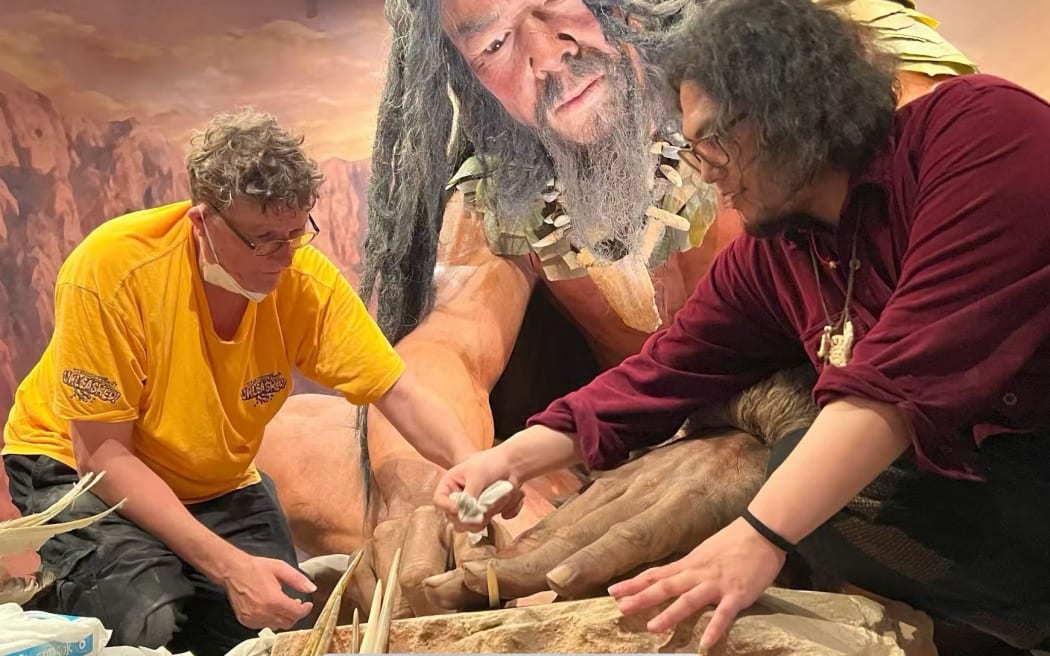
Sam Gao (right) works at the Traditional Chinese Medicine Cultural Experience Center in China with Sir Richard Taylor.
Photo: Supplied
His ties to China’s creative industries also expanded the scope of cooperation between the two countries, for example working with Tencent Games as well as Chinese science fiction blockbuster The Wandering Earth.
Before Children of the Sun, Gao and his team worked with Chou on a metaverse project called JVerse four years ago.
Wētā Workshop also worked with the Traditional Chinese Medicine Cultural Experience Center, which opened last year in Zhuhai, Guangdong province, with Sir Richard as the creative lead and Gao as art director.
The project has been nominated for Experience of the Year at the World Experience Awards in London.
“We hope to bring international standards and quality to projects in China,” he said. “The Traditional Chinese Medicine museum is one example.”
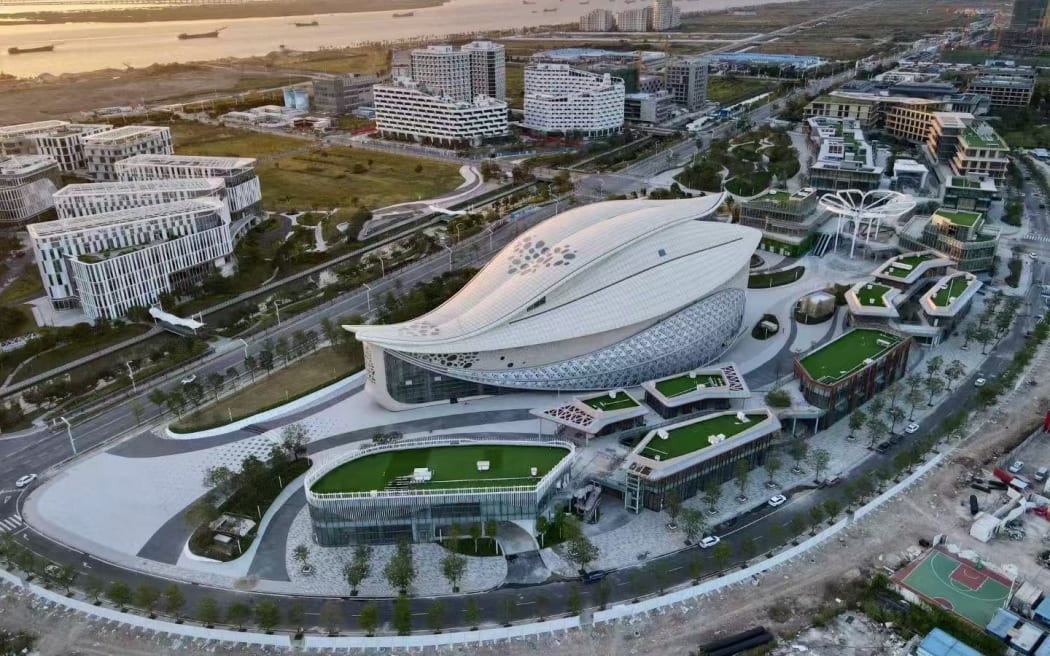
The Traditional Chinese Medicine Cultural Experience Center in Zhuhai, Guangdong
Photo: Supplied
Gao said Taylor is a charismatic leader who is hard-working, hands-on and generous in sharing expertise and experience.
“New Zealand is a small country,” Gao said.
“However, it has won so many Academy Awards. Richard himself has got five, been knighted and helped create some of the world’s most iconic films.
“There must be a reason for that and I think a big part of it comes from his personal spirit and charisma.
“Through collaboration with China, I believe we can showcase his spirit and charisma to our partners – whether through him directly, or through Chinese people like me. In a way, that is even more valuable than expertise and experience.”
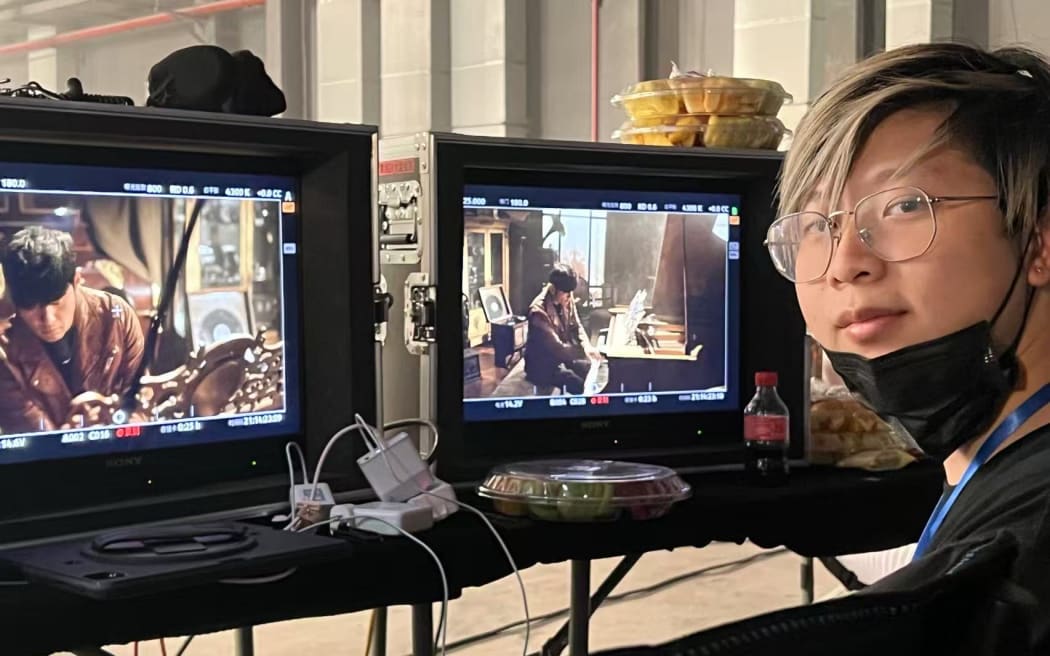
Jacky Zheng works on metaverse project JVerse
Photo: Supplied
The universal language of creativity
Jacky Zheng, an art director in the same department as Gao, said he was also living his dream.
Zheng moved to New Zealand at the age of 6 with his parents from Fujian province, travelling back to China frequently for education and vacations.
“Art was a natural way of expressing my thoughts and ideas,” he said.
“I wasn’t very good at languages when I was a kid because I was growing up in both countries in New Zealand and China.
“So, the only common language that remained between the different countries was through pictures.
“You don’t need to learn new languages. You can draw something and express your thoughts that way.”
He said when he watched The Lord of the Rings and other fantasy movies, he felt as if that kind of world was real.
“I thought those [worlds] existed and that sense of creating something that is fantastical, fictional through screen media was something that greatly inspired me as a kid,” he said.
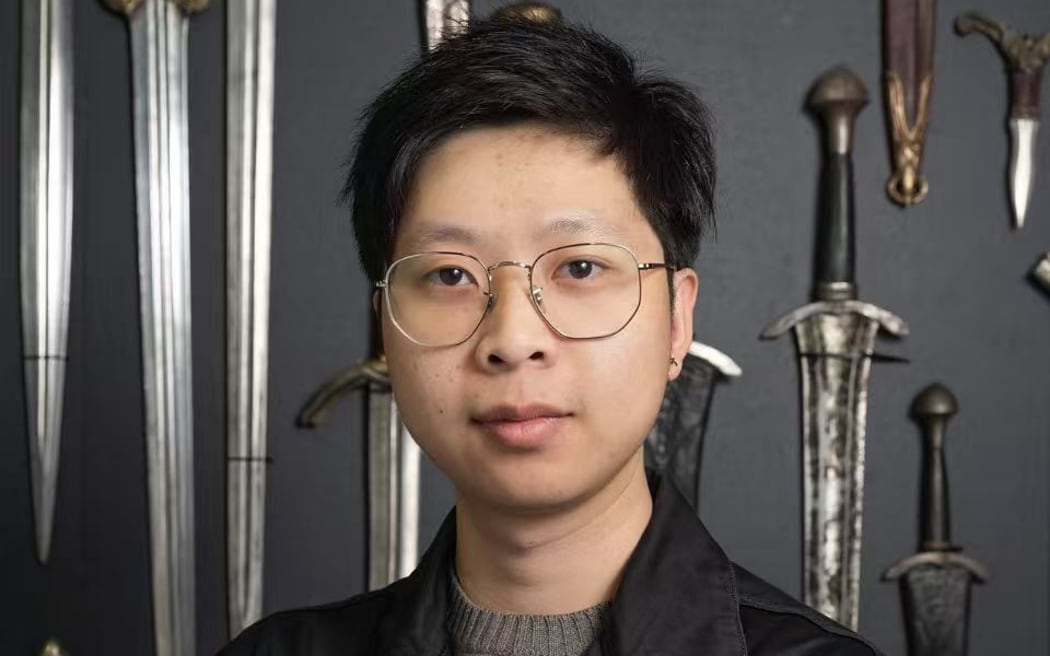
Jacky Zheng
Photo: Supplied
While studying architecture at the University of Auckland, Zheng had participated in Wētā Workshop’s annual Gwangmyeong and Incheon Concept Design Competition, eventually meeting Taylor in 2019 on a trip to South Korea after winning first place.
He joined the company in late 2021 after teaching at the university briefly after graduation.
Zheng’s role gradually shifted from being a concept designer to becoming an art director after becoming one of the earliest members of the creative media department under Gao.
He said collaborating with Chou on the metaverse project JVerse in 2022 was a fun project.
“There were live action aspects that we film and shot in Xiamen in China, and there were also the aspects of CG (computer graphics) creation, like creating digital avatars, physical environments,” Zheng said.
“So, I think it’s a very all-around project plus the musical aspects.”
Working with a lot of China-based projects, Zheng believed his bi-cultural background allowed him to understand what was relevant to customers and stay up to date with what younger generation in China were interested in.
“When thinking about heritage, it’s not only the things we learn in textbooks, like literature, that makes me who I am but also the way of thinking, the way of personalities. I think all of these are related to the work I do.”
Zheng said his dream was to continue creating meaningful content, and “being surrounded by cool and creative people”.
“Having projects that are going out in the world and a project that may inspire future younger generations and other people to also be interested in doing this kind of creative industries and maybe one day working together with us – that’s probably my biggest dream.”
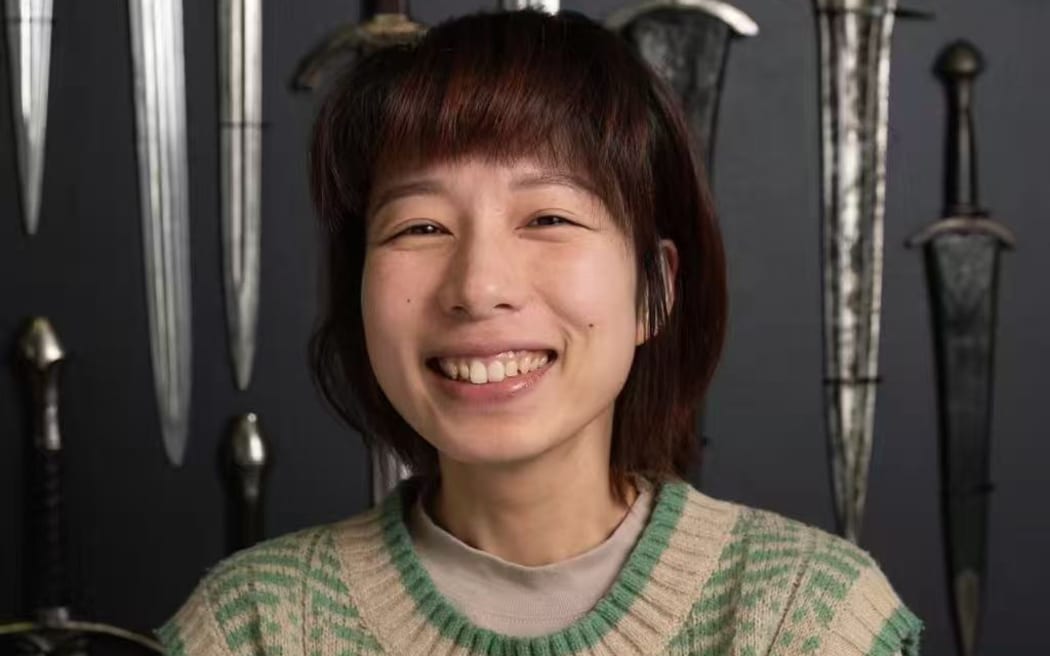
Shijia Chen
Photo: Supplied
Building connections
Producer Shijia Chen is another key figure in the team, who works in a housekeeping role to make sure projects go well at every turn.
Hailing from Fujian province in southern China, Chen studied TV production and direction before eventually working on different media platforms, including as a director for popular music talent show Sing! China for a few years.
Wanting to take a break in 2019, she came to New Zealand to study film at the Victoria University of Wellington and joined Wētā Workshop after graduation.
From coordinator to manager and now producer, Chen said she was doing what she always wanted to do.
“Back when I was in China, I worked as a director which was closely tied to the creative side,” Chen said.
“I was involved in everything from early-stage planning to filming and post-production editing. We had to understand the whole process,” she said.
“After going through all of that, I really wanted a more overarching sense of control – to be able to see a project through from zero to completion,” she said.
“Wētā Workshop is an amazing platform in and of itself. It’s so well-known, and even when I first came to New Zealand to study, I always hoped that one day, after graduating, I might have the chance to work there. It really was a dream of mine at the time.”
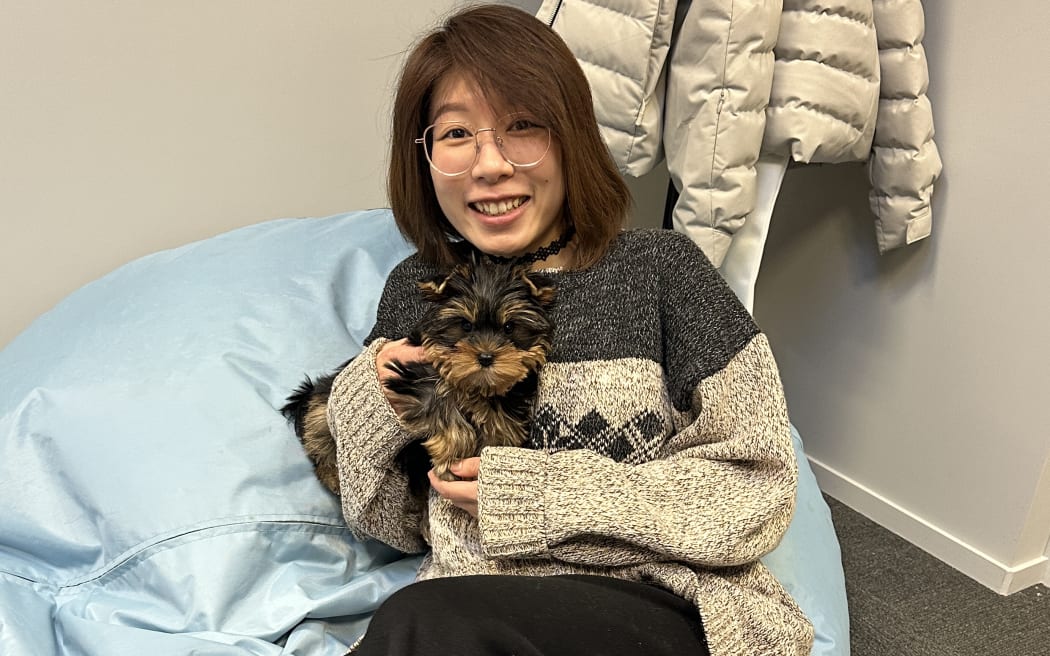
Shijia Chen in the Wētā Workshop office.
Photo: Supplied
Chen said she learned that stories could be told, emotions could be communicated and connections could be built through different forms, not only through movies.
For example, the careful consideration taken into building an immersive, pet-friendly experience centre with Chinese pet food brand Myfoodie made Chen realise that a good project could help pets and their owners.
“Working here really helps open up my thinking,” she said. “It feels like my mind is constantly expanding.”
Chen said new challenges constantly emerged – for example, dealing with contracts, legal advice and budgets – but the process had been exciting.
“I really hope that we can give our audience a good experience – something they can take away, something that helps them better understand the world around them,” she said.
“And it doesn’t matter if people’s emotional responses are positive or not. Not all feelings are purely pleasant – experiences like loss or sadness are also part of life,” she said.
“Sometimes, emotions that seem negative can make people appreciate the good things even more,” she said.
“What I hope is that people are, in one way or another, genuinely moved – that they feel something.”