
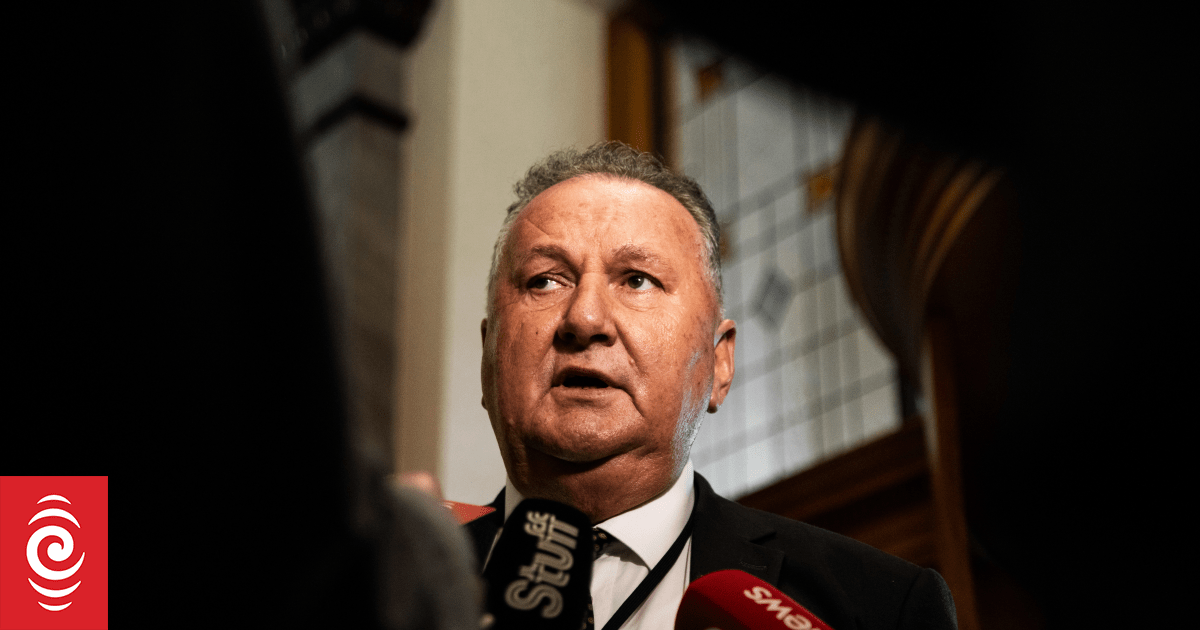
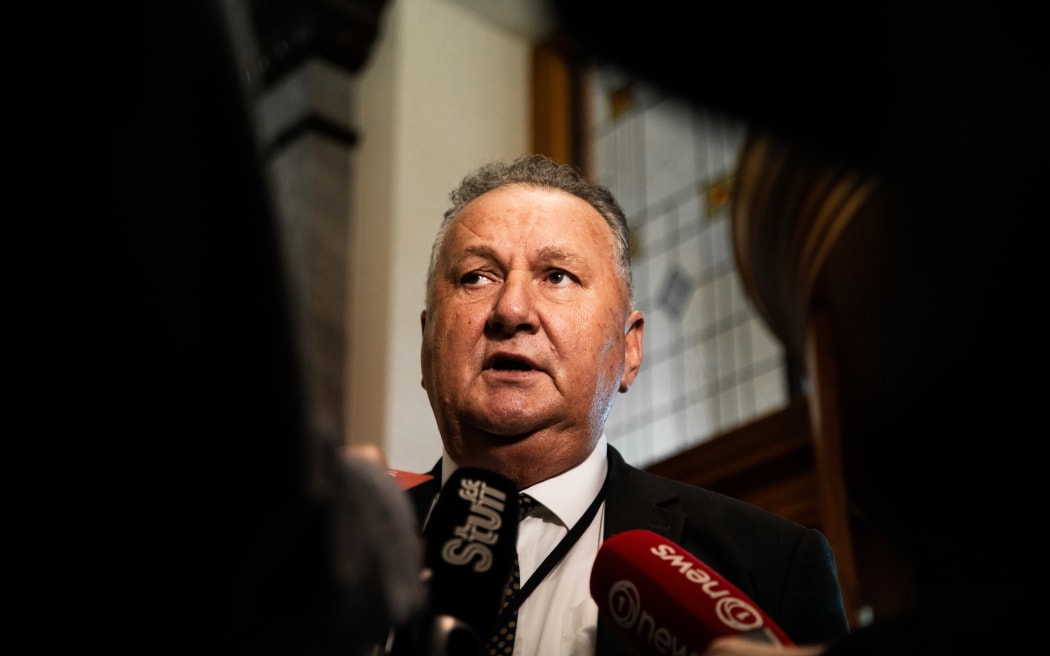
New Zealand First deputy leader Shane Jones.
Photo: RNZ / Samuel Rillstone
A new report on the state of social cohesion in our country shows rising opposition to immigration, falling trust in government, and rising loneliness
It was a provocative, headline-grabbing line designed to cut through.
When New Zealand First deputy leader Shane Jones spoke against the Free Trade Deal with India this week, warning of a “butter chicken tsunami”, it landed in a country already shifting uneasily beneath the surface.
Because at the same time, new research from Simplicity’s chief economist Shamubeel Eaqub, produced for the Helen Clark Foundation, revealed Kiwis are becoming less comfortable with immigration, with 36 percent saying immigration levels are too high.
“Our views on immigration are hardening very fast … it really is quite frightening because New Zealand was built on many generations of immigration,” says Eaqub, who was born in Bangladesh and raised and educated in Lincoln.
“What’s also really frightening is how over half of New Zealanders do not think that immigrants make good citizens.”
Eaqub was quick to clarify that the focus is only on “some immigrants”, namely, Indians and Chinese.

Shamubeel Eaqub
Photo: RNZ
“So it’s a very particular type of opposition to immigration. I don’t think it’s immigration, per se. I think it’s much more of a rise of racism that sits underneath it.
“And I think we have to call it what it is. I think sometimes using words like ‘immigration’ softens the blow, and gives us permission to speak about it as if it’s not a human on the other side of it.”
He describes Jones’ “butter chicken tsunami” as “clearly racist”.
“It’s frustrating because, of course, I look the way that I look, so he means it’s people like Shamubeel that he doesn’t want in this country.”
Today, The Detail looks at Eaqub’s second Social Cohesion in New Zealand report, which he co-authored. Nearly 3000 Kiwis of different ages and backgrounds took part in the survey.
As well as the hardening stance on immigration, it also reveals that trust in the government is falling, down to 39 percent from 42 percent last year, financial confidence is slipping, and loneliness is rising.
He says young people are feeling hopeful, and most Kiwis still report a strong sense of pride in their country. They still feel lucky to live here.
But overall: “New Zealand is fractured. We have three very different New Zealands living alongside each other.”
That includes the connected, the ambivalent, the alienated.
“I see there are divisions across financial stress, politics, distrust in institutions, and isolation; they are all reinforcing each other.
“We have got this country that’s become more frustrated and more disconnected. But what we need is for us to come together and deal with the big changes that are coming at us – whether it’s climate change, war or ageing populations.
“To me, social cohesion is the answer to how we navigate complexities. That’s why this report is so important, it tells us where we are at, where we are strong and where we can improve.”
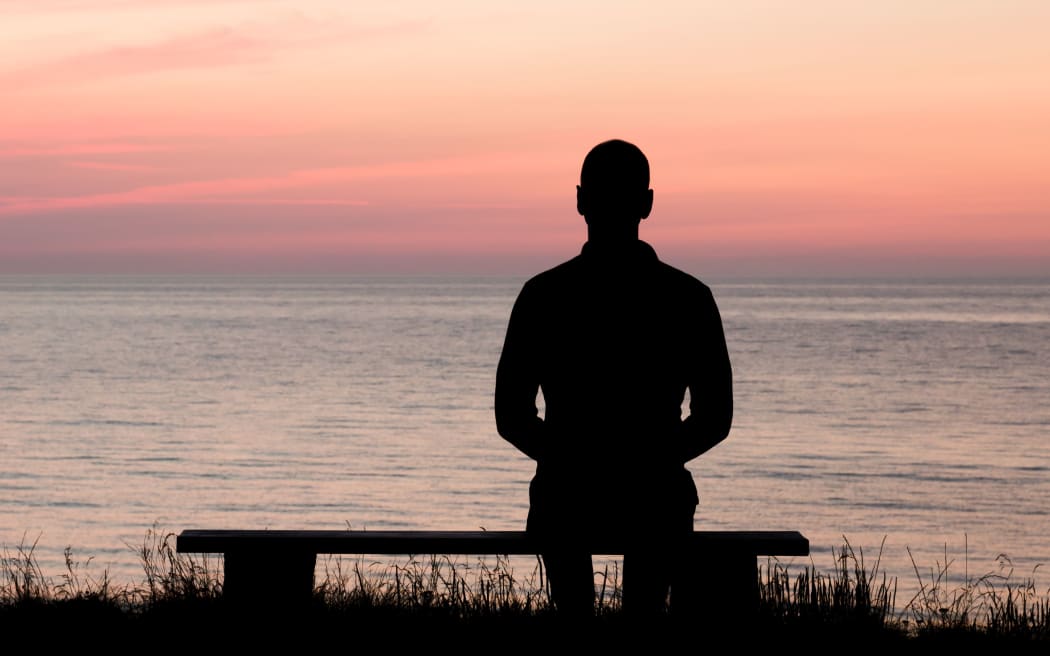
“The rise in loneliness is extraordinary, particularly among young people,” Shamubeel Eaqub says.
Photo: 123rf.com
Rise in loneliness
He describes the report as both hopeful and frightening in equal measures.
“One thing that frightened the hell out of me was just how distrusting of institutions and government we have become over time. We can see why that is. It feels like we don’t have the leadership across successive governments to really deal with the big knotty problems.
“But also, there are some really personal things that frighten me. The rise in loneliness is extraordinary, particularly among young people. That really concerns me, surprises me, and saddens me, because when people are isolated and disconnected, it becomes a self-reinforcing problem. That’s the disappointing end of things.
“On the positive end was just how strongly held the idea of New Zealand is. There is an extraordinary passion for New Zealand, and it sits across age, ethnicity, location, New Zealand-born, foreign-born – it doesn’t matter, we love this country.
“And to me, this gives me a really positive foundation to build from.”
He says New Zealand isn’t a country turning on itself, but it is under pressure, negotiating many changes in real time.
He says Kiwis still have resilience, but they are being tested. And he hopes the report can force a more honest national conversation.
“We can’t think of social cohesion as something that sits on the other side. It’s actually integral to everything that we do. When it comes to policy making, when it comes to decision making, we are quite good at the technical stuff, but we are not good at taking the community with us.
“And it is that bit – if we can bring the community with us, if we can build engagement, building that patience in the way we do things – I think we would start to make a lot of progress.”
Check out how to listen to and follow The Detail here.
You can also stay up-to-date by liking us on Facebook or following us on Twitter.