
Need more? Sign up for Euphoria Club, a newsletter overanalyzing season three of Sam Levinson’s HBO fever dream, for subscribers only.
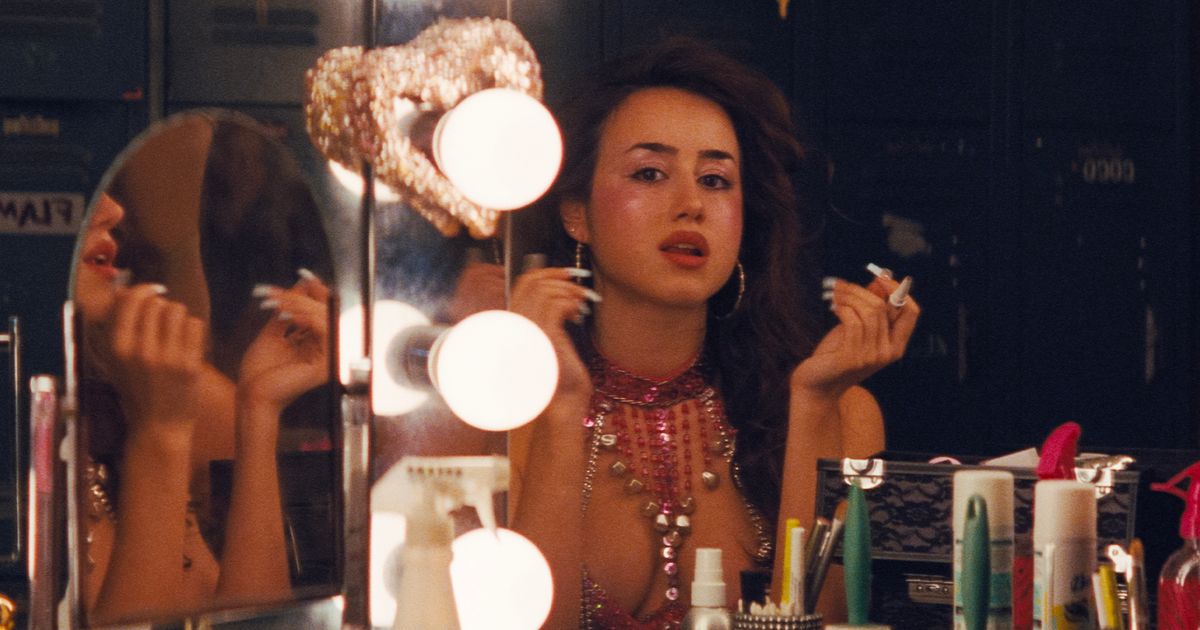
In a show obsessed with depicting extremes, few characters have felt as grounded as Priscilla Delgado’s Angel. The second episode of Euphoria’s third season finds Rue basking in the glow of God’s favor and settling into her new life working for the strip-club proprietor Alamo (Adewale Akinnuoye-Agbaje), who tasks her with scooping pig slop and covering up evidence of a dancer’s accidental overdose. Once Rue is promoted to dealing drugs at the Silver Slipper, she meets Angel, a “hellcat” dancer unaware of what happened to her close friend, Tish. As Rue spends more time with the girls (which, to her delight, includes a brief hookup with Angel in the parking lot following a shift), she overhears Angel leaving a worried voice-mail, increasingly suspicious about her friend’s disappearance — to Alamo’s irritation. The tension breaks when Angel has a meltdown at the club, forcing Rue to mercifully share the truth that Tish overdosed, sending Angel into an emotional spiral that descends into addiction.
Angel’s brief but powerful addition to Euphoria makes Rue seem stable by comparison. For the first time, Rue is placed in the caretaker role, personally dropping Angel off at a shady rehab facility. Before they part, Rue tells a teary-eyed Angel that life is precious, and Angel responds that she’s not so sure, that more people go missing in California than anywhere else in America. Delgado’s final scenes of the episode are haunting. Her character’s exhaustion as she resigns to her only choice evokes a sense of dread about what could be coming next.
For Delgado, 24, finding that depth of emotion meant having “super-deep conversations” about the realities of substance abuse with friends who have lived through it. “It gave me a better understanding and empathy for how drugs become part of people’s lives and the consequences that it all can have,” Delgado says about informing her own perspective. “It was a tremendous, transformative experience, not only for me as an actor but as a human.”
What was your experience joining Euphoria in such a highly anticipated season?
I knew I was coming into a very big universe, and into a tremendous phenomenon of a show, so there was a lot of pressure. I wanted to be very rigorous with the material that I was given. I wanted to pay homage to what was being said, so I just took it very seriously and I tried to do the best I could at the end of the day. When I came to the set, I really didn’t know what to expect. I was prepared to maybe be in a cold environment. But Sam and Ashley Levinson were so welcoming, always appreciating my work. I was so relieved to be met with such love and respect and space to create.
How much of the show had you seen when you were auditioning?
You know what? I had watched the first episode when it came out, but it was a lot for me and I was kind of young still, so I decided to leave it for the future. When I got the opportunity, I decided to keep it that way. I really didn’t want to have any preconceived idea of what I was getting into, so I watched some TikToks of some of the most iconic scenes to get the atmosphere and energy of the show.
What was your first read of Angel when you saw the full script?
I felt like she was kind of a street fighter. I just thought like, Damn, this is such a gift of a character, and I could not have not imagined what an incredible arc she’s going to have in that little time that she’s given. I wanted to give her respect and empathy and a genuine point of view.
I like that you thought of her as a street fighter. I feel like her outfits help emphasize her edge.
Oh, they were so magnificent. I had an idea how the character was going to look, but I was blown away when I came into the room to meet Natasha Newman-Thomas and I discovered those bombastic outfits that she had prepared for the character. It was elevated into the most incredible way, and I was so honored to be able to wear those pieces that all felt so unique but still part of this universe that the characters are in. So it was a joy, even wearing the flip-flops that she wears at the end. It was closing the circle for us to be able to create a real person.
What kind of preparation did you do for the role?
The nightlife, the fact of her being a stripper and being so in contact with drugs — these are all experiences that I’ve never had, and I really had to do the exercise of trying to understand her choices, her strengths and weaknesses, her past experiences. During my audition process, Anora was coming out, and I remember Mikey Madison doing a beautifully amazing job with the story that she was given, and it was really inspiring. So I watched that and used it as a reference and an inspiration. I watched a lot of YouTube videos and went sneaking into strip clubs in L.A. to just see the dynamics and understand the mood and tone of those settings. I didn’t have any pole-dancing experience, so I spent a lot of time dancing just to give her body its movement, and the attitude and height that she has, even down to her grammar and her accent.
You and Zendaya had great chemistry on the show. Did you two discuss your characters’ dynamic before filming?
Zendaya is probably the busiest woman on this planet, so I came with all the homework done for the character. But she was absolutely a mentor on set. I was very nervous, especially the first days of filming, but it all came together very naturally. She really took my hand and told me, “Hey, chill. It’s not that deep.” Even though it is. I will forever be grateful for the compassion she had with me. She was so generous. It was easy to just react to what she was giving and just be present and be with her.
You throw shoes at Zendaya multiple times in episode two. Was that hard?
Yes, we had to do that a couple of times because I was afraid of shouting at Zendaya. I was just afraid, and I could not do it. But then she came up and she told me, “Hey, just do it. It’s okay.” And Sam said, “Just shout at her, and if you have to touch her or whatever, feel free.” I needed to have that permission. I believe it was the last take that they included in the show.
I like that Angel throws the shoe again later in the parking lot. She looks so tiny in that wide shot, and the shoe goes so far.
One of the most beautiful things about this season is how tiny the characters feel in that grandiose scenery and in this big world.
How did you approach Angel’s nuances and how you wanted to portray her?
I wanted to investigate her world and that universe and try to keep her situation really grounded and serious. I needed to understand what was going on in her mind for her to end up in the situations she’s in and to be so raw and savage and crazy. A big part of it was the process of being quiet on set and really listening to Sam and to his idea of the whole thing. He gave me a lot of guidance, but the text and character were really clear. She had a lot of identity, and it was more of what she was going to be able to give to me than what I was going to give to her.
Angel’s struggle with addiction is a really heavy part of this episode, and it starts when she finds out that her friend overdosed. How did you inform your own understanding of addiction and the way you were going to represent that onscreen?
I had the chance to have amazing and super-deep conversations with friends of mine that have dealt with addiction, speaking about what the reasons are that people turn to drugs and what they might be seeking or searching for. It gave me a better understanding and empathy for how drugs become part of people’s lives and the consequences that it all can have. It was a tremendous, transformative experience, not only for me as an actor but as a human.
How did you get in the headspace to film that scene?
Honestly, I had so little time for joy because my character only has really small moments of joy, so I just stayed very focused. I thought about my character — knowing that she’s probably had the most chaotic life you can imagine — losing one of her only pillars of love, her only base. Just thinking about having someone like that in your life and the idea that this person can just go away. Angel dies, in a way, at that moment. As an actor, you know that you have one scene and you’re waiting for that day to happen and you have to prepare, and once it’s done, it’s such a relief.
What was the atmosphere on set that day?
It was a reduced crew that day, and everybody was so respectful. They knew that some huge emotions were eventually going to come in. I remember crying a lot and Ashley telling me that some people had to step away because it really created a moment on set. It was a special moment. We did multiple takes. It was really exhausting, but I was happy to have the chance to try a couple of times and in different ways. It was filmed chronologically, and I’m so grateful it happened that way. It would’ve been so difficult to come back into the brightness once I’m already in that deep, sad mode.
You’ve mentioned that there was only a little time for joy for Angel. What were your moments of joy during filming?
I really enjoyed the early scenes, like when I was dancing for Mr. Rolex, because they really were more playful. The crew was really generous, playing the music that I wanted and just giving me all the tools that I needed for me to have fun and be free.
Oh yeah, there’s really eerie choral music playing during that scene in the episode. What were you actually dancing to?
Yes, it is actually Hans Zimmer’s music in the episode, which is insane and was a fun surprise. In real life, I was playing reggaeton.
Sign up for Euphoria Club
A newsletter overanalyzing season three of Sam Levinson’s HBO fever dream, for subscribers only.
Vox Media, LLC Terms and Privacy Notice
Related