
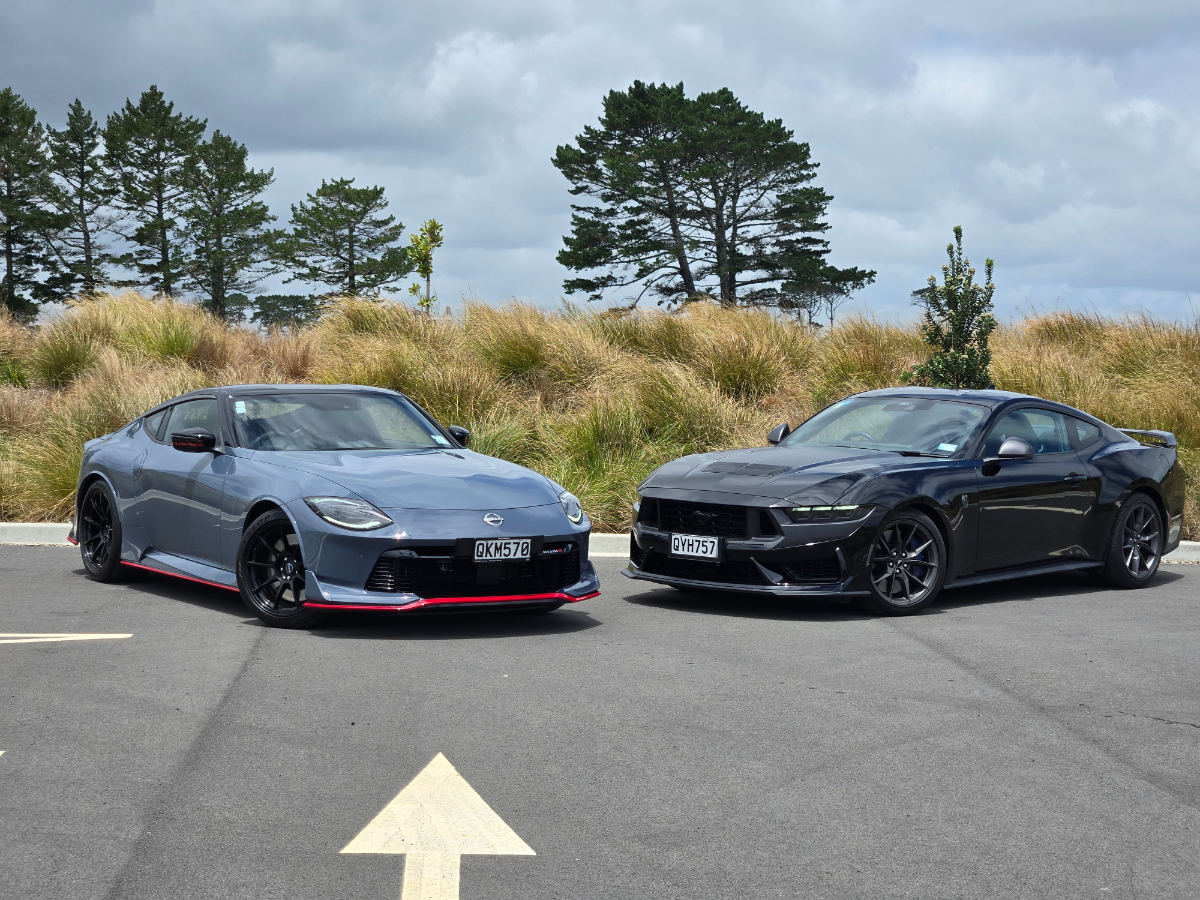
In a rapidly changing automotive landscape, one thing established (how we loathe the word “legacy”) carmakers can offer is heritage; don’t underestimate the appeal of that. Another thing some still offer is classic combustion-engine sports cars, with shouty bits under the bonnet and drive to the rear wheels.
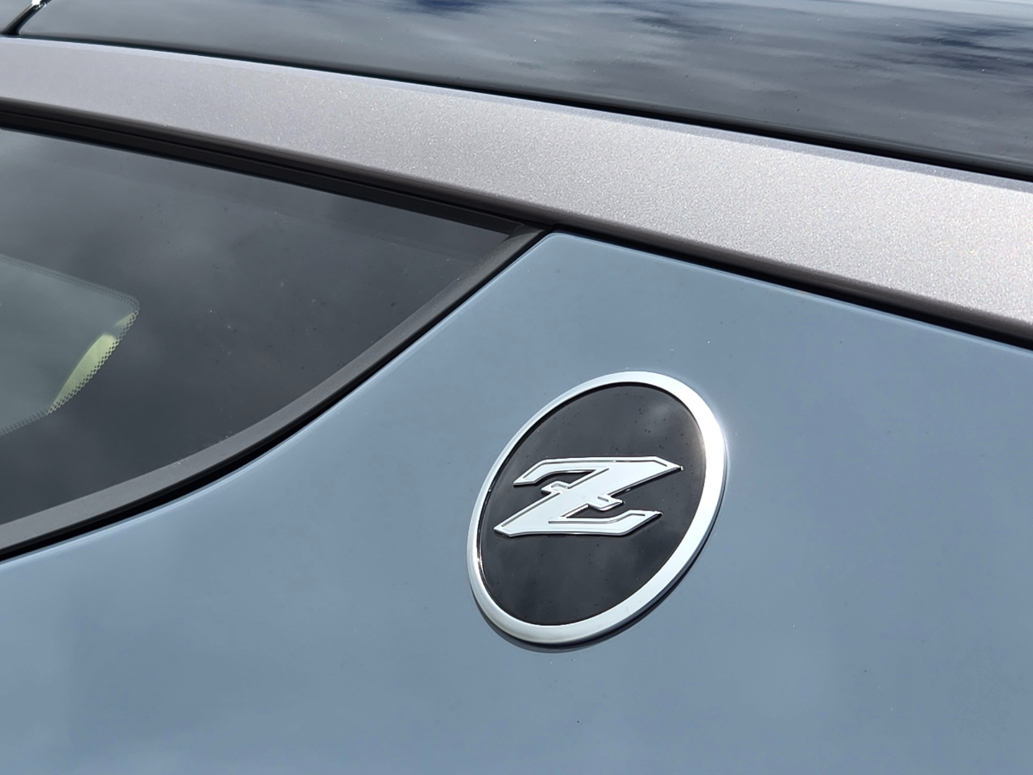
Nissan Z-badge evokes 1969 original and is even positioned in exactly the same place.
In support of all of the above, may we present the Nissan Z Nismo and Ford Mustang Dark Horse. They both represent iterations of sports cars that date back decades (1969 for the Nissan, 1964 for the Ford) and they’re both special versions of the standard models.
Not exactly the same thing, of course. The Z Nismo is a compact two-seater with a twin-turbo V6, while the Mustang Dark Horse is a larger 2+2 machine with a thunderous V8. A big price difference, too: over $25k between them.
Read More
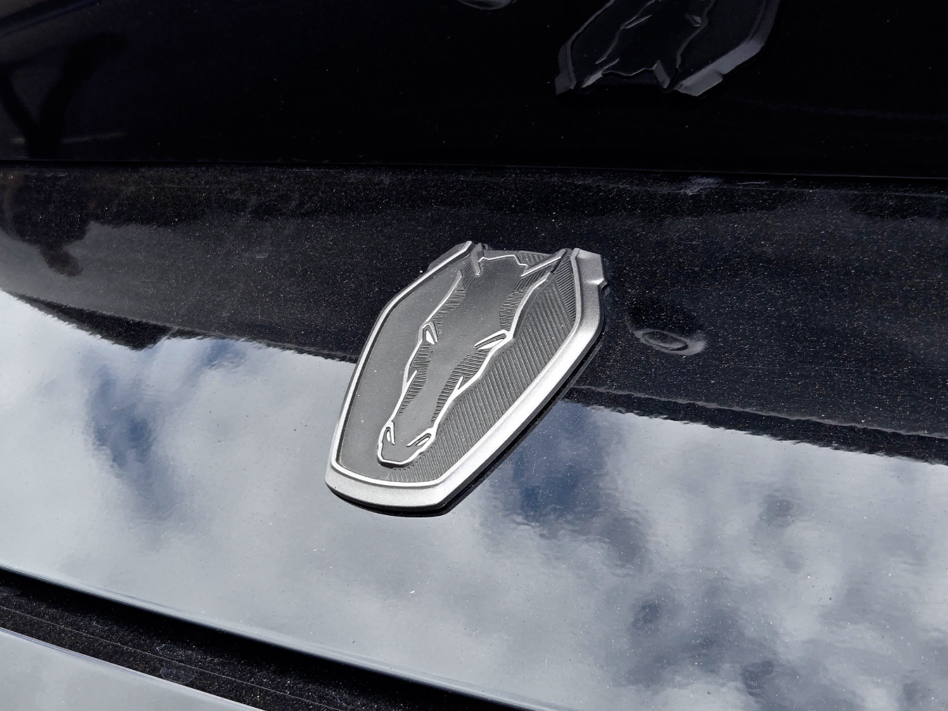
Different Mustang badge shock: head facing front on Dark Horse.
Advertisement
But we’re getting them together here because they’re so close in concept: both Nismo and Dark Horse add power, suspension smarts and a different look to their donor cars. And both have the kind of classic configuration that will appeal to old-school enthusiasts.
On the outside: what are the main design features?
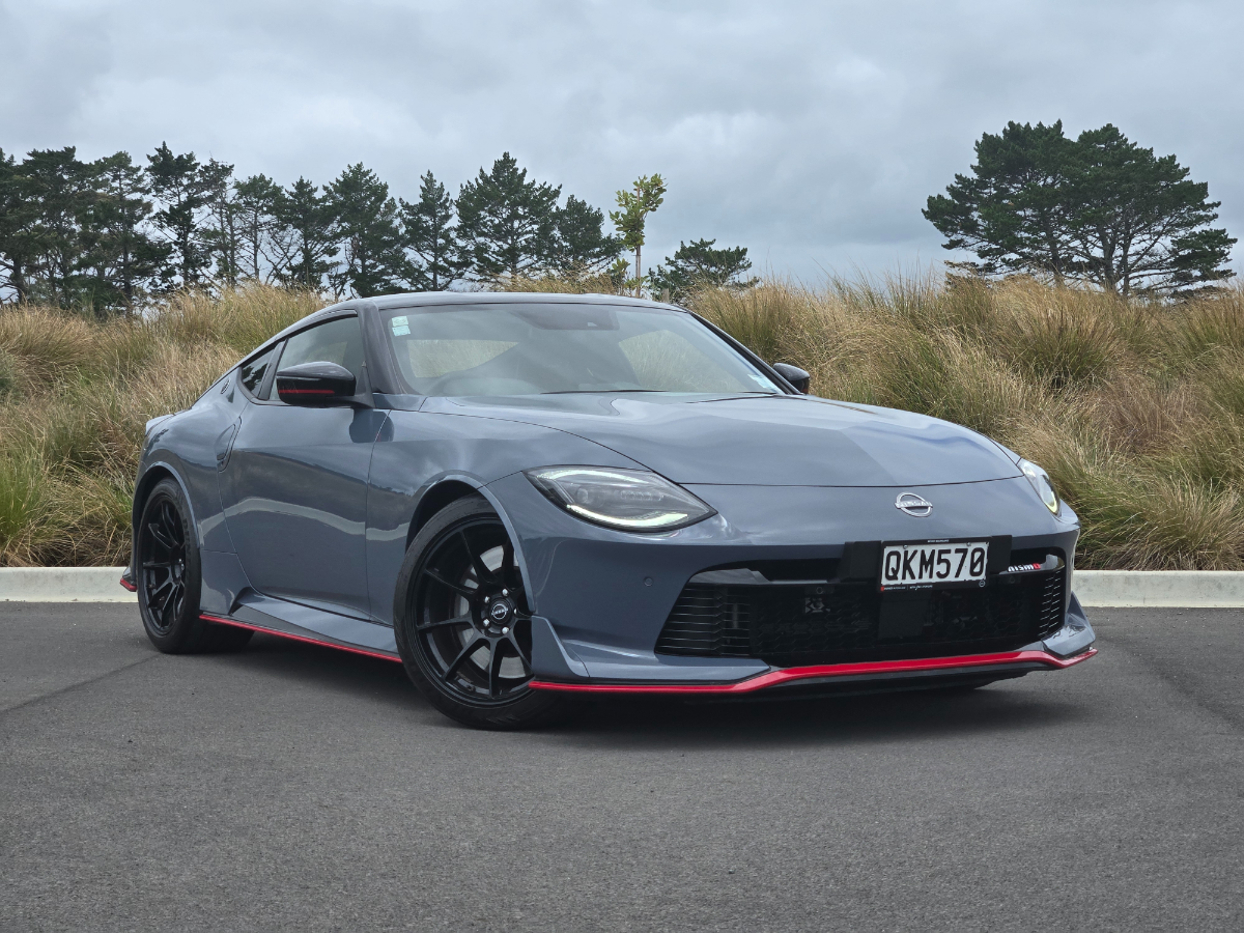
Signature red detailing and body kit add Nismo visual character to Z.
A few mods give the Nismo a very different look to the standard Z, including new squared-off front and rear bumpers, the signature Nismo red line that extends around the side skirts, a small bootlid spoiler and elaborate exhaust tips at the rear.
Both are iterations of sports cars that date back to the 1960s and both are special versions of the standard models.
There are Nismo badges everywhere, to ensure you can identify it from any angle; even on the Rays alloy wheels.
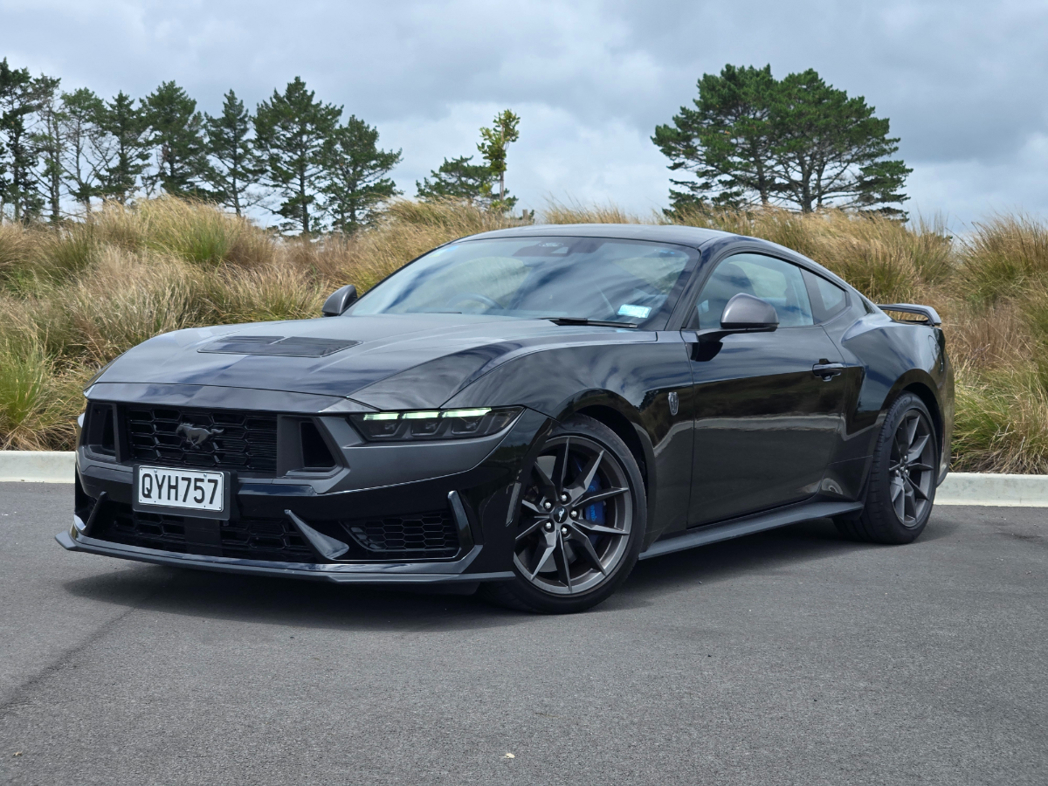
Dark Horse picks up different grille and bumper from Mustang GT.
Advertisement
The Dark Horse is not as obviously distinguished from the stock Mustang, especially in the dark hue of our test car, but it has a unique grille and front bumper with “panda eyes” inserts vaugely similar to those old FPV Falcons, shadow-finish surrounds, a fixed rear wing, diffuser and darkened exhaust pipes.
“Dark Horse” is also the first properly new Mustang model-name since the 2001 Bullitt, so it’s a big deal. To that end it also sports a controversial new Mustang badge: while the traditional logo remains on the grille, on the flanks of the car the horsey is facing-front in light and shade, rather than galloping sideways. Whatever next?
OVERVIEW
MUSTANG DARK HORSE
Z NISMO
Price
$114,900
$88,500
Body style
Coupe
Coupe
Wheels and tyres
19in alloy wheels, 245/40 from and 275/40 rear tyres
19in alloy wheels, 255/40 front and 285/35 rear tyres
Length
4819mm
4400mm
Wheelbase
2719mm
2550mm
Weight
1843kg
1640kg
Website
ford.co.nz
nissan.co.nz
On the inside: what are the cabins like?
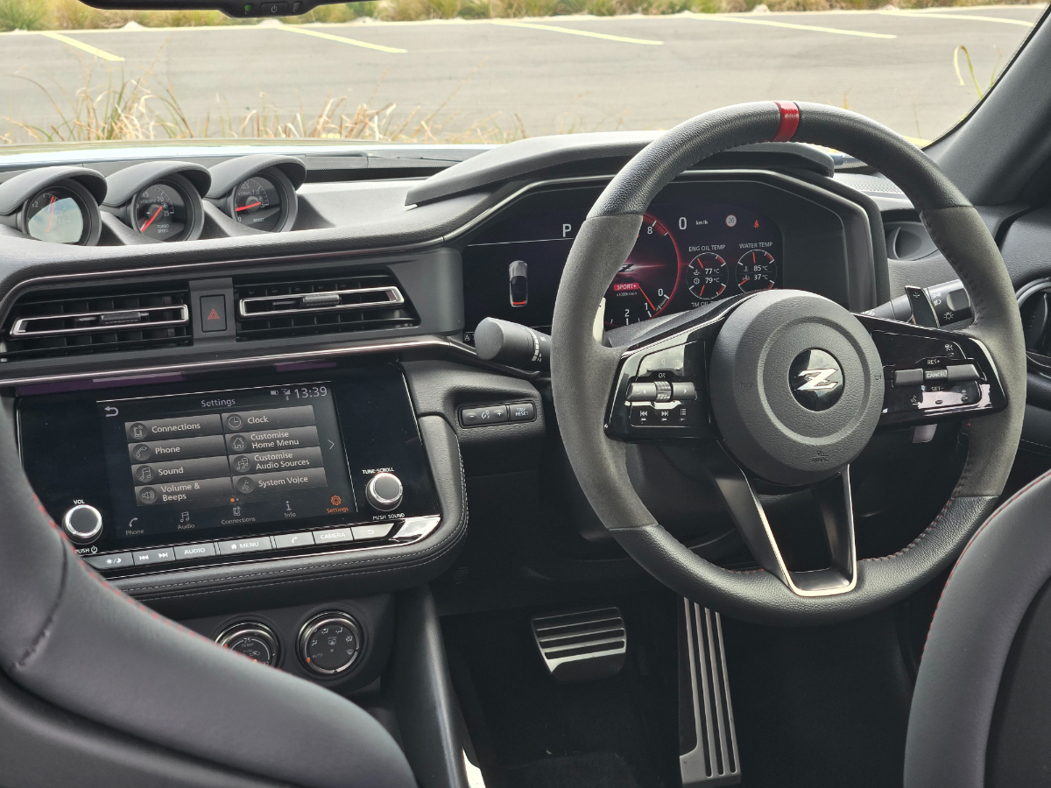
Appealing in many ways, but Nismo’s cabin feels dated in places too.
The Nissan’s cabin oozes snug sportiness, with lots of layered trim and classic touches like three hooded dials atop the centre of the dashboard. Plenty of Nismo-specific garnish too, including special branding for the digital instruments and Recaro seats with yet more branding and lashings of red trim. They’re heated, too.
They both have old-school-style handbrakes, although only the Nismo’s is actually an… old-school handbrake. The Dark Horse’s is also an electronic drift handle.
But there’s a fine line between classic and dated, and a lot of the Nismo cabin feels a tad old-hat. The switchgear is all a bit ho-hum and the infotainment graphics look especially average. You need to plug in your device for phone projection, too.
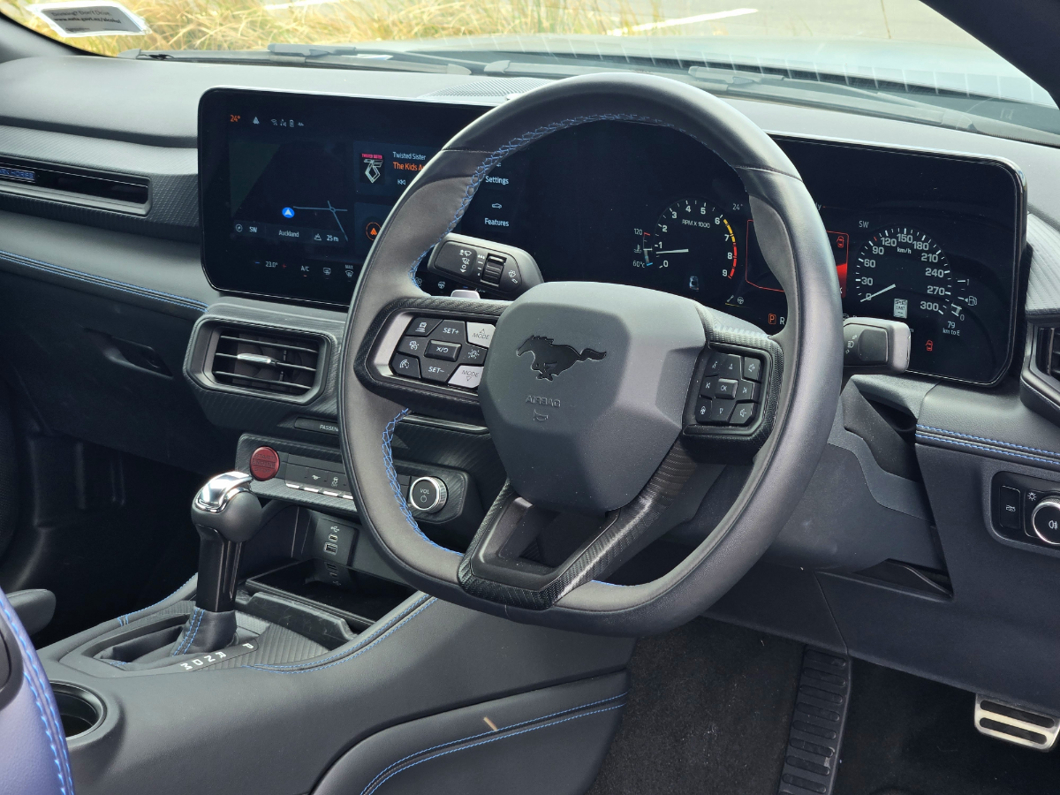
Mustang might be retro on the outside, but the interior goes big on digital.
The Mustang leans much more heavily into heritage styling, but the cabin of the 7th-generation model that provides the base for the Dark Horse is also very new-tech, with a widescreen digital display that offers a lot of customisation – including some suprise-and-delight stuff like retro instrument panels from Mustangs past. Want 1980s Fox Body Mustang dials complete with green illumination? You can have ’em.
Still plenty of physical switchgear in the Ford too, but everything feels a lot more consciously thought-out than the Nissan. You get wireless phone projection and a phone charge pad, although the standard 2026 Mustangs have now lost the latter feature (just thought we should mention it).
Like the Nissan, the Ford gets special Recaro seats. Unlike the Nissan, you loose the heating function that you get in a standard model.
They both have old-school-style handbrakes, although only the Nismo’s is actually an… old-school handbrake. The Dark Horse’s performs that function too, but in Track mode it transforms into an electronic drift handle that can lock the rear wheels and send you sideways in an instant. You also get that on the standard Mustang, by the way.
INTERIOR
MUSTANG DARK HORSE
Z NISMO
Head-up display
No
No
Infotainment screen
13.2 inches
8.0 inches
Phone projection
Wireless Android Auto and Apple CarPlay
Wired Android Auto and Apple CarPlay
Wireless phone charger
Single
No
USB ports
1x USB-A, 1x USB-C front
1x USB-A, 1x USB-C front plus 12-volt
Climate control
Dual zone
Dual zone
Front seat heating/ventilation
No/No
Yes/no
Front seat adjustment
No/no
Power 4-way driver and passenger
Boot capacity
376 litres
241 litres
Rear seat split/fold
50/50
No
Power boot
No
No
On the road: what are they like to drive?
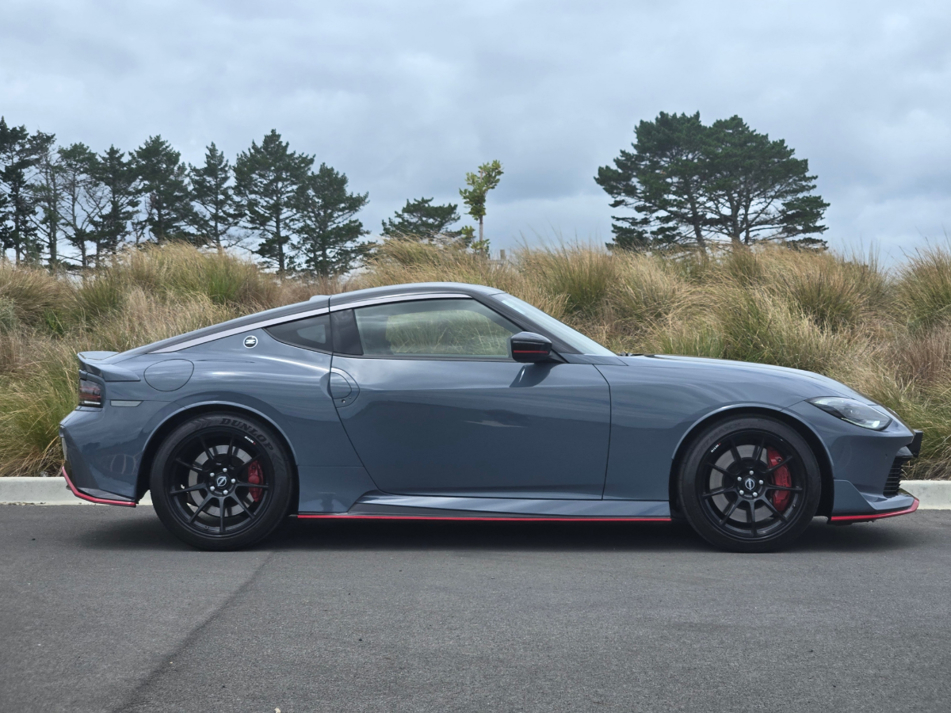
Stiffer chassis and 15mm-wider track for Nismo version of the Z.
Both cars benefit from substantial mechanical changes, aimed at making them faster and more appealing to the enthusiast driver.
Quick note which may upset some enthusiasts: both of these cars are automatic, 9-speed for the Nissan and 10-speed for the Ford. The Mustang can also be had with a special Tremec 6-speed manual, but there’s no 3-pedal option for the Z. Nor is there a manual available for the regular Mustang GT in NZ… because people just don’t buy them, apparently.
The Nissan’s 3.0-litre twin-turbo V6 gets engine management, boost and exhaust tweaks to serve up an extra 11kW/45Nm over the standard car. The chassis has been made stiffer, there’s extra bracing under the bonnet and the chassis boasts a 15mm-wider track and heavily revised suspension.
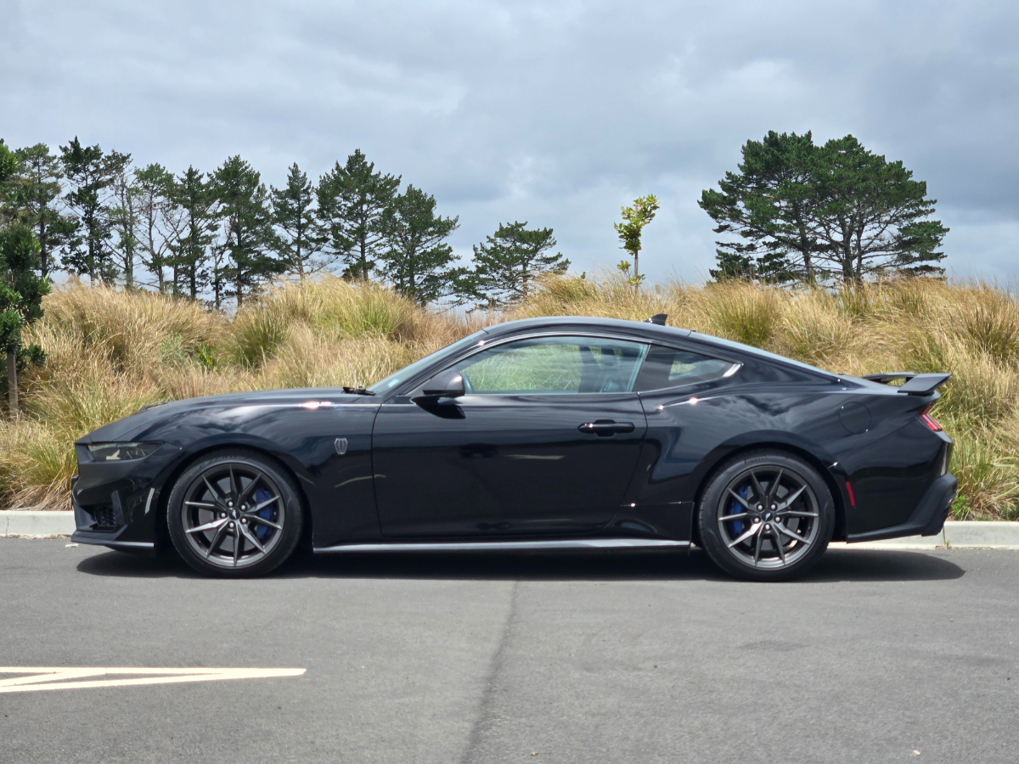
Dark Horse is the only NZ-specification Mustang to have MagneRide adaptive suspension.
The Ford goes even further under the bonnet, with piston connecting rods from the Shelby GT500 and 373kW/567Nm output (an extra 11kW).
On the road, the Nissan feels like a sporty coupe that’s acquired a whole more zing to make it fun in the real world, while the Ford has a much deeper talent base.
Dark Horse has unique suspension tuning, larger rear sway bars, heavy duty front shock absorbers and uprated Brembo brakes (although Brembos are also still standard on the GT). There’s MagneRide suspension, a Torsen rear differential and staggered 19-inch wheel sizes that are slightly wider than the standard car: 9.5in at the front and 10in at the rear.
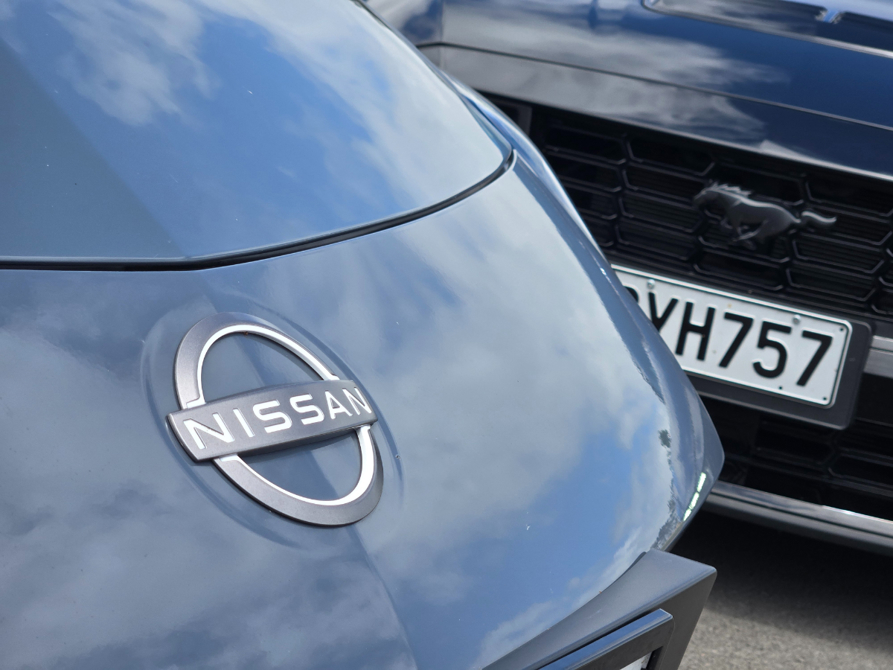
Z wears a Nissan badge up front; but for the Ford, Mustang is almost a brand in itself.
On the road, the fundamental difference in character between the two is that the Nissan feels like a sporty coupe that’s acquired a whole more zing to make it fun in the real world, while the Ford has a deeper talent base that you really need to get on the track to explore.
The Z Nismo’s turbo engine fizzes away up front; charge through a tricky corner and the steering wheel dances in your hands while the rear axle squats down and powers through. It’s a real hoot and it feels perfectly suited for Kiwi backroads: small and responsive.
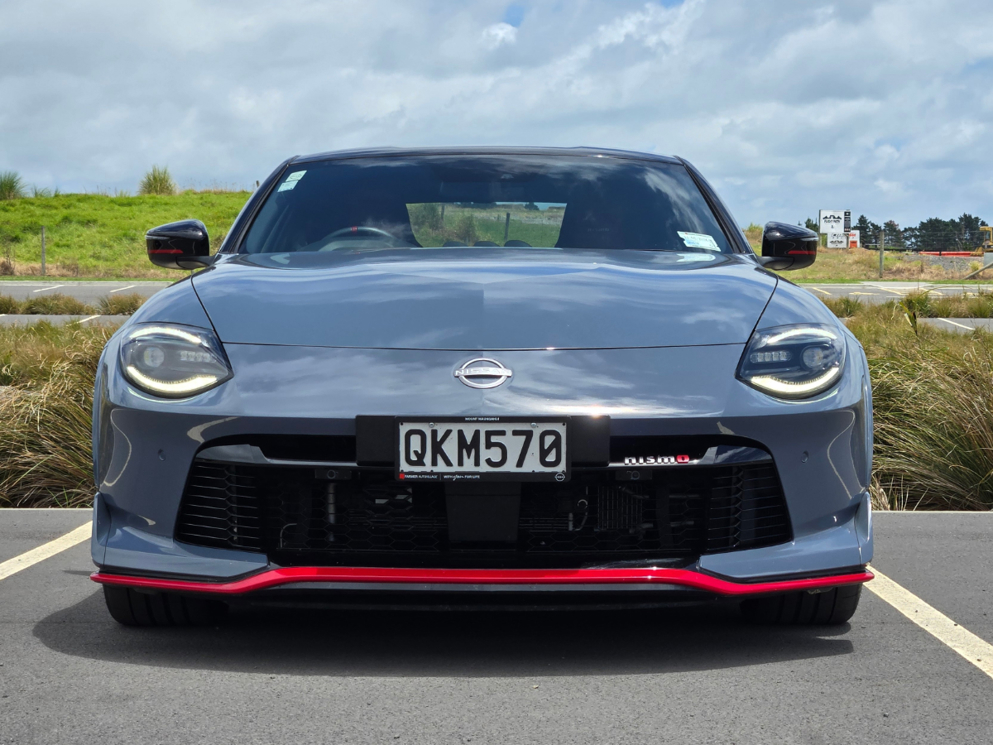
Nismo is high energy and the compact size is perfect for Kiwi backroads.
The Mustang Dark Horse is a more considered machine. There’s a menacing V8 and loads of mechanical grip that seems to far outweigh the cornering forces you can achieve on a dry public road; at least without doing something very silly with the steering or throttle.
The MagneRide adaptive suspension is unique to the Dark Horse for NZ (you can’t order it on a regular V8) and it’s highly effective, but also linked solely to the drive modes.
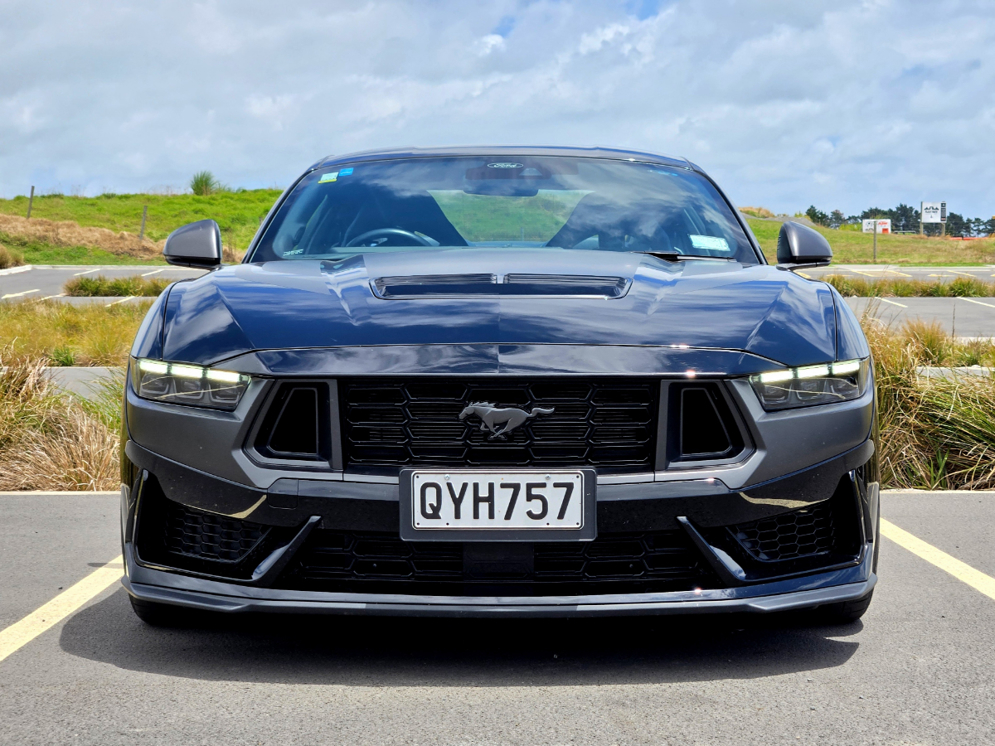
Dark Horse is fun on the road, but has a depth of talent that really requires a racetrack.
So if you want the firmest and most responsive setup, everything else must be turned up to 11. That’s the essence of this model: go hard or go home (in Normal mode).
SPECIFICATIONS
MUSTANG DARK HORSE
Z NISMO
Powertrain type
Petrol V8
Petrol V6
Capacity or battery
5038cc
2997cc
Power
373kW
309kW
Torque
567Nm
520Nm
Transmission
10-speed automatic, RWD
9-speed automatic, RWD
Power to weight
202kW/tonne
188kW/tonne
Adaptive suspension
Yes
No
Efficiency
16.0l/100km (3P-WLTP)
11.6l/100km (3P-WLTP)
Tank size and fuel type
60 litres, 98 octane
62 litres, 98 octane
Tow rating
Not rated
Not rated
On ownership: what’s the warranty and servicing situation?
The Nissan Z Nismo comes with 5-year/150,000km cover. Servicing is required every 12 months or 15,000km, whichever comes first.
The Ford Mustang Dark Horse comes with 5-year/unlimited km cover. Servicing is required every 12 months or 15,000km.
On the whole: which is better?
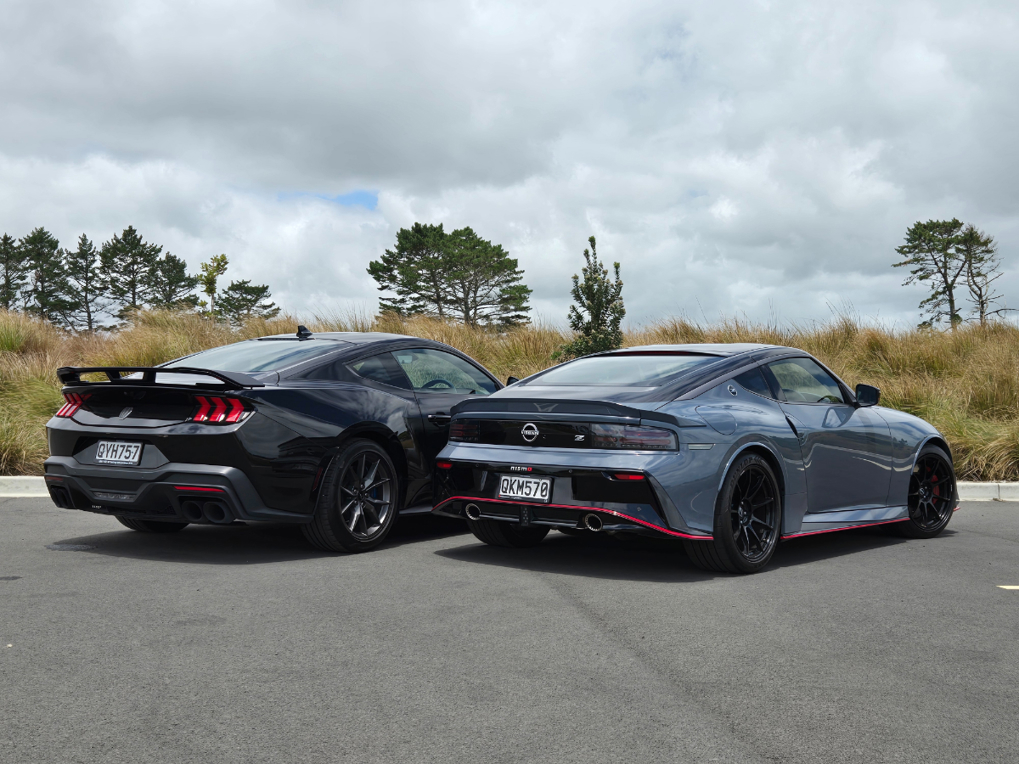
Very different cars, very personal choice. Except you can’t actually buy one of these any more.
Well, they’re very different cars aren’t they? Endlessly perky Japanese performance versus finessed American muscle. You’re getting more enjoyment for your money with the Nissan for sure and it’s truly endearing in Nismo specification, but the depth of engineering effort and sheer ability of the Ford means it gets our vote here.
Oh, you want a winner you can actually buy? That’d be the Z Nismo then, because the Mustang Dark Horse was limited to 150 units at launch for NZ back in 2024 and they were all sold out before the car even got here (apart from this one of course, which is Ford’s media/promo car). But don’t rule out more, or something very similar, in the future.
If it’s any consolation, we reckon the regular Mustang GT is still an excellent enthusiast coupe and you could mount a convincing argument that it’s a more accessible machine to drive on the road. It’s also a lot closer to the Z Nismo in price at $94,990… albeit not as special spec-wise.
Ford Mustang Dark Horse and Nissan Z Nismo FAQs
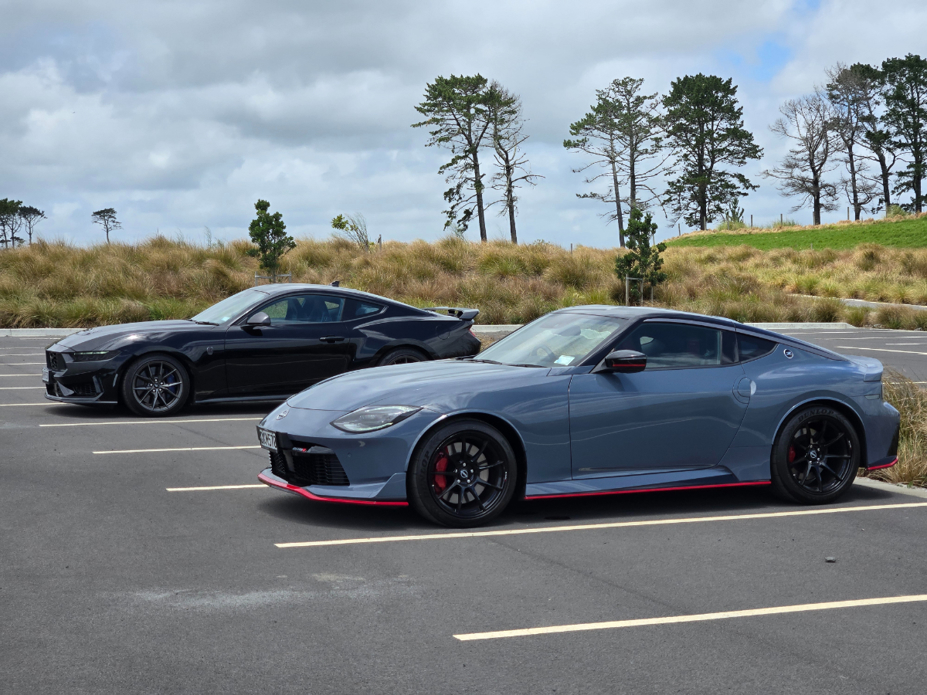
Rear-drive coupes with shouty engines are a rare thing these days. Enjoy.
What kind of cars are the Ford Mustang Dark Horse and Nissan Z Nismo?
Two-door performance coupes.
Do the Ford Mustang Dark Horse and Nissan Z Nismo have hybrid or EV technology?
You must be kidding. The Nissan is a twin-turbo petrol V6, the Ford a naturally aspirated V8.
What’s the fuel economy of the Ford Mustang Dark Horse and Nissan Z Nismo?
The Nissan is rated at 11.6l/100km, the Ford 16.0l/100km (both 3P-WLT)
Are the Ford Mustang Dark Horse and Nissan Z Nismo safe?
Neither have been tested by ANCAP, but both are rated 5 stars by NZ’s VSRR.
What safety and assistance features do the Ford Mustang Dark Horse and Nissan Z Nismo have?
MUSTANG DARK HORSE
Z NISMO
Intelligent lights
LED with automatic beam and levelling
LED with automatic levelling
Rain sensing wipers
Yes
Yes
Airbags
7 including dual front, side, curtain and passenger knee
6 including dual front, side and curtain
Adaptive cruise control
Yes
Yes
Driver attention monitor
No
No
Traffic sign recognition
Yes
Yes
Forward collision warning
Yes
Yes
Blind spot warning/assist
Yes/no
Yes/no
Lane departure warning/assist
Yes/yes
Yes/no
Rear cross traffic alert/braking
No/no
Yes
Reverse collision braking
Yes
No
Parking sensors
Rear
Front and rear
Camera system
Rear
Rear
What are the Ford Mustang Dark Horse and Nissan Nismo Z’s main rivals?
Toyota GT86 ($59,990): A RWD coupe that’s brilliant to drive. With a manual option.
Lexus LC ($234,000): Big, swish and extremely expensive, but a geat driver’s coupe too.
BMW M240i xDrive ($119,900): AWD rather than RWD, but plenty exciting alll the same.
Porsche 718 Cayman Style Edition ($154,900): Coupe with exotic mid-engined credentials.
Honda Civic Type R ($77,000): A FWD hot hatch, but a bit of crazy JDM flavour to rival the Nismo.