
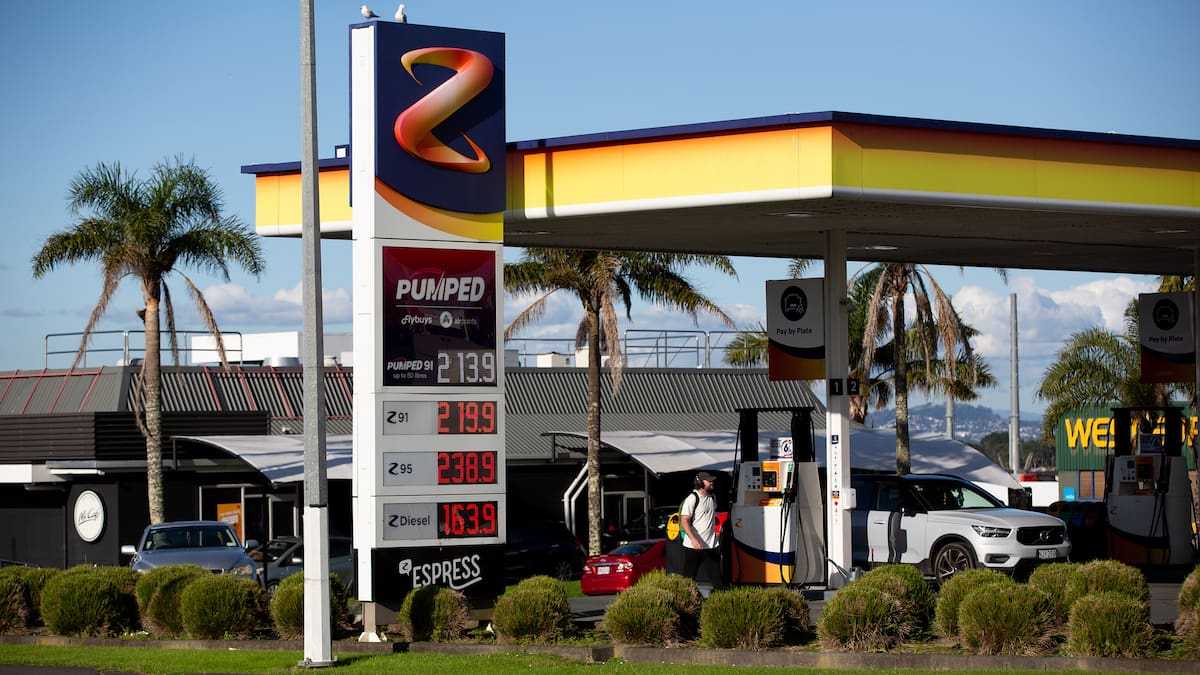
Baltej Singh Dhaliwal owns a petrol station in Auckland’s Māngere and said his staff looked at customers before turning on the pump.
Rising fuel costs are adding $80 weekly to some family budgets, straining finances. Photo / Getty Images
“We are pushing the staff to see every customer before opening the pump,” he said.
“We’re trying to put the risk down … we can control the risk, we can control the loss.”
But recently, it backfired.
“There was a nice Mitsubishi Outlander came to the site, it was a new one with the logo of Alert Taxi,” Dhaliwal said.
“The driver was fully suited and then he filled the petrol, filled the tank nearly $200, and he just ran off.”
Dhaliwal called the taxi company, who told him the licence plate didn’t belong to any of its drivers.
Pre-pay not a simple solution
Police Assistant Commissioner Tusha Penny told RNZ tips from the public were helpful to catch thieves.
“We’re just saying it’s a zero tolerance, because whilst you said some people may not be able to afford petrol, we’ve also got to be cognisant,” she said.
“What we’re seeing is thefts from families who need to get their kids to school, thefts from businesses who are doing their best to survive and thefts from farmers who some would say are the backbone for what we do in this country.”
She said more stations needed to move to pre-pay only, but the Motor Trade Association’s Simon Bradwell said it was not that simple.
“A lot of service stations depend on people coming through the door to pay at the counter, pick up some milk, pick up some bread, that revenue is super important.”
Police report there has been 100 extra drive-offs weekly since March and they are urging businesses to use pre-pay systems at pumps.
Another petrol station owner, Amit Khanna in Hamilton, agreed.
“If there are 500 customers coming into my station every day, there are only four or five who are the bad customers,” he said.
“Why are the 495 people being asked to go on pre-pay because of those five, why can’t police take action against those five people?”
Khanna said one drive-off and the day’s earnings were gone.
“We are small business owners, we’re not big corporates, we’re franchisee owners of gas stations,” he said.
“The big companies are taking all the profits, we are being given only something to keep operating.”
Family budgets take a hit
Tamaki Budgeting manager Alyson De Marco said the rising prices are adding about $80 a week to the budget of some families.
“A lot are behind in their power bills, for example, or they’re worried because they haven’t got enough money for rent, because they’ve had to spend it on that immediate purchase, which will be petrol and food.”
Henderson Budget Service chief executive Tracey Phillips said it had its busiest month in March.
“On an average month, we would receive maybe 60 new referrals a month… in March it was over 90.”
Phillips said there needed to be sustainable funding for financial mentors.
“We operate on a short-term funding basis and there’s a big need for us to change the way that the sector is funded so we can have more longer-term, sustainable funding in order to be able to be really confident that we can continue to offer this service to people,” she said.
“Now more than ever, it’s really, really needed.”
De Marco said the situation was incredibly tough.
“There are lots of reasons why people are actually still out on the road driving, but it’s adding phenomenal amounts of money to the family budget,” De Marco said.
This story was first published on rnz.co.nz
Sign up to The Daily H, a free newsletter curated by our editors and delivered straight to your inbox every weekday.