
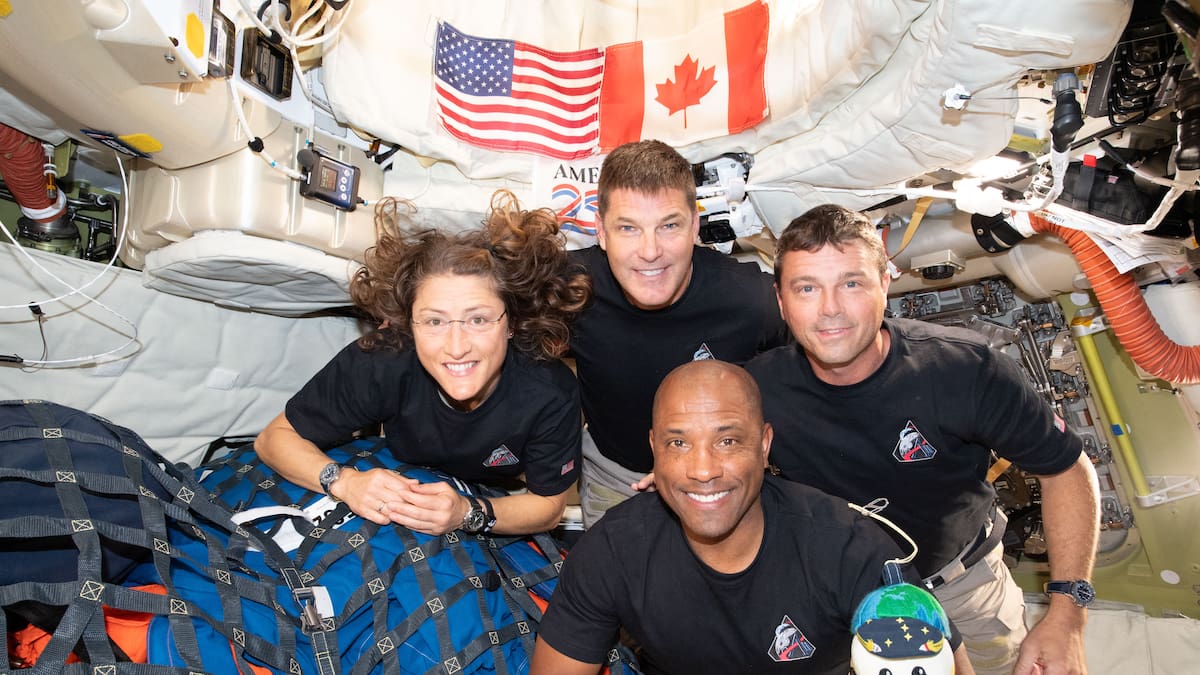
No sooner had human astronauts returned than we saw a humanoid robot run a half-marathon faster than any human ever.
The robot, called Lightning and developed by Chinese smartphone maker Honor, finished the 21km Beijing run in 50m 26s last weekend, beating the human world record by more than six minutes.
Both these events are milestones and show how far engineering and exploration have come.
The Artemis programme explores the boundaries of where humans can go, hopefully returning humans to the moon one day. The other programme pushes what machines can do, moving closer to matching human endurance and movement.
These developments reflect the same drive to extend human capability.
The technologies behind both feats are the result of years and years of research, experimentation and collaboration between scientists, engineers and visionaries who believed the impossible might one day be possible.
These breakthroughs also raise questions about the future, about how humans and machines will work together and what role technology will play in shaping the next chapter of exploration.
But for all the achievement, scientific advancements will always have their detractors. Critics of the Artemis programme believe space exploration to be a waste of money – particularly when there are more pressing issues that need sorting out here on Earth.
On the face of it, one could probably make that argument fairly easily. But missions such as Artemis add something extra to the human experience: they fire the imagination. They make us look beyond our everyday existence to a wider world – or wider universe – to consider all the things humans could achieve.
According to Bloomberg, a Nasa inspector general estimate put the total Artemis programme cost at about US$93 billion ($157b) through to 2025. That certainly is a lot of money.
But some estimates suggest the United States is spending close to US$1b a day in its war with Iran.
In a time that seems defined by division and conflict, the achievements of courageous astronauts and athletically gifted robots remind us that progress and a sense of shared human achievement are still important.