
“At the same time, you have a record percentage of US household assets – more than any other time in history – invested in the US market.
“So it’s an 1800s railroad boom all over again.”
At the same time, a yawning gap has opened up between US consumer confidence and a red-hot US sharemarket.
According to the University of Michigan’s monthly survey of consumers, consumer sentiment sank 11% this month, extending a decline that began with the start of the Iran conflict, and is down 9% from a year ago.
It was also the index’s lowest reading in the survey’s 74-year history.
Goodson said the index highlighted the “remarkable disconnect” between US consumer confidence and the market.
At the same time, there is a greater concentration of household wealth invested in equities than ever before, led by demand for AI-related stocks.
In the tiny New Zealand market, the only real play in the AI data centre space is Infratil, which has held up fairly well.
So far this year, shares in Infratil have gone against the run of play, gaining 17% to around $12.38 today.
Goodson said only a small proportion of S&P 500 names are outperforming – typically the ones focused on the AI space.
Since the start of America’s launch of its “Epic Fury” attack on Iran, only 26% of S&P 500 companies have outperformed.
Over 40% of the S&P 500’s market cap is now tied to the AI quality growth theme.
At the same time, US consumer sentiment is “in the toilet”.
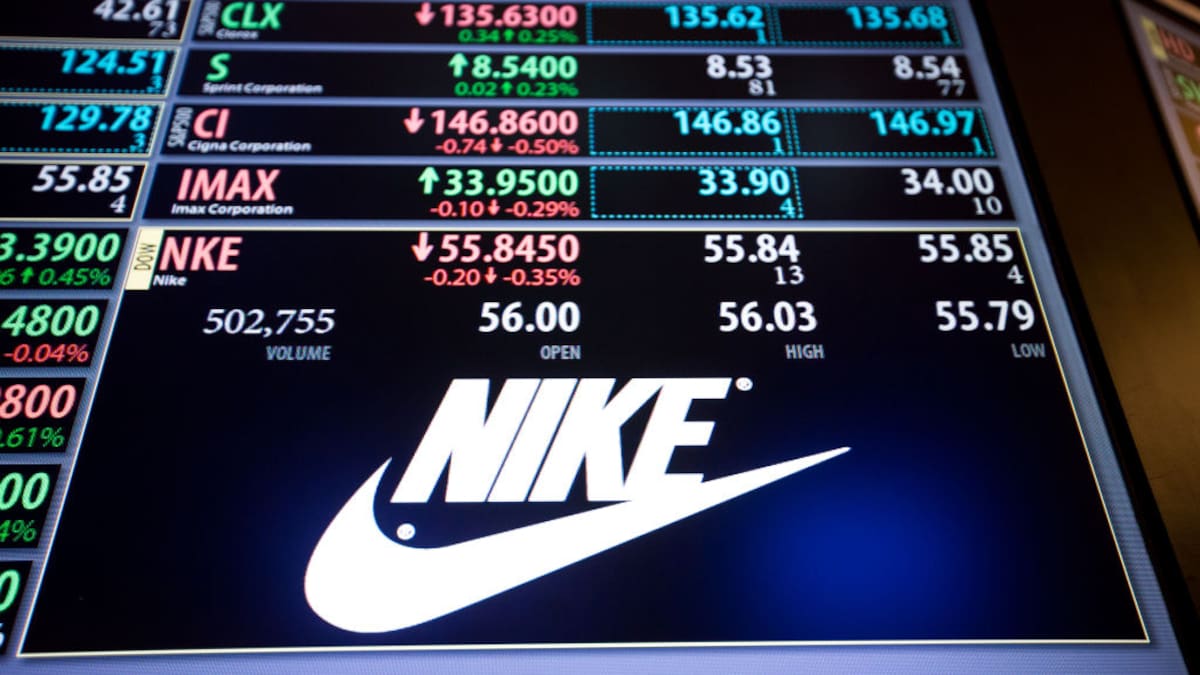
Household names like Nike have been annihilated, the company this month saying it expects sales in China to drop by 20% in the fourth quarter.
Nike shares have fallen by 28% in the year to date.
“What you’re seeing is consumer-exposed stocks in the US are in a world of pain, and the rest of the market is sailing on,” Goodson said.
“The biggest thing in the US has been the divergence between the economy and the market.”
Mercury has upgraded its earnings forecast.
Mercury’s upgrade
Power company Mercury upgraded its 2026 forecast this week, mainly on strong hydro generation.
It now expects its earnings before interest, tax, depreciation, amortisation and fair value adjustments (ebitdaf) to come in at $1.05 billion in the June year, up from its previous guidance of $1.0b.
In the nine months to March, total generation was up 14% year on year, while mass market electricity prices were up 6% and gas prices were up 37%.
Investment research group Morningstar said Mercury is on track for a strong rebound from last year’s drought.
“In addition to above-average rainfall, earnings are benefiting from early completion of a wind farm and significant retail price uplifts.”
Mercury’s lake storage is well above average for this time of year, a favourable position heading into winter – New Zealand’s peak demand period.
“Mercury should prove highly resistant to the global energy shock caused by the Iran war, with a generation fleet of hydro, geothermal and wind,” Morningstar said.
“We forecast modest earnings downside in fiscal 2027 as rainfall normalises.
“Beyond that, completion of developments and retail price hikes to pass through high wholesale prices are likely to keep ebitda [earnings before interest, tax, depreciation and amortisation] ticking higher at about 6% per year.”
Forsyth Barr said Mercury was well-positioned to continue its strong momentum through the fourth quarter of 2026 and into 2027.
“Strong wholesale electricity prices from this point create further upside for Mercury’s 2026 earnings, but also 2027,” it said.
“It is very helpful having full lakes heading into winter.”
KMD falls short
Sub-underwriters for KMD Brands have taken up the shortfall arising from its heavily discounted but undersubscribed rights offer.
KMD said this week that it had completed the retail shortfall bookbuild component of its $58.5 million rights offer. Gross proceeds came to $65.3m.
“Net proceeds will be used to reduce KMD’s net debt position and strengthen the balance sheet, and in conjunction with the refinanced debt facility, provide a stable balance sheet to enable execution of KMD’s Next Level strategy,” the company said.
About 126.4 million new shares were taken up in the retail bookbuild shortfall, while the 42.9 million new shares not taken had been fully allocated to the sub-underwriters.
Forbar on Ryman
Shares in Ryman Healthcare have lost about 29% in the year to date on concerns about a softer economy, but Forsyth Barr said the pessimism surrounding the stock had been overdone.
The broker said the decline was despite both Ryman and peer Summerset reporting limited impact so far from the conflict in the Middle East.
“While we acknowledge that uncertainty is elevated, Ryman’s share price now incorporates unwarranted pessimism in our view,” Forsyth Barr said.
“We have pushed back any recovery in unit prices to 2028, but still expect Ryman to more than triple annuity earnings from 2026 to 2029,” it said.
Stay ahead with the latest market moves, corporate updates, and economic insights by subscribing to our Business newsletter – your essential weekly round-up of all the business news you need.