
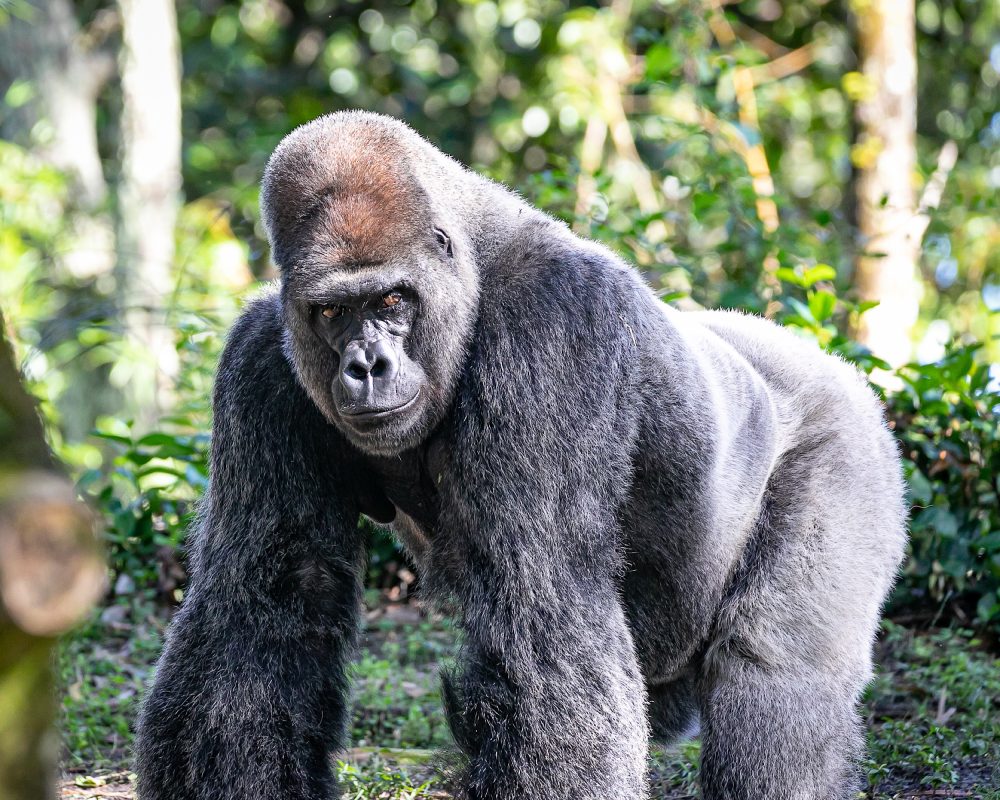
The largest open record yet of great ape experiments has been compiled, turning 18 years of scattered studies into a single resource on how apes think, learn, and choose.
This makes it possible to follow patterns across the same animals over time, sharpening questions that single studies could not hold together.
Archive behind the discovery

At one research center in Leipzig, Germany, years of archived experiments preserved choices made by chimpanzees, bonobos, gorillas, and orangutans.
By linking those records, Dr. Alejandro Sánchez-Amaro at University of Stirling (UofS) documented a continuous body of evidence that had been scattered across separate papers.
The collection spans research from 2004 through 2021, allowing the same animals to reappear across many different studies.
Even at that scale, the archive still needs careful comparison, because meaning does not emerge from one task alone.
Scale reshapes conclusions
Ape cognition research often turns on a handful of willing animals, so one missing participant can change the picture.
“Most studies therefore focus on specific questions and tend to produce relatively small datasets,” Sánchez-Amaro said.
Here, 81 apes appear in the record, and 78 of them joined more than one project.
Repeated participation lets scientists separate a passing animal behavior from steady patterns in learning, memory, or decision-making.
Files become comparable
The EVApeCognition Dataset gathers 262 experimental datasets from 150 publications tied to the Leipzig center studies from 2004 through 2021.
Curators made the records standardized, meaning the same details appeared in the same places across files.
Files keep each ape’s name, species, sex, role, age, test session, and trial when those facts were available to reviewers.
After review and author approval, the team recovered 61% of the eligible published studies for careful reuse.
Tracing the roots of intelligence
Studying great ape cognition, how apes think and solve problems, helps connect observed behavior with mental processes more clearly.
Chimpanzees and bonobos are humans’ closest living relatives, while gorillas and orangutans would require more observation because of sharper contrasts.
Comparing all four groups can reveal which skills run deep across apes and which ones grew differently in humans.
That boundary matters because shared abilities identify older inheritance, while differences show where human intelligence changed during evolution.
Watching minds change over time
Long records let researchers watch developmental change, the way abilities alter with age, across the same individuals.
“This resource will also allow researchers to track long-term patterns and explore developmental questions that are impossible to answer with single studies,” Sánchez-Amaro said.
Earlier work found that some ape task performance stayed stable across time, so repeated testing can reveal durable individual differences.
Such patterns cannot prove human connections alone, but they sharpen comparisons that make claims about origins testable instead of vague.
High stakes of open data
Unfortunately, old research can disappear quietly when files sit on private drives, broken emails, or forgotten lab computers after staff move on.
One biology paper found data access odds fell 17% each year after publication, which explains the urgency behind this archive.
The team followed FAIR principles, rules that make records findable and reusable, so other scientists can inspect the files.
A public repository keeps the material open-access, free for others to use and check, for years beyond one lab.
Boundaries of captive research
Still, the new record comes from captive apes at just one center, not from every ape population on Earth.
Voluntary testing also means each task reflects animals that chose to participate and did not provide a perfectly random sample.
Some older publications stayed outside the dataset because questions about files, authorship, or records could not be settled.
Those limits do not weaken the resource, but they keep claims honest and prevent careless overreading of results.
Textbook claims to raw evidence
Classrooms can use the same records to show students how animal behavior becomes real scientific evidence.
Instead of memorizing claims, learners can compare ages, species, tasks, and outcomes in real files from actual studies.
That experience fits comparative psychology, science comparing behavior across species, because it links numbers to living animals.
Handled well, the dataset can teach care alongside curiosity, especially when students meet complex, imperfect evidence.
Expanding the dataset further
Future versions could add newer studies after 2021 and, later, observations of everyday social life among the same apes.
With more material, the Max Planck Institute for Evolutionary Anthropology can connect experiments to grooming, play, patience, and cooperation in richer, more social ways.
Large collaborative projects have already shown that primate research gains strength when labs pool effort across different sites.
For the Max Planck Institute for Evolutionary Anthropology, the bigger challenge is turning access into careful questions instead of solely making bold claims about intelligence.
Shared story of thinking across species
A scattered archive has become a shared tool for tracing how ape minds develop, differ, and sometimes resemble our own.
Its strongest use will come from patient comparisons that respect limits while preserving rare animal histories for future researchers.
The study is published in the journal Scientific Data.
—–
Like what you read? Subscribe to our newsletter for engaging articles, exclusive content, and the latest updates.
Check us out on EarthSnap, a free app brought to you by Eric Ralls and Earth.com.
—–