
The weakening and removal of Treaty clauses has been framed by the Minister as an attempt at simplification and fairness. This move will alter over 20 pieces of legislation.
No Government can expect to deliver simplification to a 186-year-long debate.
And it cannot when the Government has been very clear that advice received from officials and experts on the matter “simply” does not suit their opinion.
In my view, when we have governments in power who prioritise their own views over expert advice, it risks setting a dangerous precedent for all New Zealanders.
Dangerous in the sense that yes, we as Māori are within their war path, but so too are the majority. The middle class, the poor, the unemployed and the single mothers are feeling the pinch of this Government’s policies. If Māori are not safe, neither is the rest of our country.
The suite of changes to Treaty clauses will guarantee another 50 years of repeated legal challenges, policy reversals every other election cycle, and feed into ongoing uncertainty for iwi and local councils.
A memorandum released in early April on the Waitangi Tribunal’s online inquiry documents database exposed that changes to Treaty clauses were agreed upon in the dark. And it was in the dark that, in my view, the Government agreed to weaken this clause in the Climate Change Response Act.
This Act is critical in protecting Te Tai Tokerau as climate change-driven weather events batter our communities.
The Treaty clause within this Act ensures that iwi and Māori are involved in key bodies, including the Climate Change Commission, and are consulted on major plans and policies, while recognising the specific impacts of climate change on Māori communities.
Mariameno Kapa-Kīngi
The Government is reducing its Treaty obligation from “give effect to” down to “take into account”.
In Te Tai Tokerau, where nearly 40% of our population is Māori, that should ring alarm bells. When 40% of our community can simply be “taken into account”, they can just as easily be ignored.
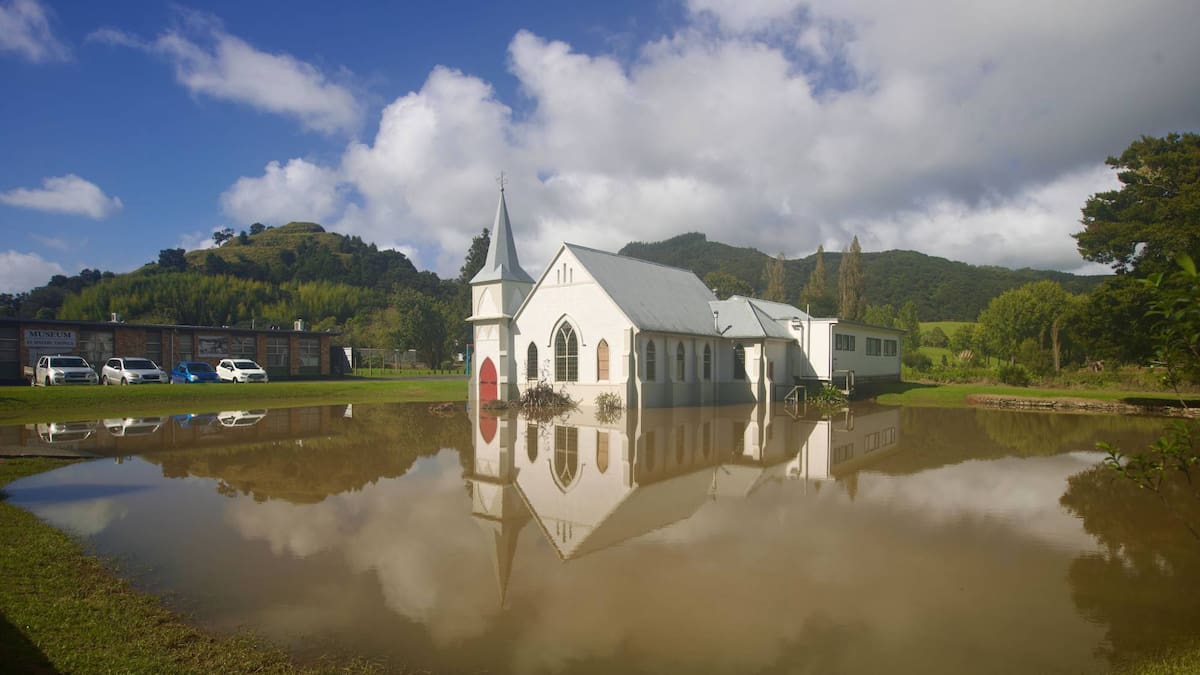
As we continue to front climate change for our country, our marae who have acted as safety nets during evacuations will no longer be able to withstand repeated weather events.
Marae will not have guaranteed representation in the Climate Change Commission, in consultation, in major plans or policies or in specific climate change impact reporting.
The birth of this nation was delivered in Waitangi itself and now our community has effectively been placed in the dark. And so, I repeat: if Māori are not safe, neither are you.
We as a people are now at a crossroads.
Shall we continue the cycle of undermining Te Tiriti o Waitangi only to uplift it again at the next election cycle, or should we invest in something more durable?
A country that continues to relitigate its founding document is one of instability and clouded direction. We must consider whether we’re prepared to leave anything stable enough for our mokopuna to build from in Te Tai Tokerau.
What’s good for Māori is good for everyone and I will not allow these changes to go unchallenged in our rohe.
Mariameno Kapa-Kīngi’s career has traversed many paths, each grounded in service to communities with a focus on iwi Māori, hapū, whānau, māmā and wāhine. For Kapa-Kīngi, every decision is guided by mokopuna. Her work is driven by the understanding that actions taken now must ensure future generations will inherit a better situation than the one experienced today.