
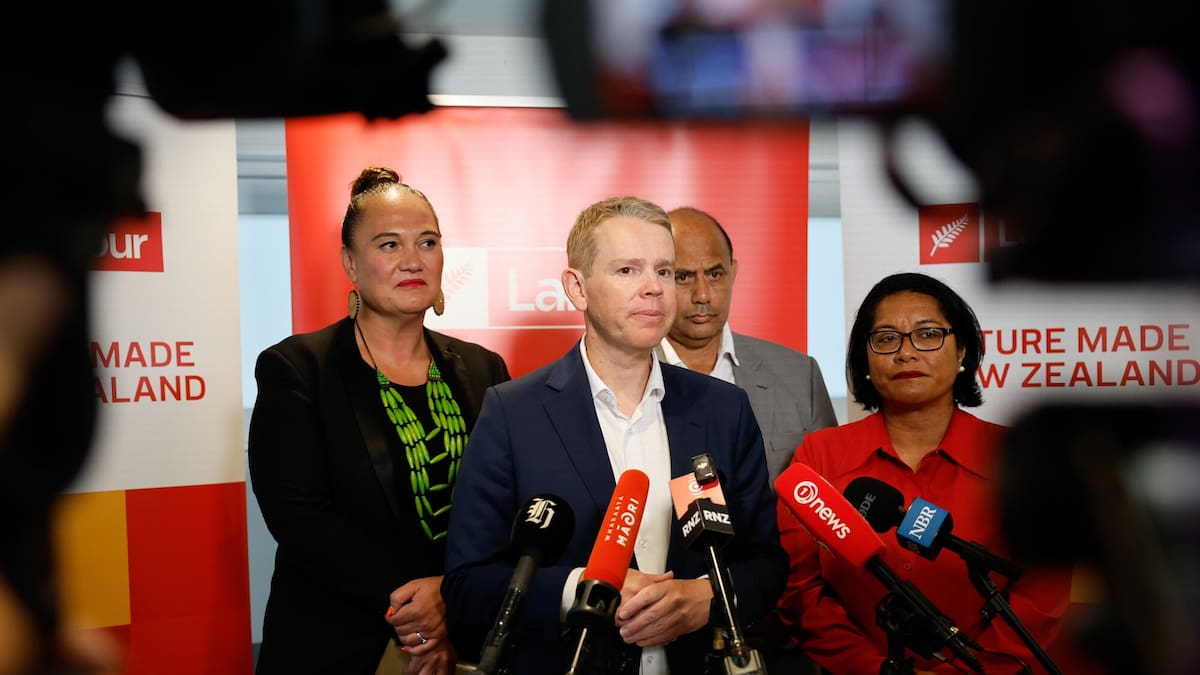
Hipkins said he “absolutely would reject any suggestion” that Edmonds misled Fitch by not telling the agency about Labour’s spending plans.
Ratings agency meeting with Labour
Fitch downgraded the outlook for the New Zealand Government in March, indicating that the Government’s AA+ rating with the agency could be downgraded.
In its report on that decision, published on March 20, Fitch indicated Labour would use taxes to reduce the deficit and debt.
In a section headed “Post-Election Deficit Reduction”, Fitch said that “significant fiscal consolidation measures are likely to occur only after the 2026 election”.
Fitch went on to compare the coalition Government and Labour’s deficit reduction plans.
It said the coalition was going to use “expenditure constraint” – code for spending cuts – to bring the books back to surplus, while Labour would “emphasise revenue measures” – code for new taxes.
Labour has only announced one “revenue measure”, its CGT.
In the words of Labour’s policy document, “every dollar raised will be ring-fenced” for spending on health, mainly a policy of giving every New Zealander three free GP visits a year, meaning there is no revenue left over to be spent on reducing the deficit.
Willis said Fitch’s comments about Labour’s plans were “mysterious”.
“Because, so far, the only revenue measure that Labour has confirmed [the CGT], they have already spent on GP visits”.
Finance Minister Nicola Willis. Photo / Mark Mitchell
Willis cited ambiguity in the positions of Hipkins, Edmonds, and Revenue Spokeswoman Deborah Russell last week on matters of tax to suggest the party was keen on additional taxes.
“They’re telling Fitch one story to make out that they’re fiscally prudent and telling New Zealanders another,” Willis said.
Fitch regularly comes to New Zealand to meet with policymakers and politicians to inform its ratings assessments. It is not unusual for Fitch to meet with Labour, given the possibility it will be in power by the end of the year.
The Herald has been asking Fitch since March 25 to clarify what was said in the meeting and whether Labour promised additional taxes or whether the party simply did not clarify that the CGT revenue was not going to be used for fiscal consolidation. Fitch has not given the Herald an answer to this question.
Edmonds met with Fitch as it was putting its report together. Hipkins was not part of that meeting.
Speaking ahead of Labour’s caucus meeting on March 24, Edmonds said she discussed “new revenue measures such as a targeted capital gains tax” with Fitch.
“That’s why it was featured in the report,” she said.
On Tuesday, the Herald asked Edmonds whether she had told Fitch the money raised from the CGT had all been ring-fenced for new spending.
Asked whether the fact the CGT revenue was being spent had come up, Edmonds said: “I don’t think that came up in the conversation.”
“We talked more generally about health and the ageing population,” she said.