
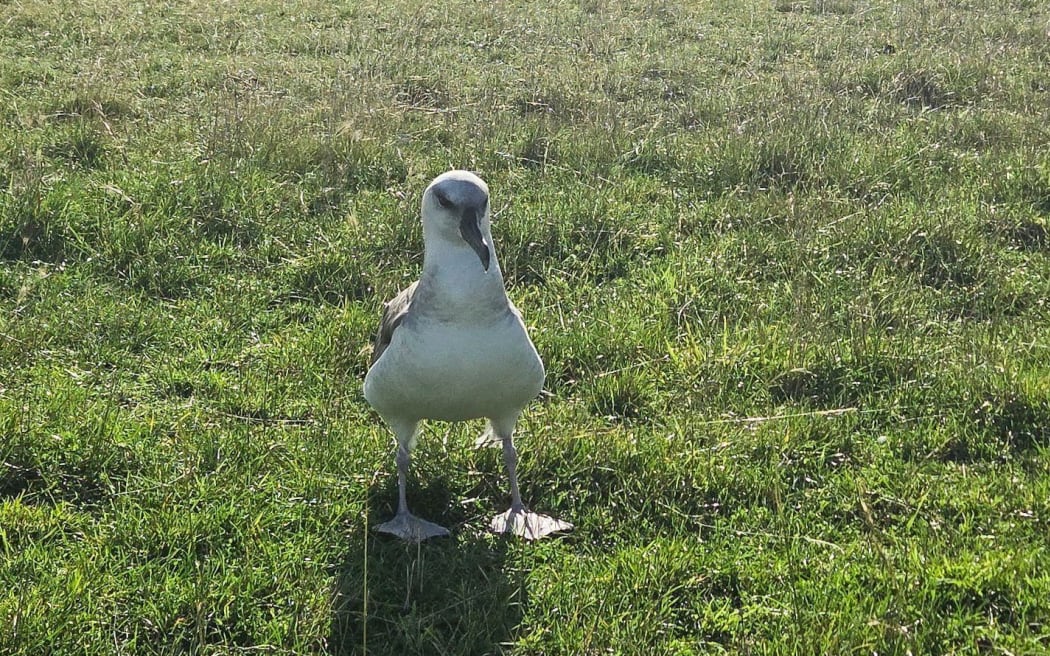
An albatross found in Pirinoa after last week’s storm.
Photo: LDR/Supplied
The number of albatrosses brought into Wildbase Recovery rehabilitation centre in Palmerston North this year is the highest they have ever seen.
Four juvenile albatrosses were brought into the centre after last week’s wild weather. This follows seven albatrosses rescued across the lower North Island after the mid-February storm.
On that occasion, three albatrosses were treated at Wellington Zoo, and four at Wildbase.

Megan Jolly, an associate professor at Massey, runs Wildbase. She said climate change meant more birds were becoming victims of storms.
“The number of albatrosses this year has been the most we have seen in any year, ever, at Wildbase.
“We usually see more sea birds in winter. The increased numbers have more to do with climate change and higher frequency of large storms than an increase in the number of birds,” she said.
“That is represented in us now seeing them across the year.
“There is a massive decline in all seabirds internationally.”
Jolly said four albatrosses had been brought into the centre last week; early in the week one had come from Wairarapa and one from Patea, and then on Friday two had been brought in from Pirinoa in South Wairarapa.
All had been thin when they came in, with two quite weak.
“They are all juveniles,” she said.
Two of the four were expected to be released later this week.
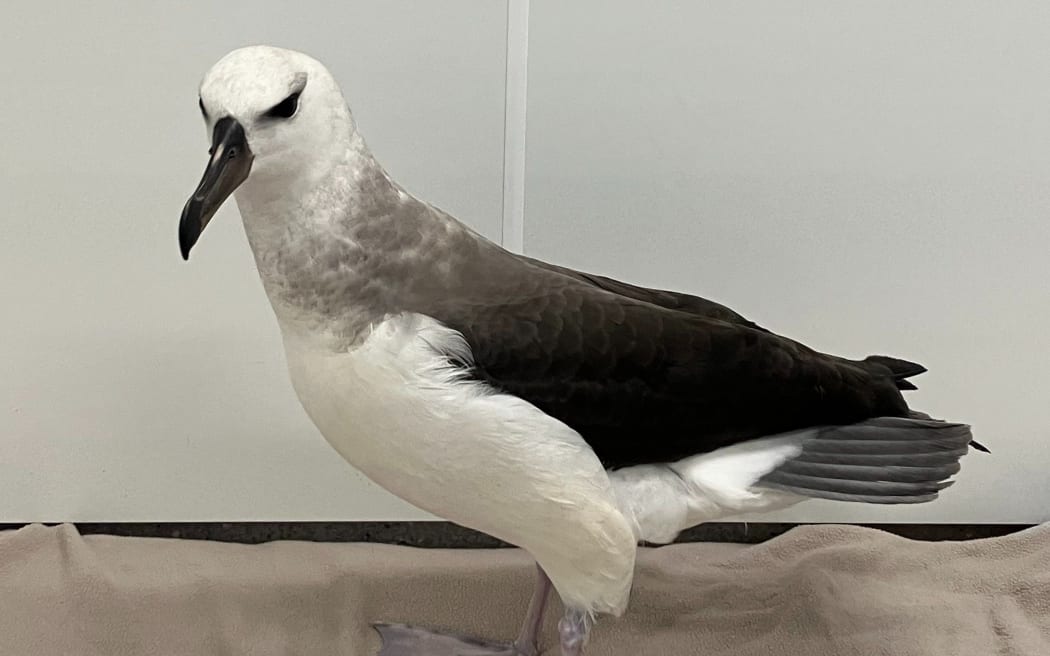
An albatross recovering at Wildbase after being blown ashore in last week’s storm.
Photo: LDR/Supplied
Danielle Hill, founder and operator of Wairarapa-based Ngahuia Wild Bird Rescue, knew of eight sea birds blown ashore after last week’s storm.
Three had come from Pirinoa in South Wairarapa, two had been found in Wellington, and one further north.
One in Gladstone and another in South Wairarapa had disappeared after being reported.
“There was one in Gladstone on an elevated paddock which managed to fly away. One landed in Seaview in Wellington, and one landed in Lower Hutt in a car park.”
Hill said they all looked like the same species, and were all juveniles.
Jolly confirmed they were all the same species, but as they were juvenile there were three possibilities; Campbell black-browed albatross, grey-headed albatross, or black browed albatross.
“The juveniles all look the same,” she said.
Both Hill and Jolly stressed the importance of getting help for seabirds as soon as possible.
“It’s really important if people find sea birds of any size they contact their local DOC, or their local bird rescue as soon as possible to maximise chances of recovery,” Jolly said.
“The sooner you can intervene, the better chance the bird has of a positive outcome.”
-LDR is local body journalism co-funded by RNZ and NZ On Air
Sign up for Ngā Pitopito Kōrero, a daily newsletter curated by our editors and delivered straight to your inbox every weekday.