
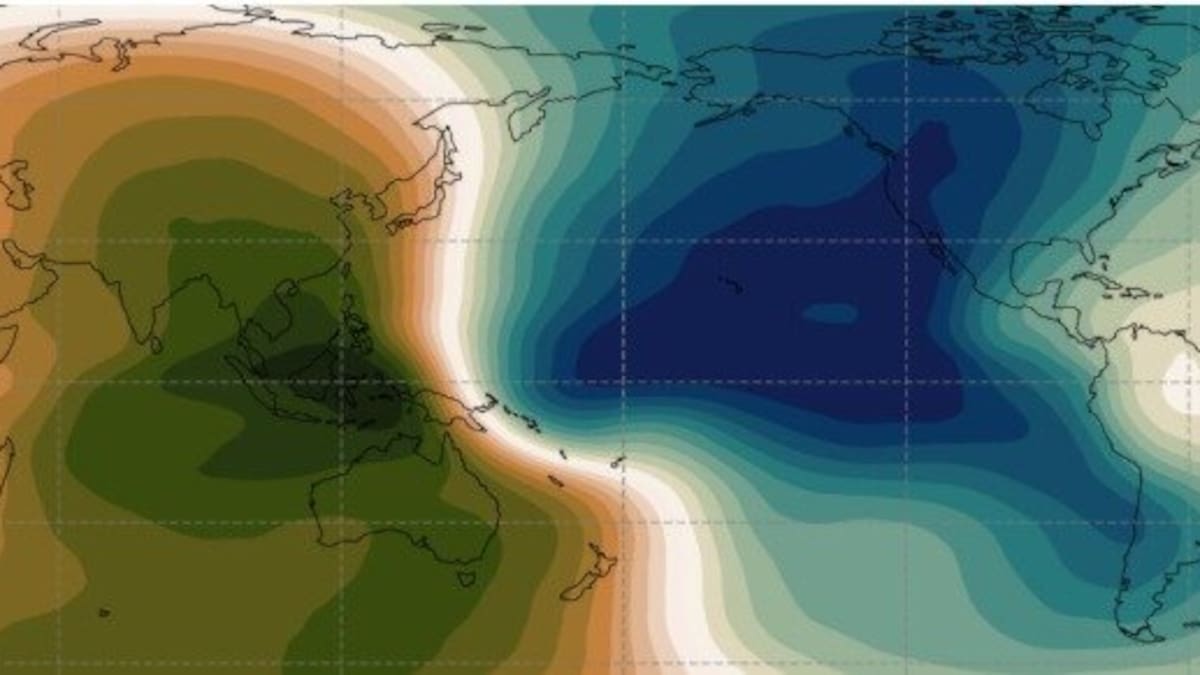
A forecast of anomalous rising air (cold colours) and sinking air (warm colours) from one of the global climate models used by Earth Sciences NZ. The Earth Sciences NZ visualisation based on data from ECMWF SEAS5 shows the globe in March 2026 and what’s forecast in September 2026, with New Zealand pictured in the lower centre.
What does it mean for our weather?
There’s a dry weather risk for eastern and northern New Zealand as a “strong” El Nino weather pattern looks likely from winter on, weather experts say. Pictured are stock gathered around a water trough during a dry spell north of Auckland in 2020. Photo / Jason Oxenham
More rain may not be welcomed by some, with several wet weather events taking lives and damaging homes and public infrastructure this year. Pictured is a flooded street in Wellington’s Stokes Valley in February. Photo / Billy Paine