

Listen to this article
Estimated 4 minutes
The audio version of this article is generated by AI-based technology. Mispronunciations can occur. We are working with our partners to continually review and improve the results.
Premier Susan Holt says her record spending on health care is starting to bear fruit, but progress isn’t moving as fast as she would like.
She told a Wednesday news conference that the collaborative clinics her government has announced so far are about one-third of the way to adding the 17,000 patients they are intended to.
A Fredericton North clinic has added 1,155 patients out of the 1,600 goal, while one in Tantramar has added 277 of the 1,000 expected.
The clinic in Lamèque, meanwhile, is down 73 patients because the switch to digital records revealed that many patients on the roster had moved away or died — though Holt said she still expects it to remove 3,700 people from wait lists over three years.
WATCH | ‘It’s very personal’: Premier on new health numbers: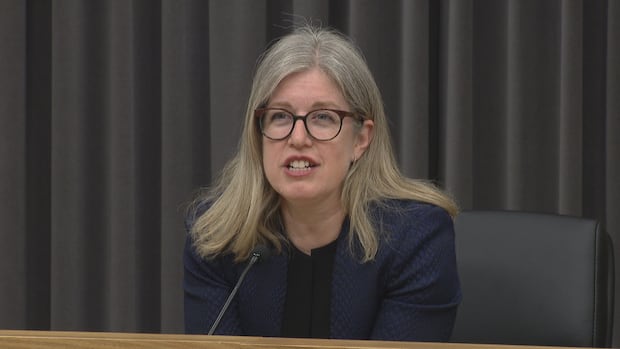
Clinics show slow but steady progress on N.B. primary care
New clinics about one-third of the way to hitting goal for newly attached patients, premier says
“We’re pleased with the adoption of the collaborative model,” Holt told reporters.
“There have been some bumps to work out in terms of how you build these teams, how we work with the data, how we clean up data that isn’t accurate.”
Holt’s Liberals have budgeted a 17 per cent increase in health-care spending for this year compared to last year’s budget.
They also agreed to a four-year, $270 million pay agreement with the New Brunswick Medical Society that includes incentives for doctors who work in collaborative care clinics.
Improving health care is the centrepiece of the Liberal government’s agenda, and Wednesday’s news conference was part of a blitz of publicity events around health and senior care this week.
That includes no fewer than four events to “celebrate” four nursing home expansions and a ceremony for internationally trained doctors who have been assessed as ready to practise medicine in New Brunswick.
Last year, Holt said she expected that New Brunswickers would begin to notice improvements in the health care system by midway through this year.
Wednesday she was more cautious.
“If you talk to 277 folks in Tantramar, they’ll tell you they’re seeing it right now. If you talk to somebody who’s still waiting because they haven’t been attached, they’ll tell you they haven’t seen any change. It’s very personal.”
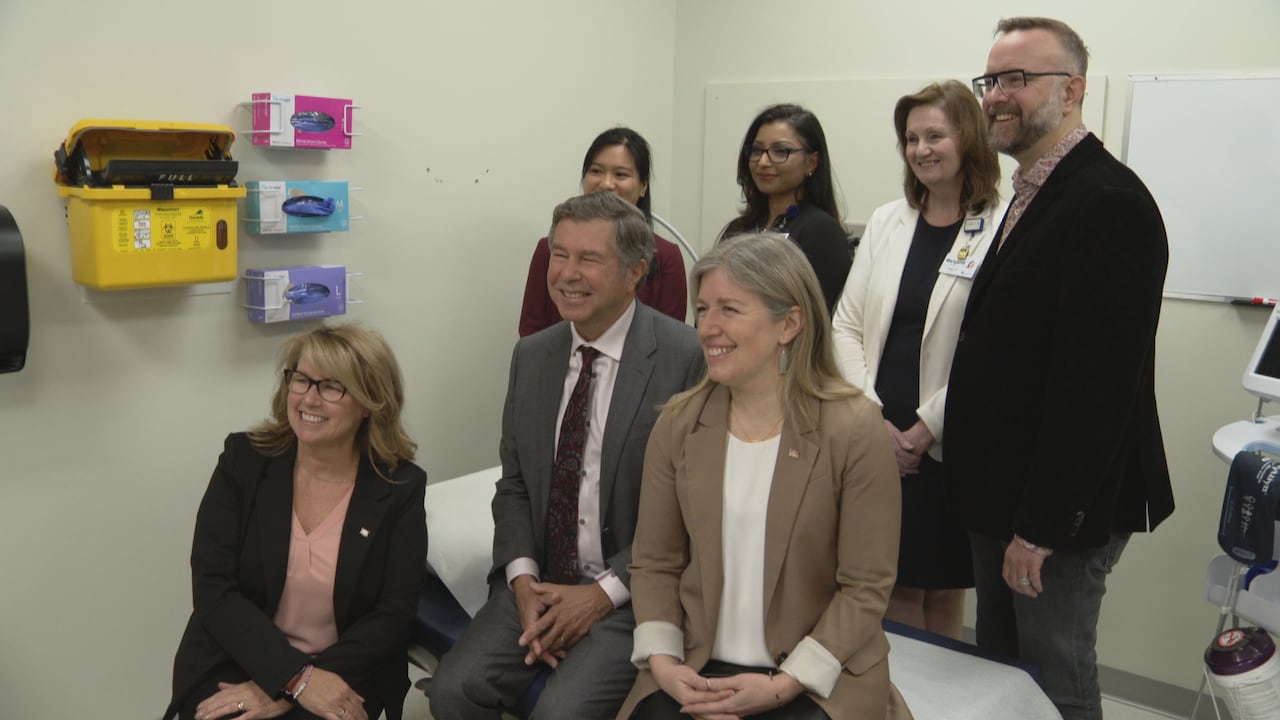 The Holt Liberals been been announcing new collaborative care clinics around the province since the beginning of their mandate. (Chad Ingraham/CBC)
Progressive Conservative Opposition critic Bill Hogan said the government could get better results if it spent money more wisely.
“Any increase in people being attached is great, but there’s still such a long, long way to go,” he said.
Holt said the collaborative clinics can take on about 50 to 100 patients a month, so getting to each facility’s target isn’t immediate.
Earlier this year, Holt revealed the percentage of New Brunswickers with access to primary care last year was 72.5 per cent, down from the previous year.
She estimated that represented 238,000 New Brunswickers, though the CEO of the New Brunswick Health Council, which produced the percentage figure, warned that Holt’s number was “not that strong.”
As of the end of March, 127,177 individuals were registered with N.B. Health Link, a program for New Brunswickers without a primary care provider.
That was up slightly from 125,000 late in 2025.
Holt said Wednesday it will be easier to count as more collaborative care clinics come on line with digital patient records.
“We are going to get better and better data as that percentage of paper records in doctors’ offices gets smaller and smaller and smaller.”
The premier said the higher spending by her government on health care is having an impact in other ways.
The turnover of nurses at Horizon Health has plummeted, and there were net increases of 67 doctors and 468 nurses in the province in fiscal 2025-26.
The Liberals awarded $15,000 retention bonuses to nurses over two years.