
Women’s double scull gold medallists Brooke Francis (right) and Lucy Spoors at the 2024 Paris Olympics. Photo / Iain McGregor
“I’ve always wanted to do one, and we are currently living in Rotorua, so it seemed perfect timing to aim for this iconic marathon.”
She said she had been rowing on Lake Rotorua but couldn’t imagine running around it.
Francis returned to elite rowing after the birth of her now 3-year-old daughter, Keira, and now balances training with two children under 4. Her son, Flynn, is 10 months old.
She said she enjoys running, because “it’s so easy to chuck shoes on and head out the door”.
Her training included shorter runs with Flynn in the pram and one long run a week on her own.
“Running has been a good way to help build back my aerobic fitness for rowing.”
However, she said marathon training had been different from rowing training.
“I’m very novice when it comes to running, and just tend to put my shoes on and go without overthinking anything.”
She said the marathon had been a good challenge and goal to work towards.
On race day, her aim was to enjoy it, fuel well, and finish in under four hours.
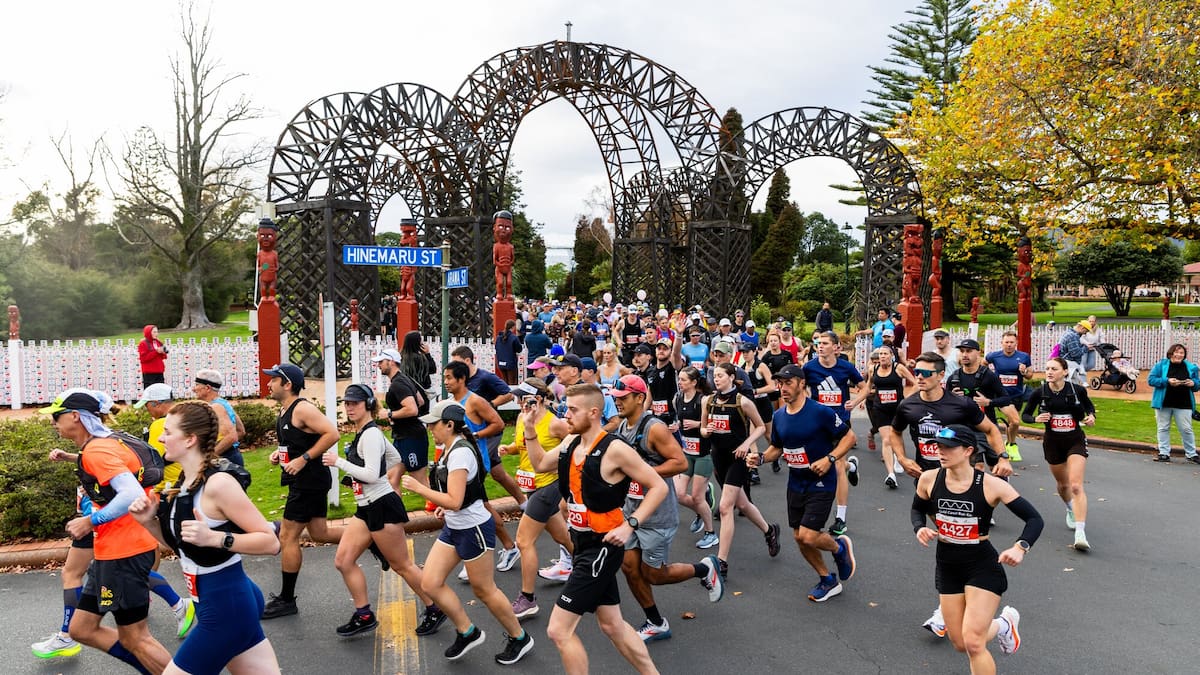
The 2025 Red Stag Rotorua Marathon. Photo / Supplied
Event director James Cameron said watching Francis run 42.2km around the lake she trains on every day would be special.
“We can’t wait to see her come through that finish line.”
Cameron called the race the “people’s marathon”.
“It’s the longest-running major annual marathon in New Zealand and in the Southern Hemisphere.”
He said about 80% of participants were from outside Rotorua, and 2400 tamariki (children) were from primary schools in Rotorua and the district.
“It’s a special way to start the marathon weekend with the next generation getting their opportunity.”
Cameron said the marathon was one of Rotorua’s most loved events and was always held in the first weekend of May every year.
He said the event had captured the hearts and minds of the community over generations.
“Running is booming at the moment, so we’re seeing a lot of interest in running events.”
NZME’s Flava breakfast hosts K’Lee McNabb, Azura Lane, and Charlie Pomee were taking part in the Rotorua Marathon with other team members.
McNabb and Lane were running the Te Puia 10km, while Pomee was running the half-marathon.
Lane said the team had been “locked in” to their fitness since Christmas.
Flava breakfast hosts K’Lee McNabb, Azura Lane, and Charlie Pomee. Photo / Supplied
“Red Stag Rotorua Marathon partnered with us, giving us the opportunity to run in the marathon and promote a healthy lifestyle.”
She said Pomee had been the most competitive – “no one else is running his distance, but he still finds a way to talk pace, food, and training every day”.
Her goal for the race was “don’t stop running”.
Lane said she was excited about the Rotorua atmosphere.
“It’s beautiful to see so many people with a common goal or showing aroha to the people they care about.”
After the race, the Flava team would be at the Good Eastern Taphouse from 5.30pm playing musical bingo. Listeners could register on the Flava website and come along.
Lane said they would also watch the Warriors play the Eels at 7.30pm.
“We can’t wait to be with other passionate league fans that night – we know RotoVegas loves their footy.”
Injury warning
Before the marathon, ACC injury prevention leader James Whitaker advised runners to pace themselves.
He said the Rotorua Marathon was one of the special days on the national running calendar.
“The Rotorua Marathon is known for being a world-class event.”
“Success on race day starts well before the gun goes off,” Whitaker said.
“Knowing your limits is just as important as crossing the finish line.”
Participants at the 2025 Red Stag Rotorua Marathon. Photo / Supplied
Whitaker said the “rule of thumb” was that the Rotorua Marathon was about seven minutes harder than any other marathon in the country.
“It’s important to have a plan for race day and to make sure you get your nutrition and hydration right.”
His biggest tip was not to try anything new on race day.
“Make sure you replicate what you have done in training.”
He said appropriate footwear, good nutrition, and training on similar surfaces could help reduce injury risk.
“If something doesn’t feel right, get it checked early.
“And if you are injured, talk to a professional about the right time to return to training rather than pushing through pain.”
Bijou Johnson is a multimedia journalist based in the Bay of Plenty. A passionate writer and reader, she grew up in Tauranga and developed a love for journalism while exploring various disciplines at university. She holds a Bachelor of Arts in Classical Studies from Massey University.