
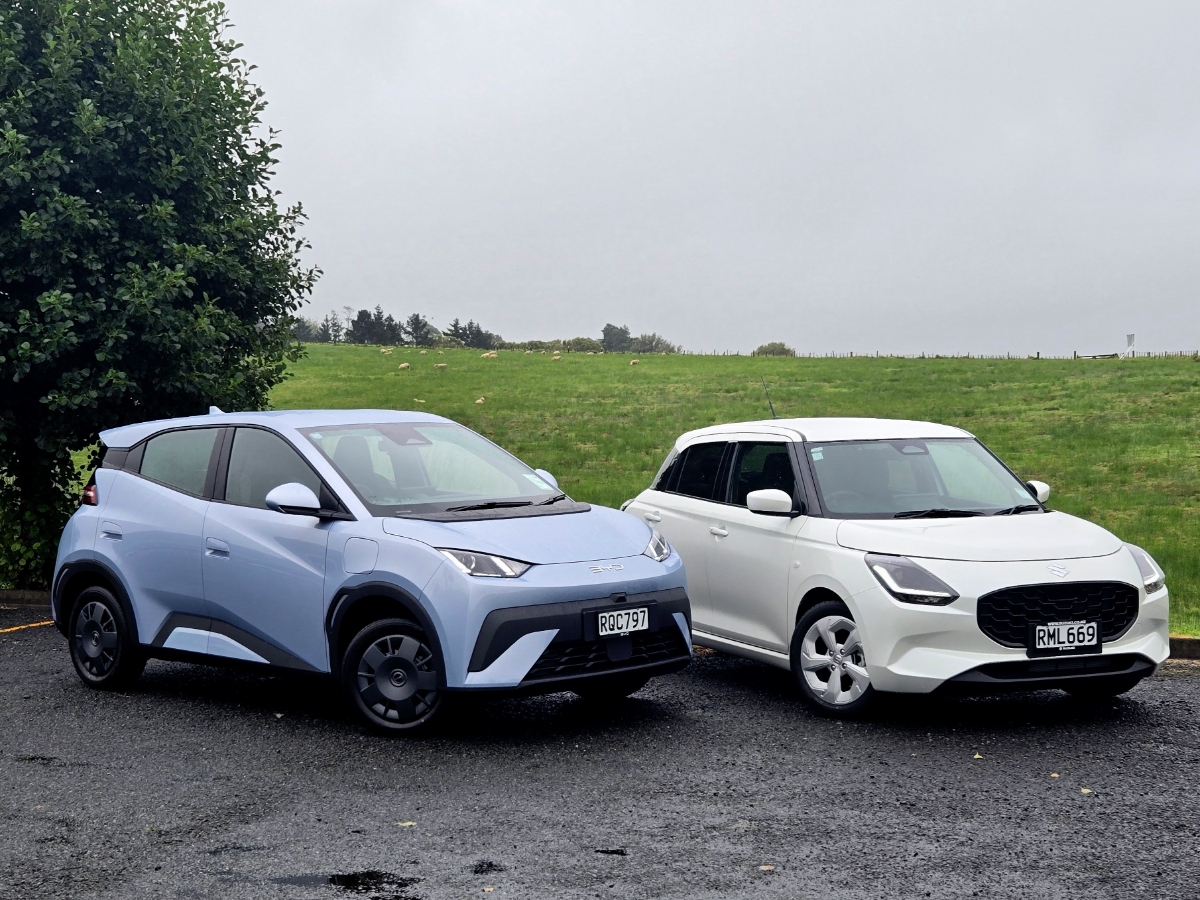
It’s amazing how quickly the BYD Atto 1 has become a bit of a cult small-car in New Zealand. Everybody seems to know what it is and when you’re driving one, people smile.
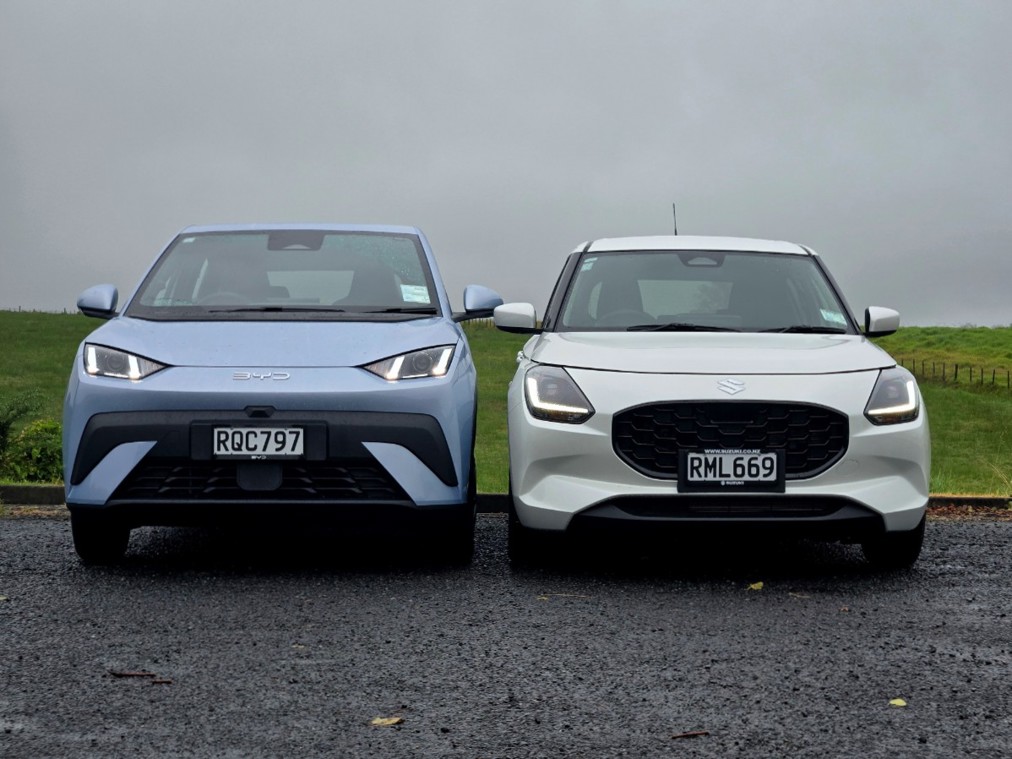
BYD towers over Suzuki physically. But how about in other ways?
It’s clearly been designed with a sense of fun. It’s minuscule and it looks, well, a bit silly. Having BYD on the bonnet is a factor, too: it’s NZ’s number one EV brand and seems to be in a position of trust among Kiwi consumers. The Atto 1 was much-talked-about prior to launch and a sub-$30k price for the entry-level model really grabbed headlines.
So it seems like a good time to put it head-to-head with a long-standing small-car icon, the Suzuki Swift. Suzuki NZ claims it’s the most privately purchased new car of the last 20 years; it’s one of the most aspirational budget-cars around, and it’s worth mentioning you can have any mainstream Swift (Sport excluded) for less than $30k.
Read More
We’ve chosen to put the entry-level $29,990 Atto 1 Essential against the mid-range $26,990 Swift GLZ. The Essential, because that sub-$30k price is key to the whole value argument and something starting with a “2” seems so much cheaper than something starting with a “3” (like the Atto 1 Premium). And the GLZ, because it’s the best price/equipment mix in the range, and a pretty fair comparison specification-wise to the little BYD.
Advertisement
On the outside
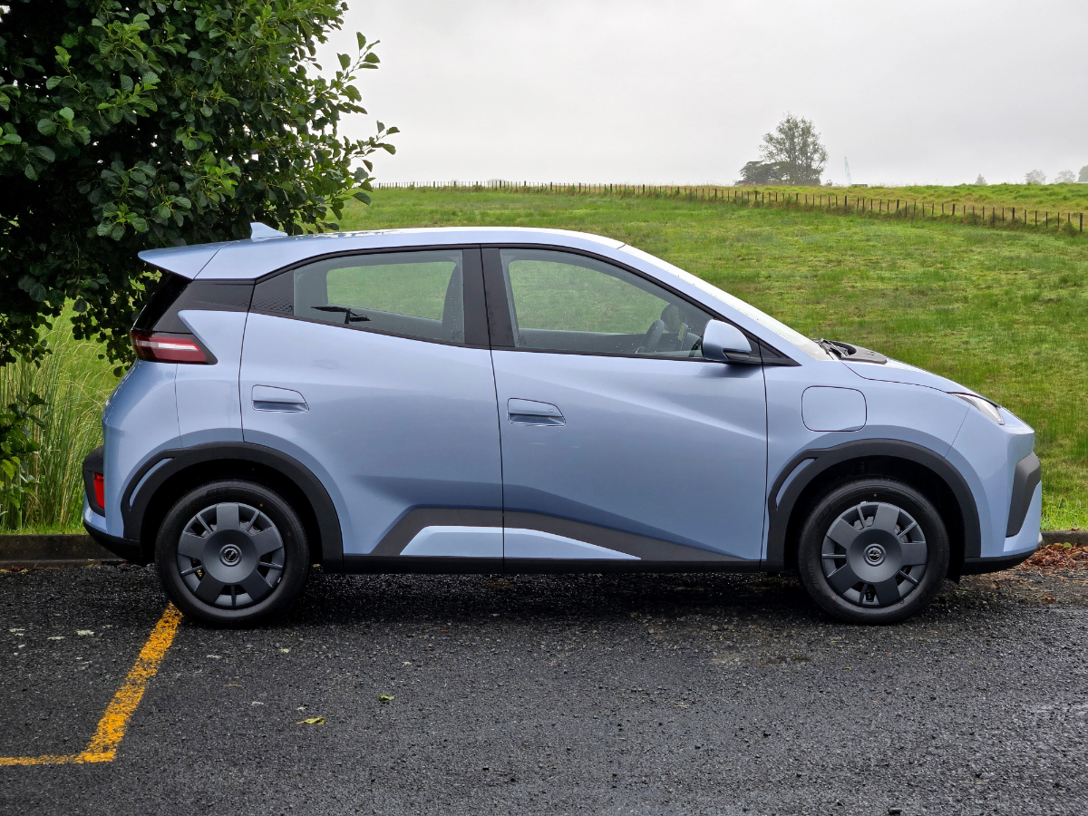
Doesn’t look it, but Atto 1 is actually longer than the Swift. Well, just.
The Atto 1 is all wild angles and relative height, but it works. You might not know it thanks to the tall-boy profile, but it’s actually 130mm longer than the Swift – albeit still under 4m long, which is kinda the cutoff for true city cars.
Both the BYD and Suzuki are instantly recognisable, which surely spells design success in some way.
The Swift is… a Swift. This model was all-new in 2024, but still carries signature styling cues like the clamshell bonnet and “floating” roof.
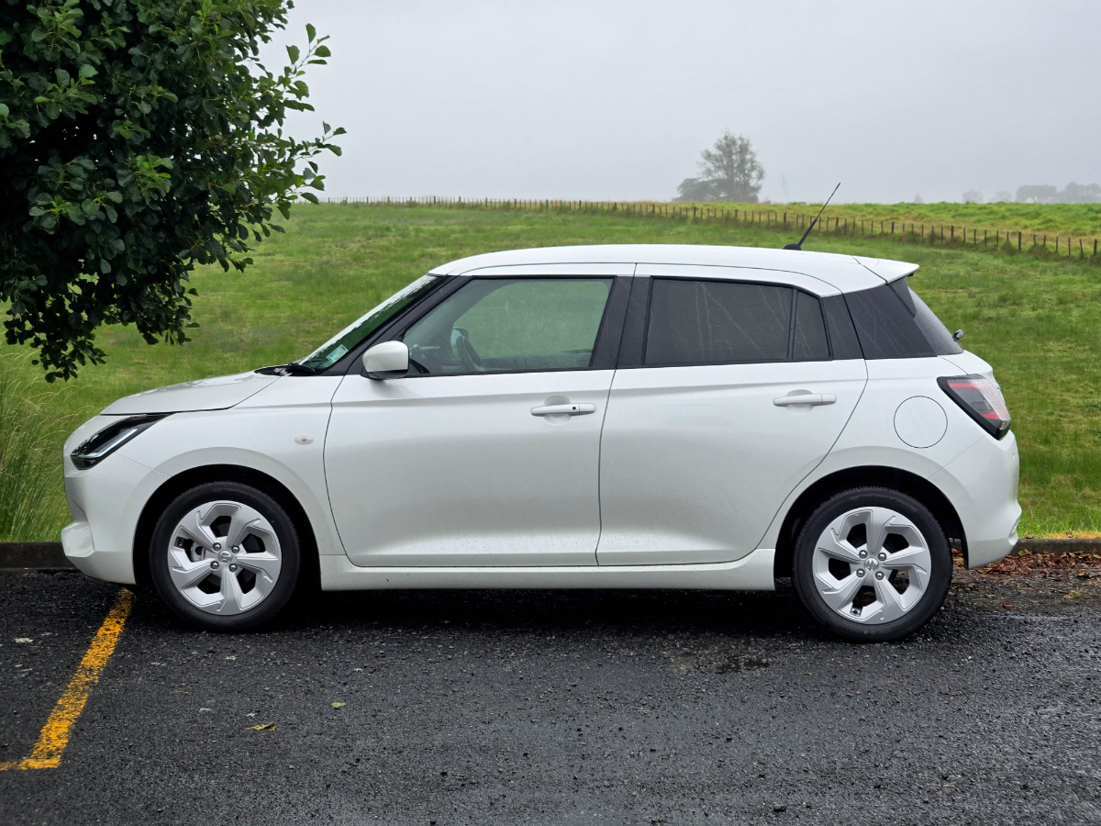
You wouldn’t mistake this for anything other than a Swift.
Both the BYD and Suzuki are instantly recognisable, which surely spells design success in some way.
They could both do with a footwear upgrade, though. We actually prefer the Atto 1 Essential’s smoky plastic wheel covers (there are steelies underneath) to the Premium model’s shiny alloys, but they’re a bit undernourished at 15 inches in diameter.
Advertisement
The Swift’s 16-inch alloys give it more of a planted look, but what a shame they look like… plastic wheel covers.
OVERVIEW
ATTO 1 ESSENTIAL
SWIFT GLZ
Price
$29,990
$28,500
Body style
5-door hatchback
5-door hatchback
Wheels and tyres
15-inch steel wheels, 175/65 Hankook Ion ST AS tyres
16-inch alloy wheels, 185/55 Yokohama BluEarth-Es tyres
Length
3990mm
3860mm
Wheelbase
2500mm
2450mm
Weight
1294kg
984kg
Website
bydauto.co.nz
suzuki.co.nz
On the inside
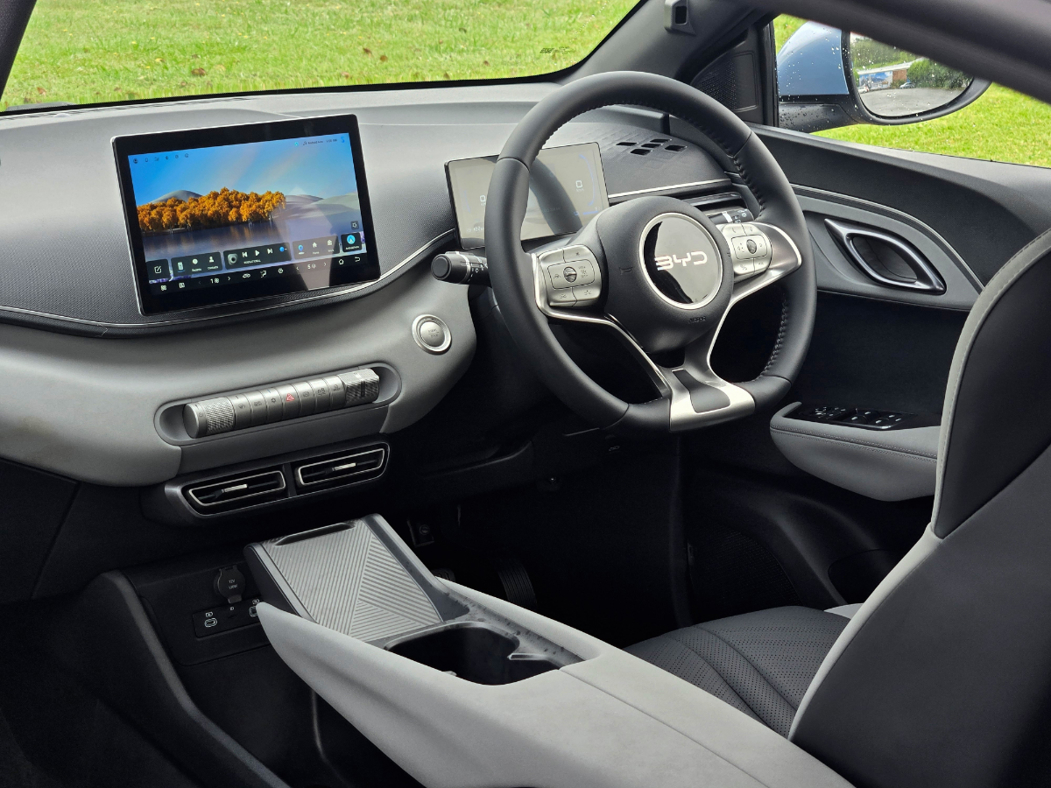
Atto 1 cabin has a good blend of digital with physical controls.
This is new-gen versus trad small-car and no mistake. The Atto 1 sticks to the EV ergonomic playbook with a central screen handling most major functions, and a tiny virtual instrument panel atop the steering column.
You have to learn your way around the BYD cabin, after which time you may well prefer it; but the Suzuki is just easy-to-operate from the first drive.
BYD has retained some physical controls, most obviously a row of smooth switches on the centre console that include a rather fiddly audio control, a climate shortcut and drive modes. Closest to the driver is the gear selector, which you click back and forth for Drive or Reverse.
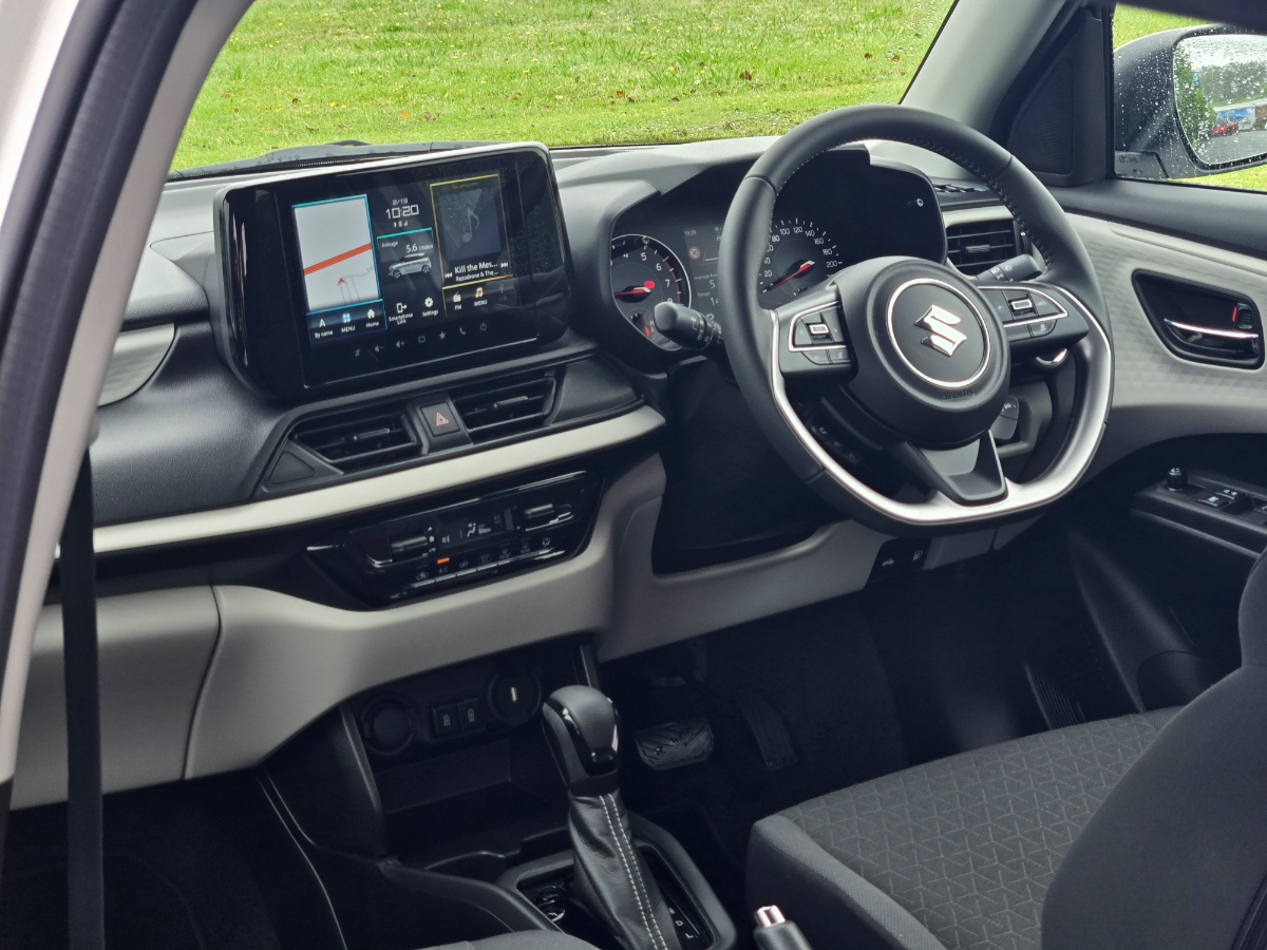
Swift is old-school in many ways, but it works.
In comparison, the Swift’s cabin is like stepping back in time: a traditional instrument binnacle with two analogue dials, masses of buttons on the steering wheel and console, and a gearlever sticking up between the seats (a mechanical handbrake, too!). But you do get a touch screen plonked atop the dashboard and it’s even 1in larger than the BYD’s.
Stepping back a bit isn’t such a bad thing, to be clear. Many carmakers previously intent on eliminating switchgear are starting to roll that back a little and there’s a familiarity to the Swift’s control layout that will be comforting to many. You have to learn your way around the BYD, after which time you may well prefer it; but the Suzuki is just easy-to-operate from the first drive.
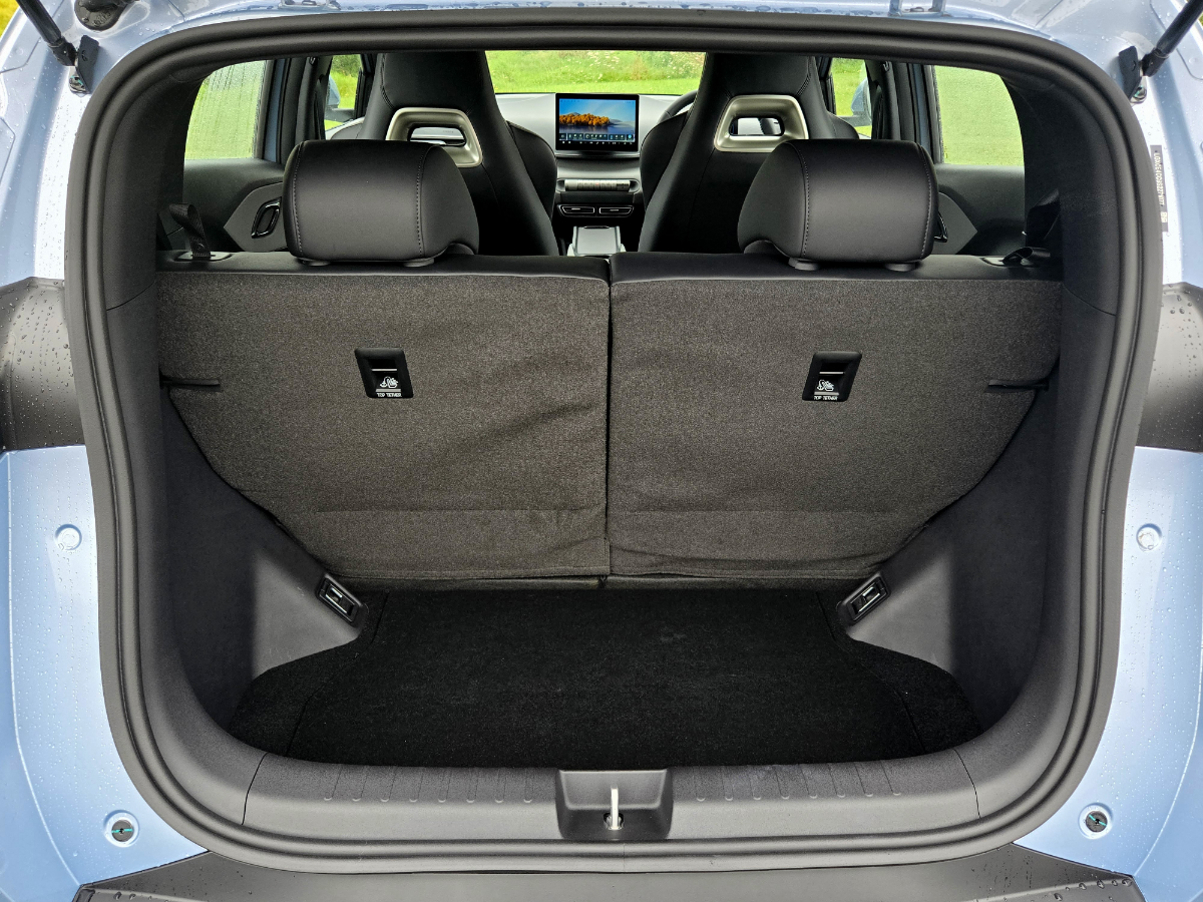
BYD boot is tall and narrow, but it’s bigger by volume.
Both have manual climate control and manual seat adjustment; the Suzuki’s heated seats (an addition for the new GLZ model) are a nice touch.
The BYD is better for rear-seat occupants thanks to a slightly longer wheelbase and, let’s face it, boxier-all-round body shape. It’s only a 4-seater, whereas the Swift can theoretically take 5, but that’s very theoretical in terms of adult passengers. Maybe 3 kids across the back, but even that would be pretty tight.
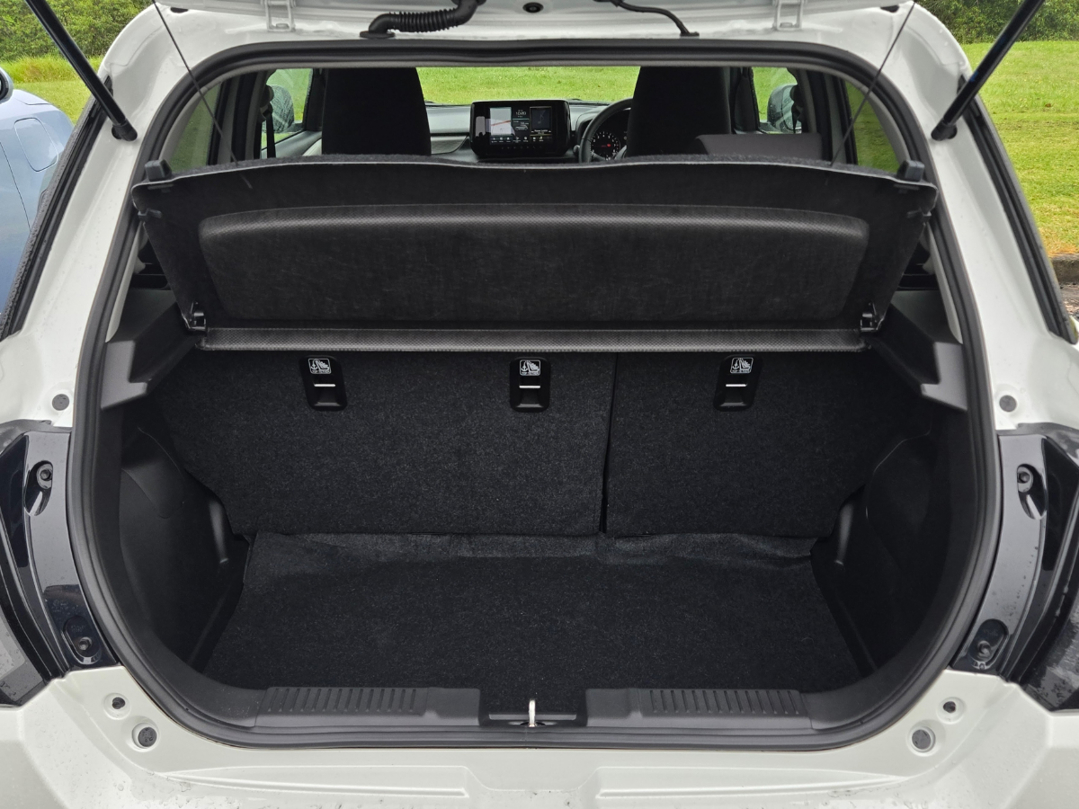
Swift has the more practical load space.
The Atto 1’s boot is deep and offers more load volume, although you could argue the Swift’s is a bit more practical with better opportunity for load-through. It’s more nicely finished as well, if that sort of thing matters to you. The Atto 1 rear seats are split 50/50, while the Swift offers a slightly more versatile 60/40 arrangment.
INTERIOR
ATTO 1 ESSENTIAL
SWIFT GLZ
Head-up display
No
No
Infotainment screen
10.1 inch rotating
9in
Phone projection
Wireless Apple CarPlay and Android Auto
Wireless Apple CarPlay, wired Android Auto
Wireless phone charger
No
No
USB ports
1x USB-C, 1x USB-A front, plus 12-volt
2x USB-A, 1x USB-C front, plus 12-volt
Climate control
Manual
Manual
Front seat heating/ventilation
No/no
Yes/No
Front seat adjustment
Manual
Manual
Boot capacity
308 litres
265 litres
Rear seat split/fold
50/50
60/40
Power tailgate
No
No
On the road
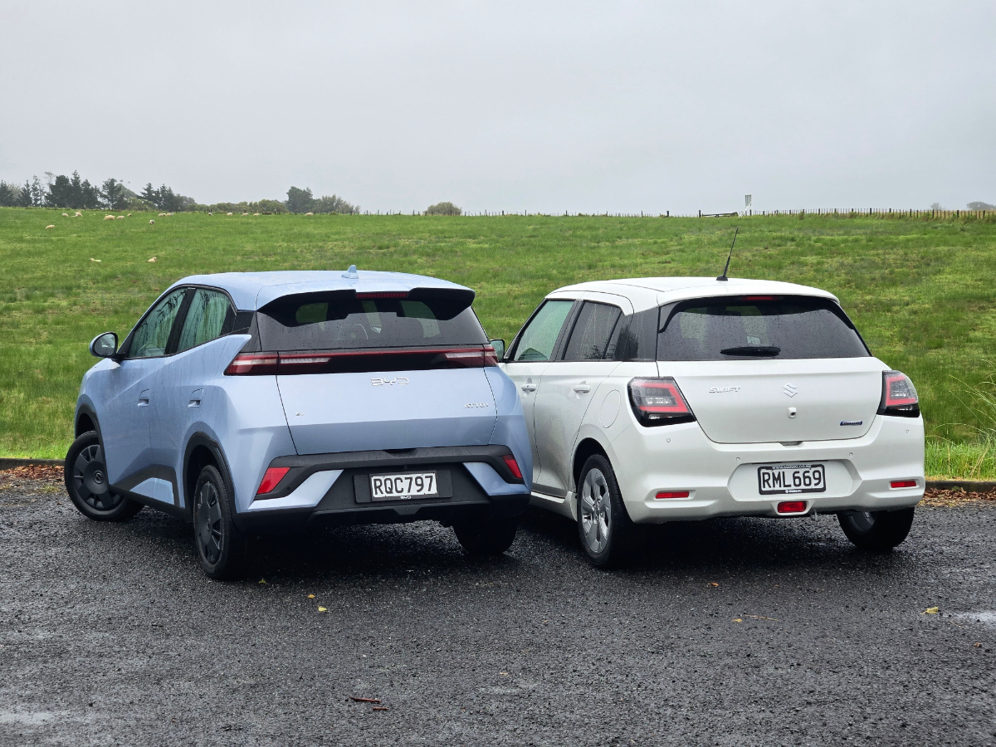
The Atto 1 is fun to drive, but the Swift has more of a big-car feel on the road.
These two are both a whole lot of fun – but in their own ways. The Atto 1 Essential is suitably perky in city driving and bounds away from traffic lights, just as you expect an EV to. Hard to believe its 65kW motor has only half the output of the Atto 1 Premium; at least until you get onto big hills or hit higher speeds, at which time it runs out of puff quite quickly.
The Swift’s mild hybrid engine also only makes 60kW, but the car itself is a massive 310kg lighter. Combustion cars deliver their power and torque in a very different way to EVs of course, so the Swift’s little 3-cylinder is more of a grower: it builds more slowly but is happy to rev and rev, and it sounds fantastic however you use it thanks to the odd number of cylinders.
The Atto 1 is much less happy on the open road than Swift. It’s safe and steady, but requires smoothness and planning to flow from A to B over tricky backroads. The Suzuki feels like a much larger car, with communicative steering (well, in relative terms), a balanced chassis and grippy tyres.
The Atto 1’s driver assists could do with a little over-the-air update (OTA). The adaptive cruise lane-assist aims to keep you in the centre of the motorway markings, but actually ping-pongs you between them; you can disable it on a swipe-down menu from the infotainment home-screen, but it comes back on a startup. And the driver distraction alert is maddening, beeping even if you glance away for a couple of seconds.
Both can presumably be fixed with an OTA. Please, BYD? They’re spoiling our fun.
SPECIFICATIONS
ATTO 1 ESSENTIAL
SWIFT GLZ
Powertrain type
Battery electric
Petrol 12v mild hybrid
Capacity
30kWh
1.2-litre
Power
65kW
60kW
Torque
175Nm
108Nm
Transmission
1-speed, FWD
CVT, FWD
Power to weight
50kW/tonne
61kW/tonne
Adaptive suspension
No
No
Efficiency
15.5kWh/100km, range 220km
4.3l/100km (3P-WLTP)
Tank size, fuel type
n/a
37 litres, 95 octane
Tow rating
Not rated
650kg
On ownership: what’s the warranty and servicing situation?
The warranty covers the car for 3 years/100,000km, but after that the powertrain is covered for another 2 years (up to the original 100,000km) provided all scheduled servicing and maintenance/repairs have been carried out by an authorised Suzuki centre. Roadside assistance is provided for 5 years/unlimited km regardless.
Servicng is due every 12 months or 15,000km, whichever comes first. A (free) check is required at 1000km.
On the whole: should you buy the BYD Atto 1 Essential or Suzuki Swift GLZ?
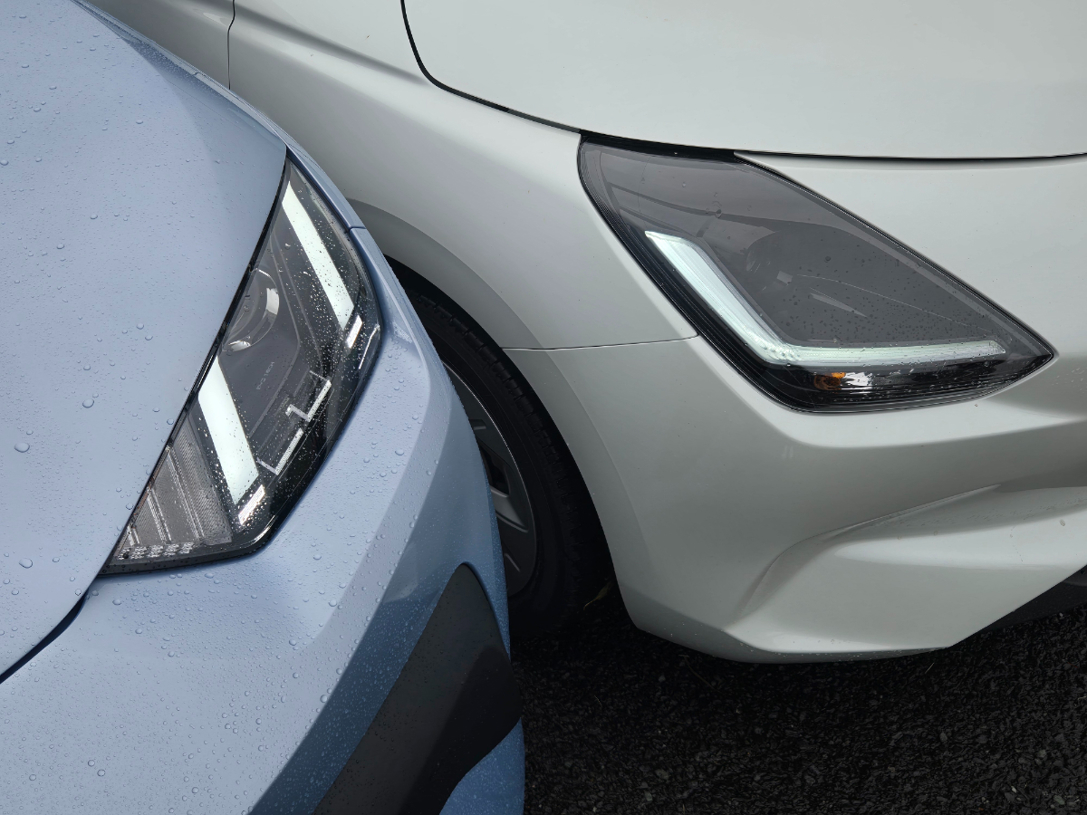
You can judges them as cars, or as an EV versus mild-hybrid petrol.
The decision between these budget-hatchbacks could well start and end with an EV-versus-petrol argument. If you charge the Atto 1 Essential exclusively at home, it’ll cost about $450 to run it over an average annual mileage of 15,000km. That’s cheap.
And the Swift? Well, you need to know long-term fuel cost to work it out, and that’s anybody’s guess at the moment. The Suzuki requires 95-octane too, so that’s another blow. But assuming a price of $3.50/litre at the time of writing, you’re talking approximately $2300 to run the GLZ for the same 15,000km.
With the difference in purchase price, it’ll take you a year to get ahead in the Atto 1 Essential in financial terms, and only if you avoid charging at those much more expensive DC stations. But overall, we reckon this is still a fair match.
The Atto 1 is a hoot to drive around town and really quite practical in its own way. A 5-star ANCAP safety score strengthens the case against the troubled Suzuki (see the safety section below); so this is a win for the BYD.
But the Swift is still packed full of character and while the Atto 1 feels like a toy (we mean that in loving way), the Suzuki feels more like a car. If we had longer distances in mind, it’s worth another look.
BYD Atto 1 Essential and Suzuki Swift GLZ FAQs
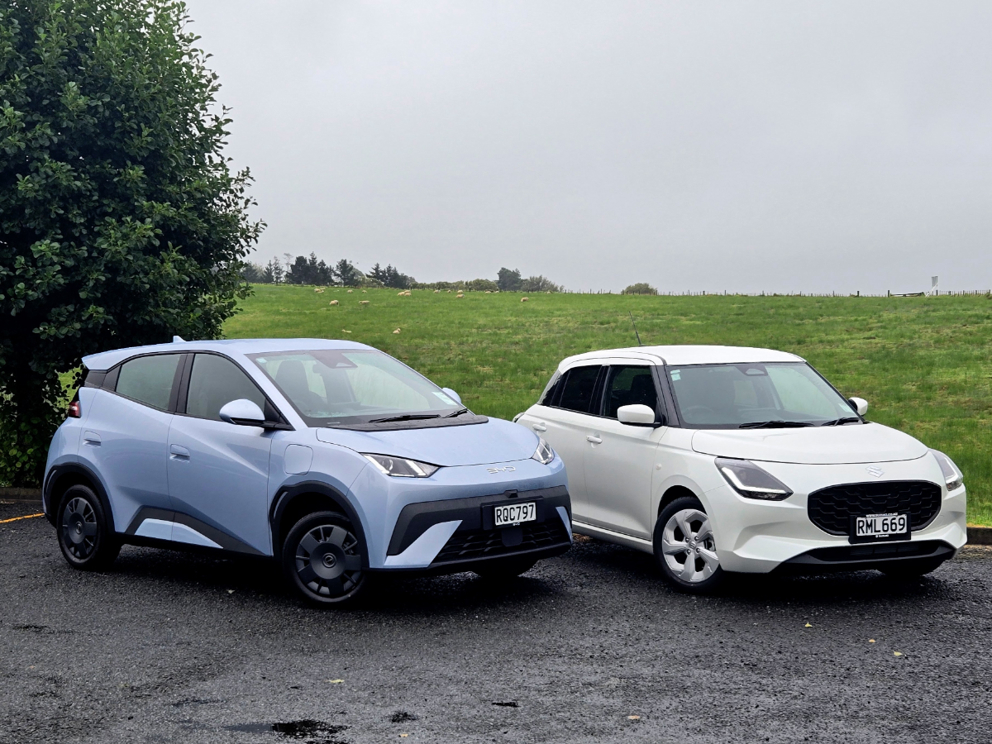
Much lower running costs of Atto 1 EV must be balanced against the higher purchase price.
What kind of cars are they?
Five-door city hatchbacks.
Do the BYD Atto 1 and Suzuki Swift GLZ have hybrid or EV technology?
The Atto 1 is pure-electric, with a 30kWh battery and single electric motor.
The Swift GLZ is a mild hybrid, able to capture energy and store it for use in engine starting and running the electrical systems, to reduce the load on the engine. It can also give a 60Nm torque boost for short periods… but it can’t drive on electric power alone.
What’s the efficiency of the BYD Atto 1 Essential and Suzuki Swift GLZ?
Different powertrains so different measures, but the BYD EV returns 15.5kWh/100km and a range of 220km (WLTP), while the petrol Suzuki is rated at 4.3l/100km (3P-WLTP).
Are the BYD Atto 1 Essential and Suzuki Swift GLZ safe?
The Atto 1 has covered itself in glory with a 5-star safety rating from ANCAP.
This generation Swift has had a rough ride in that respect, initially scoring just 1 star but now rated at 3 stars (September 2025 models onwards) following some specification changes.
What safety and assistance features do the BYD Atto 1 Essential and Suzuki Swift GLZ have?
ATTO 1 ESSENTIAL
SWIFT GLZ
Intelligent lights
No
High-beam assist
Rain sensing wipers
No
No
Airbags
8
8
Adaptive cruise control
Yes
Yes
Driver attention monitor
Yes
No
Traffic sign recognition
Yes
Yes
Forward collision warning
Yes
Yes
Blind spot warning/assist
Yes/no
Yes/no
Lane departure warning/assist
Yes/yes
Yes/yes
Rear cross traffic alert/braking
No/no
Yes/no
Reverse collision braking
No
No
Parking sensors
Front/rear
Front/rear
Camera system
Rear
Rear
What are the main rivals for the BYD Atto 1 Essential and Suzuki Swift GLZ?
Dongfeng Box ($26,990): Pure-EV on clearance pricing, but another car with safety-rating struggles.
Toyota Yaris GX ($33,590): Relatively expensive, but rock-solid with proven hybrid tech. It’s a Toyota.
MG3 Excite Hybrid+ ($30,990): The cheapest hybrid in the lineup… still over $30k.
Chery Tiggo 4 HEV Urban ($29,990): Tiggo 4 starts in the $20k-bracket, but $30k gets you a full hybrid.
Mahindra XUV 3XO AX5L ($29,990): Honest, interesting to look at and fun with a 3-cylinder engine.