
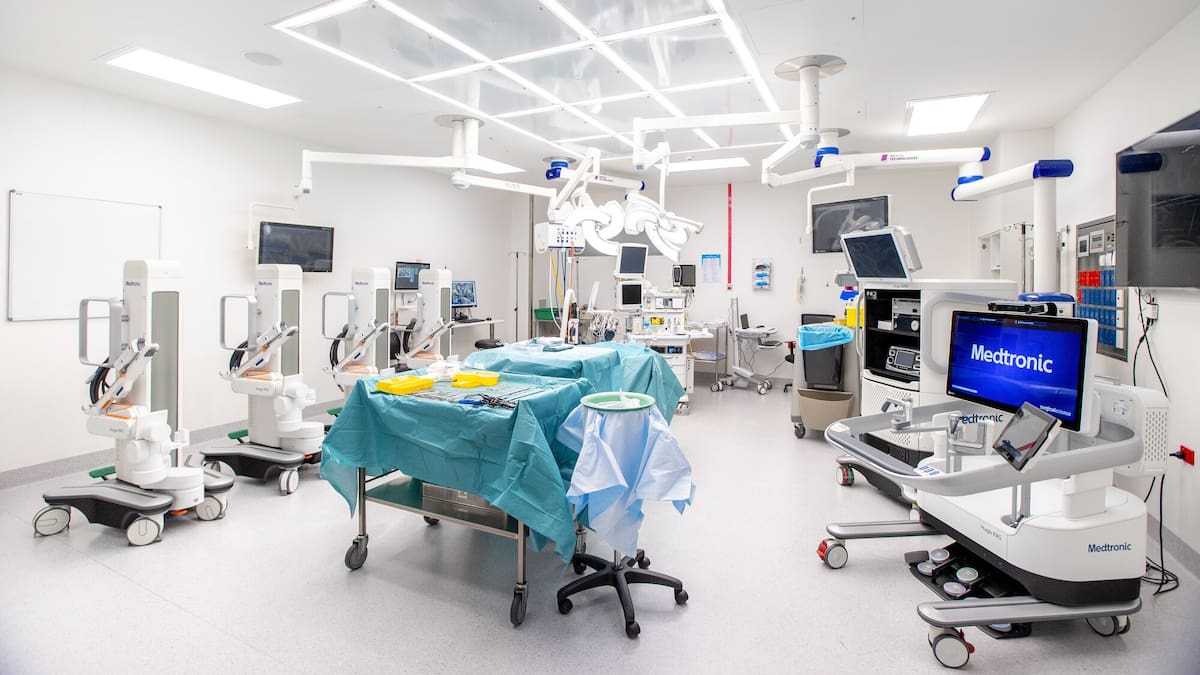
The first procedure using the robot was performed in March this year.
So far, two prostatectomy procedures have been completed using the system.
“A robot-assisted prostatectomy is a minimally invasive procedure used to remove the prostate gland, usually due to prostate cancer,” Harland said.
“It enables our surgical teams to deliver modern techniques, as well as allowing patients to remain close to their families and support networks during treatment.”
Currently, the system is being used for urology procedures, with plans to expand into gynaecology and general surgery later this year.
Hawke’s Bay urologist, Dr Kenny du Toit, who trained on the Hugo system in Sydney before its deployment at Royston Hospital, said the local robotic-assisted technology is a significant win for surgeons and patients alike.
“Robotic-assisted surgery allows us to perform very complex procedures more efficiently and accurately,” he said.
“For suitable patients, that can mean a smoother recovery and a quicker return to normal activities.”
Currently, the system is being used for urology procedures, with plans to expand into gynaecology and general surgery later this year.
“We hope this soon provides a pathway to include all patients within both the private and public health sectors,” du Toit said.
Patients accessing the technology are either privately insured or referred from Health New Zealand waiting lists, with no additional cost for those referred through the public system.
“We also have a small percentage of patients who self-fund their surgery, so there may be a cost increase for those patients who elect robotic procedures over traditional ones,” Harland said.
Health New Zealand director of funding hospitals, Rachel Haggerty, said robotic-assisted surgery (RAS) was being rolled out in a staged approach, based on evidence and led by each region, while maintaining national consistency.
“The goal is to make sure RAS is used effectively, helps attract and retain staff, and leads to better outcomes for patients,” she said.
No specific details were provided on pathways or plans to introduce this technology into Hawke’s Bay’s public system, with further information expected in the coming months as budgets are confirmed.