
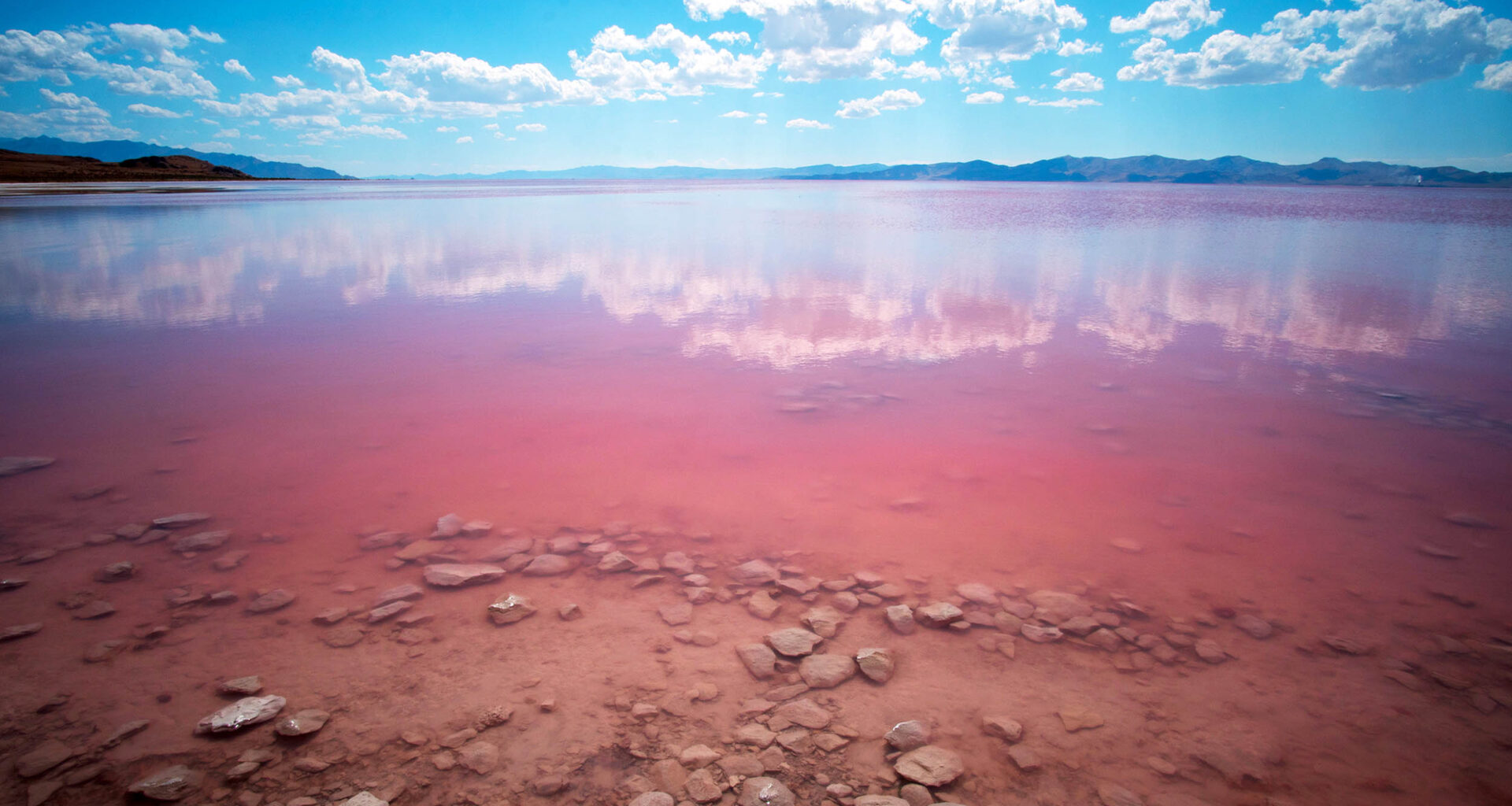
Utah’s Great Salt Lake doesn’t exactly look like a place teeming with life. The water runs five to six times saltier than the ocean, the shoreline crackles with mineral crust, and only a handful of hardy creatures manage to call it home.
Now scientists can add one more name to that very short list.

A tiny roundworm living in Utah’s Great Salt Lake has now been confirmed as a species never before described by science.
Researchers say its ability to survive in the lake’s extreme salt levels not only expands what scientists know can live there, but also raises new questions about how it arrived and what role it plays in a fragile, bird-supporting ecosystem.
Finding Diplolaimelloides woaabi
Inside hard, lumpy microbialites, rock-like mounds built by microbes, on the lakebed, slimy algal mats held the first worms recovered in 2022.
From those mat scrapings, Michael S. Werner, Ph.D., a biologist at the University of Utah described a roundworm that matched no known species.
Back in Werner’s lab, the animals stayed in the top few inches of mats, and they vanished deeper in the mounds.
That tight hideout suggests the worms depend on microbial communities for food, making their presence sensitive to changes in the mats.
After years of close work, the worm received a formal name, Diplolaimelloides woaabi, in the paper.
To choose woaabi, researchers worked with the Northwestern Band of the Shoshone Nation, a federally recognized tribe whose ancestral homelands include the Great Salt Lake region.
That choice links a new nematode, a tiny roundworm with a simple tube-like gut, to a language rooted in the lake.
Names can signal respect, and they also make it harder to treat the lake’s living community as an anonymous sample jar.
Few animals survive
Until discovering Diplolaimelloides woaabi, only brine shrimp and brine flies had been confirmed as native animals thriving in the lake’s saltiest bays.
With no outlet to the sea, water evaporates while dissolved minerals stay behind, driving salinity upward.
Brine shrimp and brine flies turn algae into food that fuels huge waves of migratory birds across the West.
Adding a third animal group forces ecologists to rethink what else might be living on the lakebed.
Two populations appear
Genetic checks showed the lake’s worms did not all match perfectly, hinting at hidden variation within the same muddy habitat.
Because many roundworms look alike at this scale, small DNA differences can mark separate lineages even when bodies seem identical.
“It’s hard to tell distinguishing characteristics, but genetically we can see that there are at least two populations out there,” Werner said.
Sorting that out will take more sampling around the lake, because a second species would change the whole count.
Salt stress and survival
Life in salty water pulls moisture from cells, so any animal that stays alive must manage water loss constantly.
In this group of roundworms shared by Diplolaimelloides woaabi, a tough outer skin and careful control of body salts help keep internal tissues from drying.
Measured under about 1/16 inch long, the species stayed slender enough to slip through bacterial films on the mats.
Even with those defenses, extremes have limits, and rising salinity could still push the worm beyond what its cells can handle.
From ocean to Utah
Most close relatives of this worm live near coasts, yet it survives 4,200 feet (1,280 meters) up and more than 500 miles (800 kilometers) from ocean shoreline.
Migratory waterbirds can carry tiny aquatic life between lakes, sometimes hitchhiking on feathers, feet, or swallowed mud.
Long before humans, a North American inland sea and later freshwater Lake Bonneville remade Utah’s waters between about 30,000 and 13,000 years ago.
Researchers explained that two main ideas could account for the presence of Diplolaimelloides woaabi, but each requires an unusual chain of events to be true.
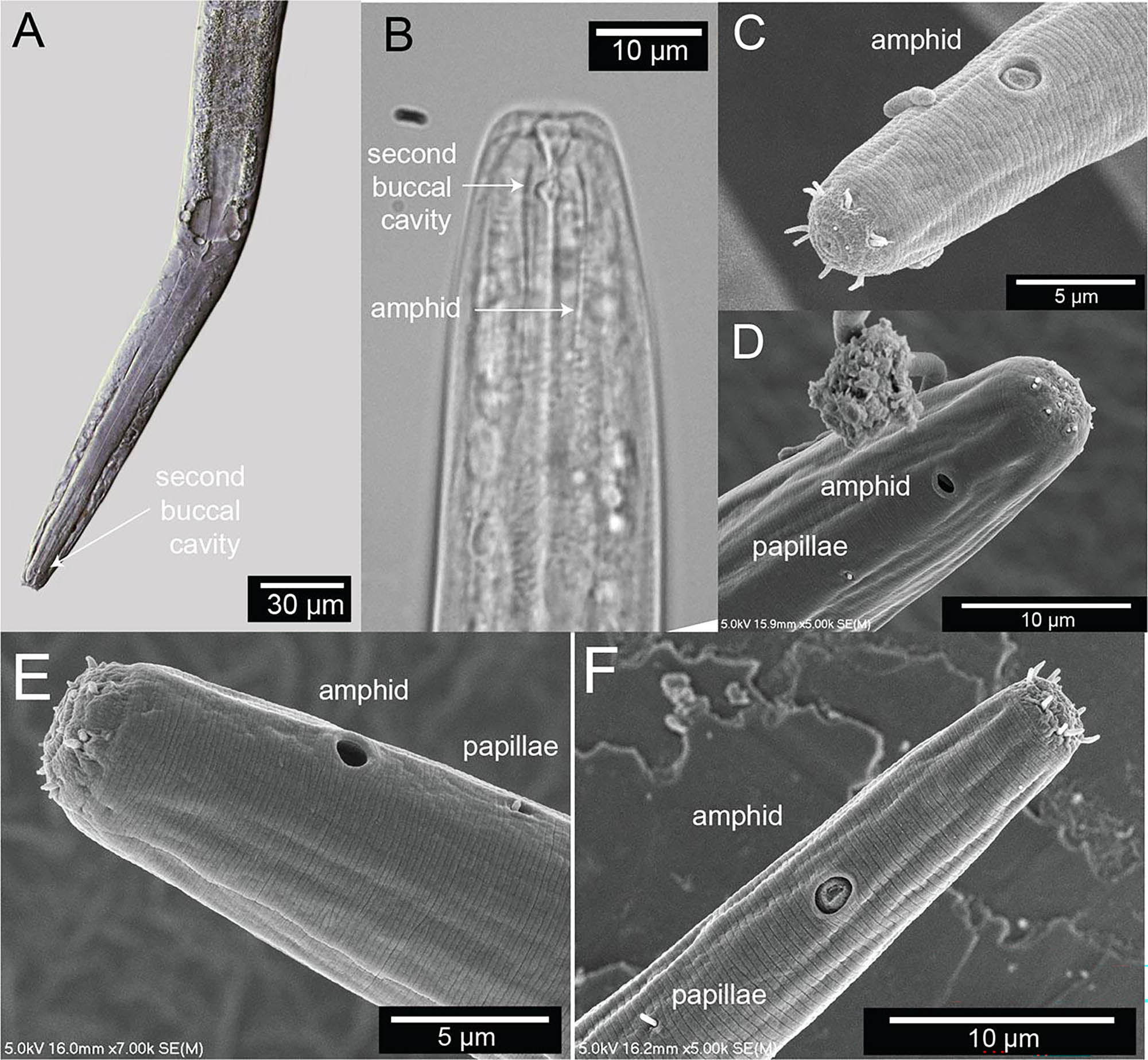 Terminal head region of the new animal species found in the Great Salt Lake, Diplolaimelloides woaabi sp. nov. Credit: University of Utah. Click image to enlarge.Males are missing
Across many lake samples, females dominated the worm population so strongly that the imbalance became part of the mystery.
Male anatomy matters for identifying species, so a shortage of males can slow the work of confirming who is who.
“When we sample out there on the lake and bring them back in the lab, we get less than 1% males,” Werner said.
Such swings suggest the lake environment filters which worms thrive, and lab conditions may hide that pressure.
Food at the surface
Diplolaimelloides woaabi feeds on bacteria growing thickly at the surface, staying close to the lakebed’s main food source.
By grazing on microbes, it may turn that growth into animal biomass that other lake residents can use.
Under high magnification, microbes clung to its outer skin, suggesting a surface coat that can shape who sticks around.
If the mat community thins or dries, the worm loses both food and cover, making its numbers a quick signal.
Lessons from Diplolaimelloides woaabi
Ecologists often treat nematodes as a bioindicator, a living marker of environmental change, because their populations respond fast to stress.
Falling water has exposed microbialite reefs, whose surface mats are estimated to contribute about 30 percent of the lake’s primary productivity.
When those mats bleach, the base of the food chain shrinks, and the worm’s presence could track that decline early.
Used carefully, counts of this species could guide restoration targets, but only long-term surveys will show what normal looks like.
Finding Diplolaimelloides woaabi in Great Salt Lake microbialites shows that even extreme habitats can hide animals with real ecological jobs.
Future work can test how it reached Utah and whether its numbers move early when water levels and salinity change.
The study is published in the Journal of Nematology.
—–
Like what you read? Subscribe to our newsletter for engaging articles, exclusive content, and the latest updates.
Check us out on EarthSnap, a free app brought to you by Eric Ralls and Earth.com.
—–