
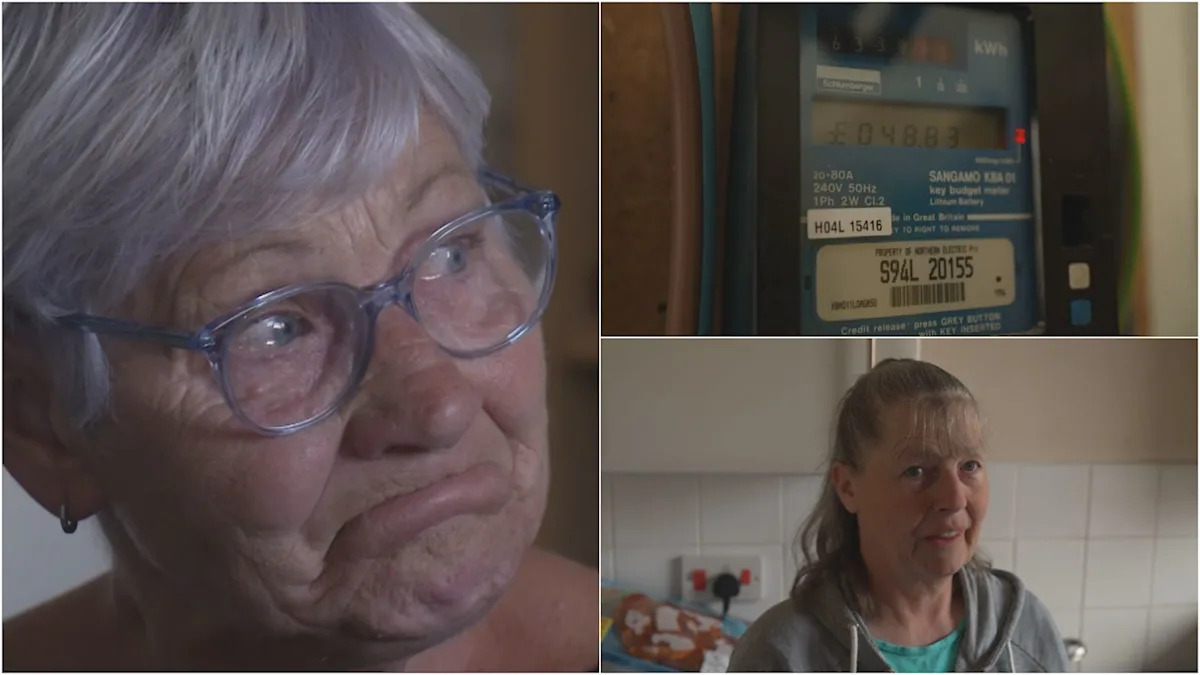
As millions of people prepare to vote in local elections, ITV News Investigations Editor Daniel Hewitt has been finding out how the cost of living remains a major concern across the country
Davina doesn’t want to be calling her 90-year-old mum to ask for help, but what choice does she have?
Her partner, Michael, was made redundant from his job as a chef, and his Universal Credit application was delayed.
Davina’s wage as a supermarket cleaner always helped cover the bills, but couldn’t cover them alone. There was simply not enough in her bank account.
Her mum lent her money to pay the rent and keep the lights on, but not every cost could be covered, and so debt started to build.
It wasn’t always like this.
I first met Michael and Davina three and a half years ago. I went to North Shields in the north east of England to produce a series of reports on the cost of living crisis, with energy bills skyrocketing and inflation rising.
Michael was doing ok, but not everyone around him was.
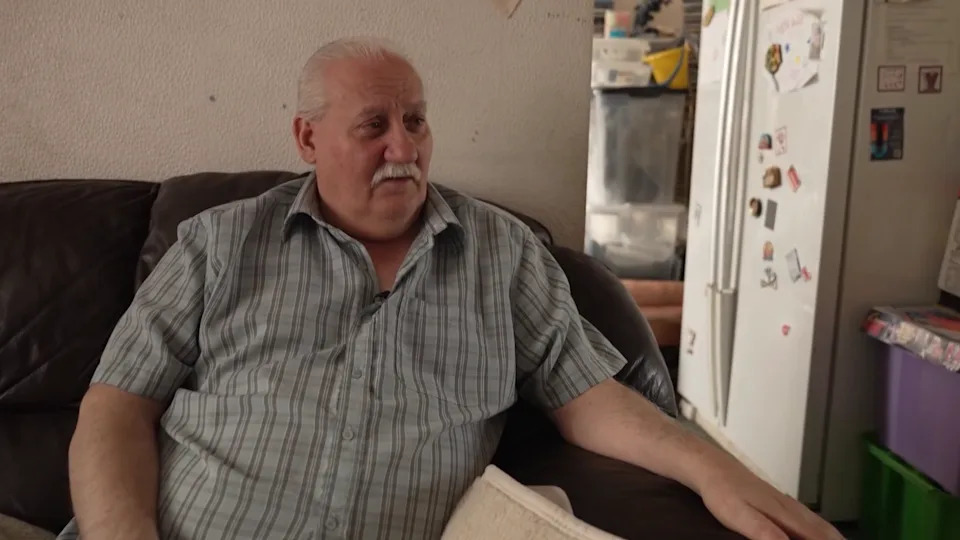
Michael was made redundant from his job. Credit: ITV News
So in his spare time, he was making food for his neighbours and friends who were struggling to afford regular meals.
I went with him as he dropped off trays of sandwiches and savoury scones to his friend John, who lived alone.
That was in 2022. When I arrived at his house this week, Michael greeted me with a familiar warm, welcoming smile, but it was quickly clear that the struggle had also arrived at his door.
The community kitchen he worked in had its funding cut, and last year, Michael was let go.
“I got a little bit of redundancy money, but not a lot. It came to the point where I couldn’t pay my rent, it was just as simple as that,” he told me.
“If I am honest, we were in dire straits, and that just knocked me into a depression, really. I’m on antidepressant tablets. I was used to working every day.”
‘Toast is a luxury’: Families ‘never been more scared’ as costs rise
Empty shops, evictions and extra hours – Britain’s cost of living crisis
When I asked about the meals he used to make for others, he said, regretfully, that he doesn’t have the money to do it now.
For five months, they tried and failed to survive on Davina’s £700 cleaning wage.
Then his Universal Credit finally came through late last year, with a backdated payment for the months he should have been receiving it. I asked how he’s doing now.
“We’re managing, yeah. I mean, we’re not uncomfortable,” he said.
“It’s not as if we’ve got any money left at the end of the week, but that’s not the point. We don’t need any money at the end of the week. We’re getting by with what we have.”
I have known Michael for a few years now, and I know from our conversations that he is a proud man who would likely put on a brave face rather than tell me how bad things really are.
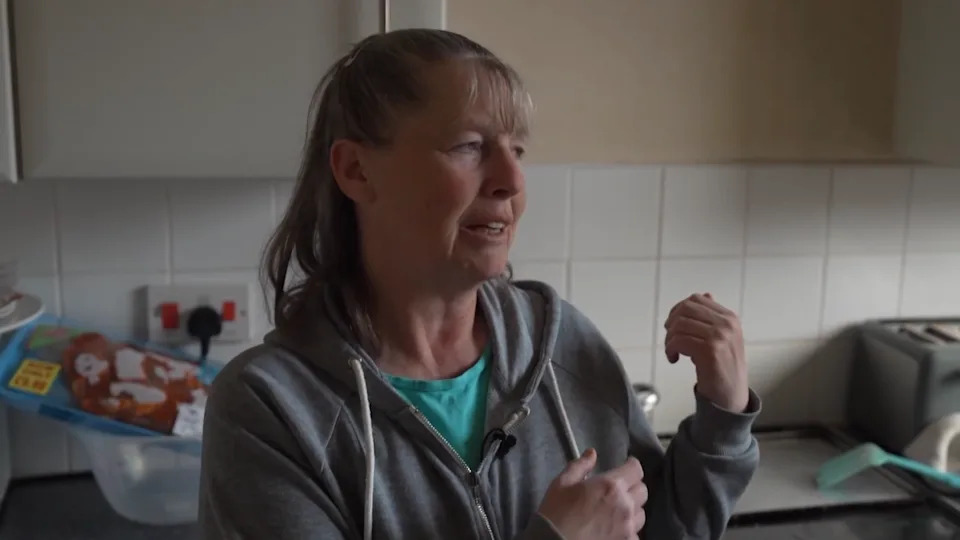
Davina said she has had to borrow money from her mum. Credit: ITV News
When I put that to him, he said: “Well, you don’t go into everything. It’s private.”
In the kitchen, Davina tells me things are “very, very hard”.
“I’ve had to borrow off my mum,” she said. “I mean, my mom doesn’t work anymore. She’s nearly 90. It’s just the cost of being alive, really.”
Michael lives on the Meadow Well estate, one of the most deprived areas of the country.
When I first came here in the autumn of 2022, people lived under a Conservative government, in a cost of living crisis, with a prime minister in political peril, a sluggish economy and the price of everything rising.
Today they have a Labour government, in a cost of living crisis, with a prime minister in political peril, a sluggish economy and the price of everything rising.
I wanted to ask the same people I met back then if things have got any better.
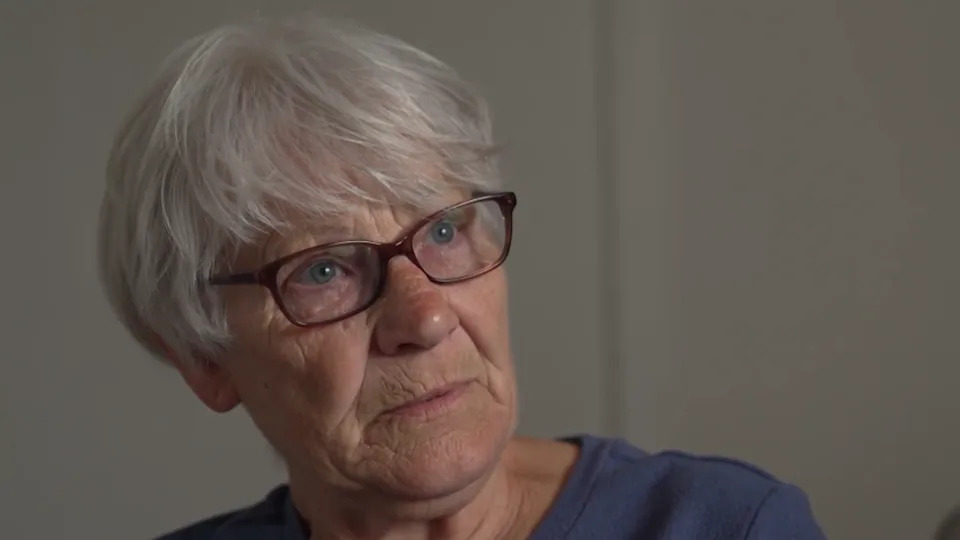
Liz had to downsize from a three-bedroom house to a one-bedroom bungalow to able to keep up with the cost of living. Credit: ITV News
Back then, Liz Wright let us into her life at her lowest moment. She was in her 60s, working two jobs to get by, but then came an energy bill twice as much as the last one, which she had no idea how to pay.
“I’m really worried,” she said in 2022.
“I have the heating on for an hour a day, I barely use my cooker, I don’t use my toaster – it’s a luxury to have a piece of toast. I’m going to have to explain that I’ve got no money, and I can’t live.”
Three and a half years later, I met Liz at a different house.
She has downsized from a three-bedroom house to a one-bedroom bungalow, and retired, cashing in a small pension, while getting a little help from her family.
She said she is no longer in debt and is in a much better place than she was, but does worry about rising costs.
“I went shopping the other day, not for my freezer, just to last me the week and it cost us £39,” she said.“And I was like, ‘what you added on to me bill?’. I said, ‘give us a look’.
“Everybody’s screaming where are they going to get the money from.”
Subscribe free to our weekly newsletter for exclusive and original coverage from ITV News. Direct to your inbox every Friday morning.
She said “nothing has changed” in the last three and a half years to help her or people like her, but has some sympathy with the government having to deal with events beyond their control.
She added: “It’s unrest, isn’t it? It’s a scary thing – he’s a nutter.”
Who is? I ask.
“Trump,” she replied, blaming the war in Iran for pushing up fuel prices. “He’s not right. How are people going to get to work if they can’t get any petrol?”
However, energy prices are lower now than they were when we were last in North Shields.
Back then, Neil owned four butcher shops in the area that his nan opened in the 1950s, but the energy bill for his businesses had more than doubled, and not enough money was coming in to pay them.
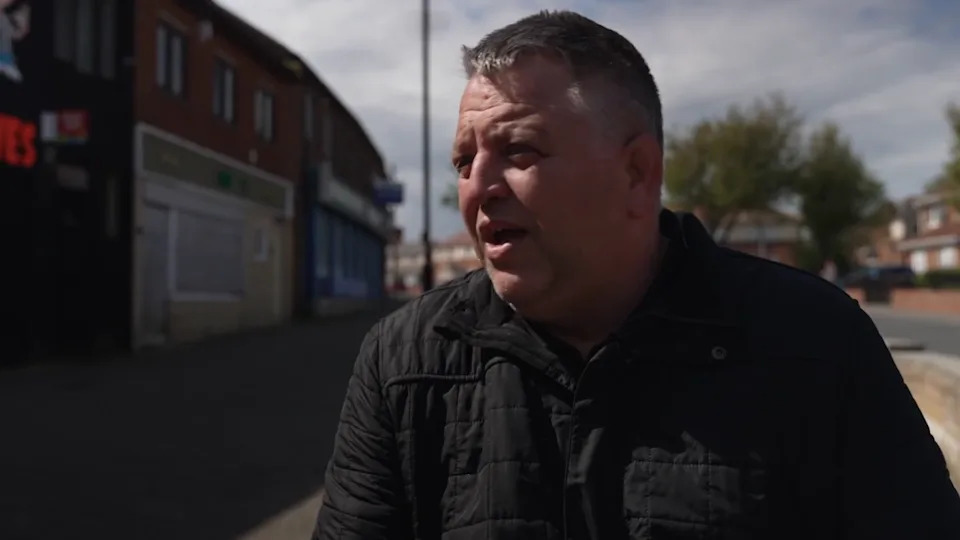
The energy crisis cost Neil his butcher shops. Credit: ITV News
He predicted it was unsustainable.
“I think it’s the end of an era,” he said, and his prediction came to pass. In 2023, he shut down all of his businesses.
I met him outside the shop on the Meadow Well, shutters down, letters from the sign slowly falling off.
“Oh, it was heartbreaking,” he said.
“It was like a bereavement. It had been my whole life for 40 years, and that was just working here. Before that, I was a child working here.”
Neil missed it desperately at first, not knowing what to do with himself, but now feels “relieved” to be out.
“Anybody who wants to start a small business now must be crazy with what’s happened in recent years.
“The first increase in the minimum wage would have cost us over £600 a week. Then you find out they’ve adjusted the national insurance.
“I’m quite happy now that I haven’t got the stress of employing people and running the business.”
The energy crisis cost Neil his shops, but for so many, the cost of living crisis I came here to cover in 2022 has not ended.
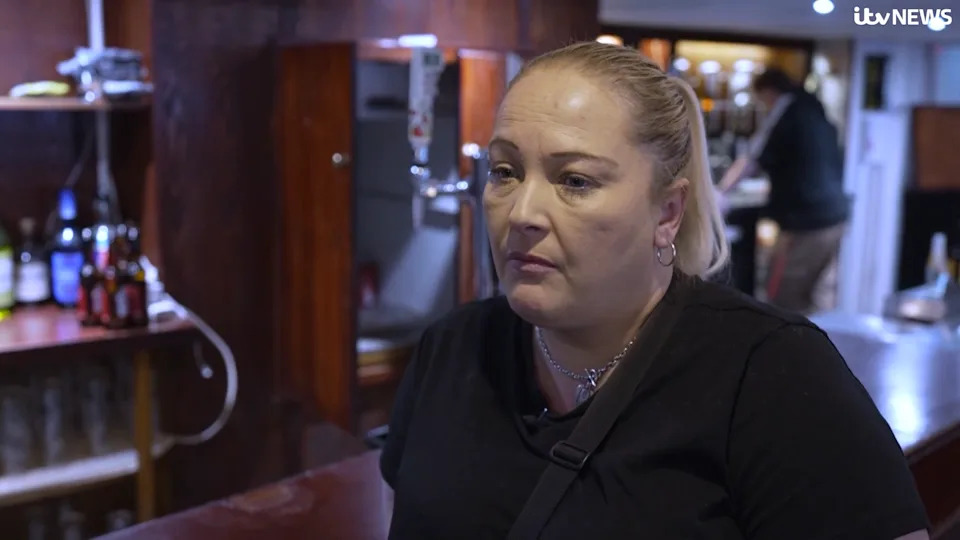
Emma is struggling financially as a working mum. Credit: ITV News
Emma runs a local social club, where midweek bingo nights and weekend tribute bands help keep the doors open.
She is a working mum with a mortgage and mouths to feed, and she sometimes wonders when the struggle will end.
“Rent and mortgage, council tax, the cost of food and essentials is really, really bad now,” Emma said. “There’s nothing you can see that makes you think it’s going in the right direction. I think everything’s just sort of stagnant at the minute and nothing seems to be going for the better. I wish it would be different, but it’s not.”
What I found when I was last here was fear. The shock of such severe price rises, particularly for energy and food, left people worrying how they would pay for it.
Now it feels more like resignation. Life isn’t any easier; people just seem used to it being harder.
Have you heard our podcast Talking Politics? Tom and Robert dig into the biggest issues dominating the political agenda in every episode…