
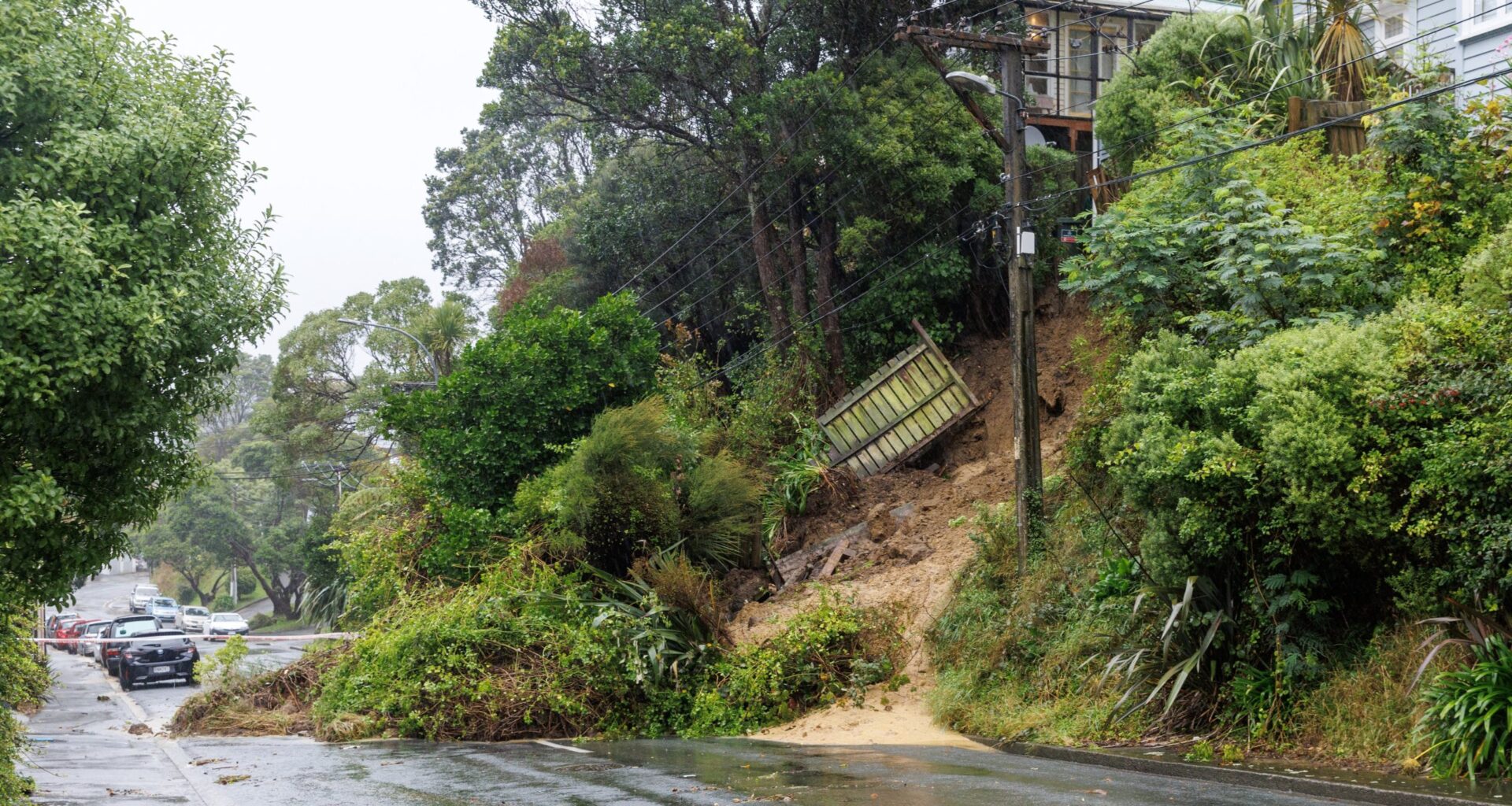
Comment: Pōneke Wellington, my hometown for more than a decade, was hit by flash floods last week. The unusually intense night-time rainfall caused flooding that resulted in many millions of dollars in damage to physical assets, such as houses, cars, and roads.
Less visible, but no less insidious, are the ways in which these extreme weather disasters create long-term impacts on our lives and livelihoods.
Together with my research group, I have been trying to identify and quantify some of these effects. Our research offers a multi-dimensional view of how such disasters, and climate change, affect the social and economic fabric of communities in Aotearoa New Zealand, and highlights the enduring and pervasive costs associated with environmental shocks.
One of the most direct impacts of a steadily warming climate and the weather extremes it amplifies is the general effect on our health. We have recently quantified two aspects of this: rising mortality associated with heat extremes, and mental health crises following devastating storms.
This research statistically links weather data with mortality records, revealing a significant relationship between acute heat and increased mortality. High daily mean temperatures turn out to be more predictive of mortality risks than recorded maximum temperatures, since it is the cumulative heat load sustained over 24-hour cycles that seems to endanger us.
Crucially, the impact of accumulating heat is not uniform across the population as people aged 60 and over are much more vulnerable. Among this older demographic, women experience a larger increase in risk than men.
After Cyclone Gabrielle in 2023, our research also found a marked increase in the use of prescriptions for psychiatric medications, such as antidepressants, especially in heavily damaged areas. These data suggest it is the traumatic emotional impact of the experience – alongside the stress of forced relocation – that is the primary driver of such mental health decline, and not so much the loss of income resulting from the storm.
In terms of financial impact, these cyclones also significantly disrupt earnings, though here too effects vary by demographics. Wages and salaries decline significantly for people in cyclone-affected communities, with financial hits persisting for up to two years after the event.
The impact on the business sector is similarly substantial and persistent. Analysis of plant-level data after cyclones Debbie and Cook in 2017 revealed that premises in flooded areas suffered a 13.5 percent decline in gross output and a 10.3 percent drop in sales. These adverse effects are not short-lived; production-related income streams often remain depressed for up to four years after the initial floods.

Start your day informed. Make room for newsroom’s top stories. Direct to your inbox daily.
Business declines are driven by capital destruction – mainly physical damage to buildings and machinery – and by labour displacement when workers are unable to reach their workplace. Ominously, firms frequently demonstrate a limited capacity to relocate away from flood-prone areas, probably due to the high costs of relocation. This increases their exposure and vulnerability to future events.
New Zealand’s primary industries, our most profitable export sectors, face rainfall extremes, droughts, and rising temperatures, all of which challenge current agricultural practices. Satellite data indicate that both droughts and floods significantly reduce agricultural productivity across annual crops, perennial crops, and pasture. While the average reduction in productivity is often less than 1 percent nationwide, these data often mask significantly higher local damage, with annual crops being particularly vulnerable to flooding.
All in all, the ultimate financial impact of weather extremes on farms is complex and sector-dependent. For dairy farms, revenue and profit may paradoxically increase in the short term after droughts. This happens because New Zealand has been a ‘market maker’ in the global dairy trade: when domestic production falls due to drought, global export prices for milk solids rise, buffering farmers financially against lower yields.
For our commercial fisheries, warming waters present a threat. Modelling of the fishing of species such as flatfish, trevally, and jack mackerel shows a threshold relationship between sea surface temperatures and catch. Though catch levels may initially rise with moderate warming, they begin to decline once temperatures exceed a threshold between 10°C and 12.2°C. Our ocean’s temperature is close to that threshold. Flatfish are particularly at risk because their ability to migrate to cooler waters is limited.
This portfolio of evidence demonstrates that extreme weather has far-reaching socio-economic repercussions that are felt for years after the initial clean-ups. Even our homes are put at long-term risk when, after disasters like the recent Wellington floods, insurance becomes more expensive and may no longer be affordable for some households.
Quantifying these data, and summing up the total cost associated with last week’s floods is currently, and regrettably, impossible. We will not even know the total value of damaged assets from the latest storm. Surprisingly, governments in recent decades haven’t collected this information – perhaps preferring not to know the costs associated with extreme weather events. None of this, however, is inevitable. We can prepare and adapt our economy and make it more resilient to the rising risks of disasters. We can, should we choose to, measure these risks, as well as manage them effectively – be it the floods and landslides in Wellington, the droughts in the Waikato or Canterbury, or the storm surges and riverine floods.