
AI startup developed at Yukonstruct acquired by Motorola
Published 5:30 pm Saturday, May 2, 2026
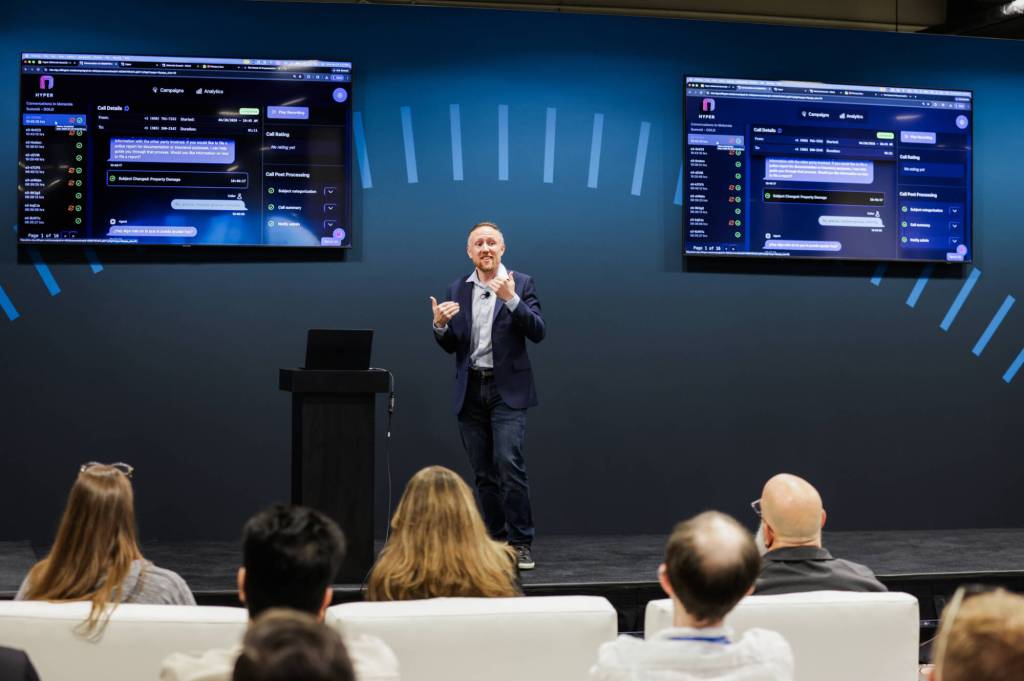
Motorola Solutions has acquired HyperYou, an AI startup whose early development took place at Yukonstruct and with support from Yukon University and local angel investors, according to co‑founder and CEO Benjamin Sanders.
Sanders said the company’s first prototypes were built in Whitehorse, where he spent long days testing early versions of the technology inside the makerspace.
Motorola announced the acquisition on April 9, saying Hyper’s voice‑AI system helps 911 centres manage non‑emergency calls, so operators can focus on urgent situations.
In an April 30 interview, Sanders said he moved to the Yukon in 2013 after selling his first startup and later joined a Yukon government innovation team. That work led him to help launch Yukonstruct, which became the base for several of his companies.
He described Yukonstruct as the place where Hyper took shape.
“There’s a little phone booth on the second level overlooking the restaurant down below, where I basically kind of locked myself in all day,” Sanders said, recalling early user‑testing calls and prototype development.
Yukon University’s Innovation and Entrepreneurship division, which operates out of the same building, provided a small grant that allowed Sanders to hire local developers.
“I wasn’t taking any salary, but I needed a little bit of help to pay some local developers to help me build a prototype,” he said.
Sanders said Hyper also received a small investment from the Yukon Venture Angels. He called it an important step for a territory still developing its early‑stage investment community.
“I think this was one of the first local companies that the group backed,” he said.
Hyper initially explored several uses for voice‑AI before identifying 911 support as the strongest fit. Sanders said many emergency centres are overwhelmed by non‑emergency calls, which can slow response times for urgent cases.
He said the company now works with major centres, including Toronto and the San Diego County Sheriff’s Office. Motorola’s release said Hyper’s system can detect when a situation escalates and automatically transfer callers to a 911 specialist.
Sanders said the scale of that work made a partnership with Motorola a logical next step.
While Sanders says he is now the only Yukoner still involved full-time, he maintains that the company’s ties to the territory remain strong. Hyper has brought team members north for culture‑building retreats, he said.
Asked whether the Yukon has enough support for future founders, Sanders said the territory has the right ingredients, pointing to grants, workspace, and a local investor network. He said larger jurisdictions lack similar early‑stage supports for startups.
He added that the government can also play a role by becoming an early user of local technology, noting his previous startup was adopted by the Yukon government before expanding nationally.
Sanders said he hopes Hyper’s path encourages other Yukon entrepreneurs to pursue similar ideas.
“Spend time at Yukonstruct, talk to the folks over at Yukon University. Connect with the Yukon Angel Network, too. Those are three big pieces that were really helpful for us,” Sanders said.
Contact Jake Howarth at jake.howarth@yukon-news.com.