
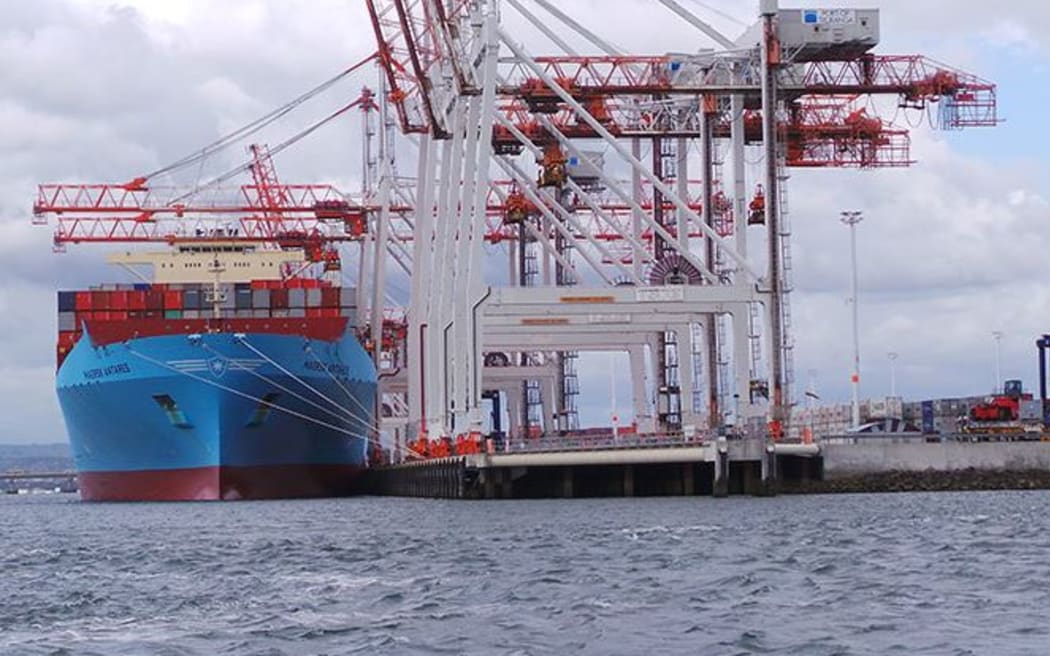
Intermodel transport involves the efficient movement of a container between two or more modes, such as rail, sea and road.
Photo: Andrew Campbell.
Global transport company AP Moller – Maersk has raised some of its freight charges by 27 percent to cover a surge in global energy prices associated with the conflict in the Middle East.
“With approximately 20 percent of global fuel passing through the Strait of Hormuz, current developments have created an unprecedented cost environment affecting Landside (Inland) and Intermodal operations,” it said in a statement.
Customs Brokers and Freight Forwarders Federation of New Zealand chief executive Sherelle Kennelly said the costs were widespread across the industry, with the end user picking up the tab.
“All charges in the supply chain do get passed on to the end user, so that’s where you see your pricing increases, in particular with fuel at the pump, but also grocery stores and things like that.
“What we’re seeing at the moment is a continuation of the fuel related surcharge [that] has been introduced across the global shipping industry.
“The New Zealand intermodal fuel fee is part of that wider trend, rather than an isolated change.”
Intermodel transport involves the efficient movement of a container between two or more modes, such as rail, sea and road.
“To ensure service continuity, safeguard cargo integrity, and secure sufficient vendor capacity across our network, AP Moller – Maersk will implement temporary, cost reflective energy/fuel price adjustments on Landside transportation.
“Given the volatility of the current energy market, further adjustments may be required as conditions evolve.”
Kennelly said the market will continue to see increases until the conflict settles down and trade returns to normal.
Westpac chief economist Kelly Eckhold said central banks were starting to sound the alarm as the war on Iran dragged on.
He said while the surcharge could be removed, indications were oil prices would continue to increase.
Eckhold said New Zealand was a small country at the end of the supply chain and lacked the economies of scale of larger countries.
Government committed to minimising impact – Associate Transport Minister
The Associate Transport Minister said flow on effects from the world wide fuel crisis was putting more pressure on household budgets.
James Meager said the government couldn’t control global oil markets or international conflicts, but said it was committed to minimising the impact as much as possible by providing targeted support to those most affected
He said the government was taking measured action, and sticking to a careful economic plan is how the country could get through this global shock.
Diesel and jet fuel stocks were up, according to the latest government update on fuel supplies. The country had about 52 days of petrol, nearly 53 days of diesel and nearly 59 days of jet fuel.
Three ships were within two days of arriving, and another nine were less than three weeks away.
Sign up for Ngā Pitopito Kōrero, a daily newsletter curated by our editors and delivered straight to your inbox every weekday.