
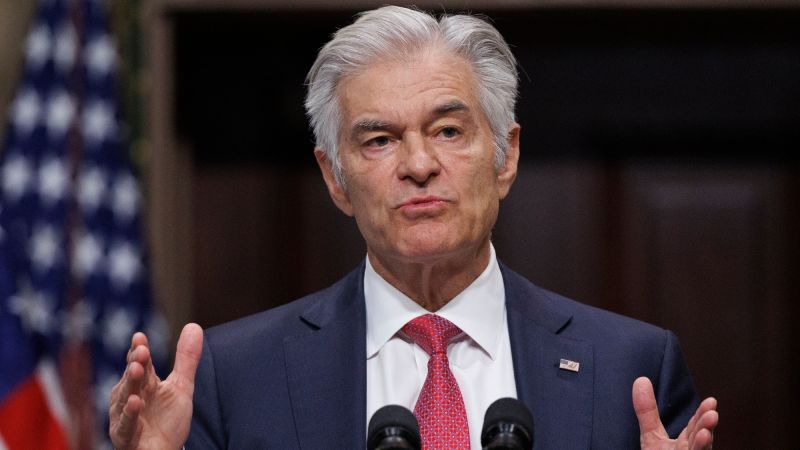
Dr. Mehmet Oz built his reputation as “America’s Doctor” by dispensing easy-to-follow medical advice on TV.
Now, as a top health official in the Trump administration, he’s harnessing his charisma and TV skills to send a different message: that Medicare and Medicaid are riddled with fraud, adding to the cost of the massive public healthcare programs.
With a camera crew still in tow, he’s going on-site in multiple, mostly Democratic-led, states to film video after video calling out improper and questionable spending. He’s also filmed himself tagging along with armed federal agents raiding allegedly fraudulent healthcare providers.
The crusade has not only endeared Oz to Donald Trump but also made him a top lieutenant in the president’s quest to root out wasteful spending in federal social programs.
The highly produced videos, viewed millions of times on social media, are a big part of messaging aimed at convincing voters that Trump is fulfilling his campaign promise to address Americans’ healthcare costs.
Best known for frequent “Oprah” appearances that parlayed into the long-running “The Dr. Oz Show,” he was tapped by Trump last year to be administrator of the Centers for Medicare and Medicaid Services, or CMS.
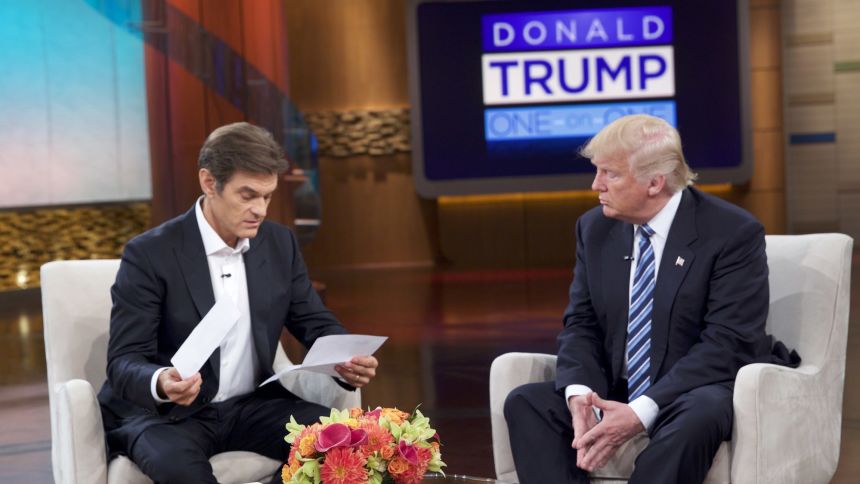 the results of a physical check-up Trump underwent last week. The two talked during a taping of “The Dr. Oz Show” in New York on Wednesday, September 14.” class=”image_large__dam-img image_large__dam-img–loading” onload=’this.classList.remove(‘image_large__dam-img–loading’)’ onerror=”imageLoadError(this)” height=”1125″ width=”2000″ loading=’lazy’/>
Since then, Oz has built a reputation as a steady voice in the Trump administration’s sprawling health apparatus, which has undergone dramatic upheaval with downsizing and policy changes, including some that have been questioned by mainstream medicine. Oz also has taken a leading role in negotiating lower drug prices with more than a dozen manufacturers.
But experts have questioned Oz’s claims that there are many billions of dollars in fraudulent spending to slash in public health insurance programs, many of which cover the most vulnerable Americans. They warn the effort may be aimed at cutting federal spending even when it’s not warranted, while undermining a critical program.
“There is fraud against Medicaid, and we need to get on it. But I don’t believe it’s ‘rampant.’ I don’t believe it’s ‘staggering,’ and I don’t think there’s any evidence for that,” said Andy Schneider, a research professor at Georgetown University and former CMS senior adviser during the Obama administration. “But that’s the kind of rhetoric that Dr. Oz and other people in the administration are using, and I don’t think it’s helpful.”
Oz argues that his efforts are aimed at strengthening Medicare and Medicaid.
“CMS is focused on protecting patients, safeguarding taxpayer dollars, and making sure these programs are there for the people they were designed to serve,” he told CNN in a statement.
Not long after Trump won the presidency in 2024, some of his top allies in the healthcare world convened at Oz’s mansion in Palm Beach, Florida, where they sat around a dinner table discussing how they were going to fix healthcare.
Oz, now-Health and Human Services Secretary Robert F. Kennedy Jr., a cohort of “Make America Healthy Again” supporters, and a handful of officials from the first Trump administration cycled through the beachfront mansion, discussing goals like how to tackle perceived corruption across the healthcare system.
It was a sort of “healthcare Hyannis Port,” according to Michael Caputo, a former health official from the first Trump administration, who was in attendance.
Current and former Trump officials who spoke to CNN described a cost-cutting, fraud-finding crusade that they believe will resonate with voters ahead of the midterm elections — and Oz’s efforts are being seen in a positively within the administration. He is a central player on Vice President JD Vance’s anti-fraud task force.
There is a sense that “if things are going to get done, they’re likely going to get done through CMS,” said one former official. “At CMS, you’ve got Oz in a place, a clear chief of staff, a strategy that people can understand and get behind.”

Speaking in The Villages, a large retirement community in Florida, on Friday, Trump praised his administrator. “We have a man here who knows more about Medicaid, Medicare, medical crap than any human being,” he said.
And Oz has taken on the fraud-fighting mantle with gusto.
“Healthcare fraud is real, documented, and devastating,” he said in the statement to CNN. “When bad actors exploit the system, they’re not just wasting taxpayer dollars, they’re putting patients at risk and taking resources away from people who truly need care.”
Minutes after being sworn in, he was already railing against alleged criminals stealing from vulnerable Americans and from taxpayers in healthcare programs.
“We have created a war room at CMS to go after, to catch the fraud in real time before the money leaves the federal coffers,” he said, addressing Trump.
Oz estimates that fraud, waste and abuse in Medicare, Medicaid, the Affordable Care Act and the Children’s Health Insurance Program total $100 billion. His efforts largely focus on areas that have seen large increases in billing or in providers participating in the programs.
At the heart of his anti-fraud battle are social media videos and letters to governors with demands for information about their Medicaid programs. The missives take an adversarial tone, blaming state leaders for not doing enough, requiring responses within weeks and threatening to act.
In April, he announced that CMS has asked all 50 states to submit plans on how they will revalidate Medicaid providers in areas deemed high risk. States will have 30 days to comply, making sure that the providers are legitimate, deliver the services they are being paid for and do it the right way.
In one of his initial actions earlier this year, Oz announced CMS would temporarily withhold $259 million in federal matching funds for Minnesota until the state can prove that its Medicaid providers weren’t fraudulent and that some individuals served have the proper immigration status. Last week, he followed up by temporarily withholding another $91 billion, saying on X that “we cannot and will not pay bad bills so we’re asking for more information from Minnesota to verify these bills.”
Other high-profile targets have included social adult daycare and home-care programs funded by Medicaid in New York and California’s hospice and home-care services providers.
Oz has also questioned payments for autism services for children in Maine, and, in the only red state on his public shaming list, blasted fraud committed by medical equipment providers in South Florida.
In one action-packed video last month, Oz narrates a SWAT team raid against a California couple charged by the Justice Department with defrauding Medicare by billing for services they did not provide.
“We had a bunch of hospice operators that have been getting away with fraud and corruption for a long time,” Oz says as he strides toward the raid team. “That stops today.”
The couple seized in the video were two of seven medical practitioners and hospice operators arrested or charged with Medicaid fraud in the enforcement action.
Results. pic.twitter.com/q6iHAsEx2p
— DrOzCMS (@DrOzCMS) April 17, 2026
Oz has also traveled around the country — including to Minneapolis, Southern California, New York City, Florida and Nevada — to take viewers to sites where he alleges fraud is occurring.
In another video, filmed in South Florida, which he calls “the hotbed of durable medical equipment supplier fraud,” Oz claims there are more suppliers than McDonald’s in the area. One alleged perpetrator tried to flee on a Jet Ski with several hundred thousand dollars in a backpack, he says, as the video shows a man with a backpack on a Jet Ski.
These videos are among the well over a dozen that Oz has posted to his social media accounts this year. He has also appeared on numerous news shows and podcasts discussing the issue.
The agency said it is intensifying its “nationwide, data-driven effort to identify and address potential fraud across Medicare and Medicaid.”
“The agency follows the data and does not predetermine enforcement targets; instead, it focuses attention where billing patterns, program vulnerabilities, or law enforcement findings indicate elevated risk,” it said in a statement to CNN.
Criticism and praise
To be sure, fraud has long existed in Medicare and Medicaid, primarily perpetrated by providers, not enrollees — whom GOP lawmakers have often targeted. But there’s no data available on the total amount of money lost to fraud in the two programs, and Oz’s claims have been found to be inaccurate at least once.
Prosecutions give an inkling of the extent of the problem. Medicaid Fraud Control Units, which operate in all states, recovered $1.2 billion in criminal fraud convictions in fiscal year 2025, according to the Health and Human Services Office of Inspector General. (Total Medicaid spending that year was $1 trillion.)
The effort to use data to find billing patterns that could be indicative of fraud predates the Trump administration. CMS estimates that it stopped $11.9 billion in potentially fraudulent Medicare payments between fiscal years 2022 and 2024, according to a recent report from the Government Accountability Office. Under President Joe Biden, some action was taken — for example Medicare officials told the accountability office that the data helped them halt more than $4 billion in payments for supplies that were billed but never delivered.
Prosecutions for healthcare fraud are common. Last year, the Justice Department announced it had charged 324 defendants for their alleged participation in more than $14.6 billion in fraud schemes, more than double the previous record.
But Oz’s tactics have met with mixed reviews.
Democratic governors and left-leaning policy experts say he is deliberately targeting blue states in a political ploy and are challenging his claims.
For example, one of Oz’s eye-popping accusations was that more than 5 million Medicaid beneficiaries in New York — or three-quarters of the total number enrolled — received personal care services during part of 2025.
Michael Kinnucan, health policy director at the progressive Fiscal Policy Institute in New York, looked closely at the data and determined that CMS likely added up all the enrollees who receive this service month after month, rather than counting individuals only once.
The error shows that Oz has a weak grasp of the programs he’s accusing of fraud, Kinnucan told CNN.
“The effort here is not to fight fraud or force New York to do a better job of fighting fraud,” he said. “They want to cut federal spending.”
More than a month later, Oz and CMS acknowledged the mistake, saying that the actual number was about 450,000 beneficiaries.
However, Oz’s claims of rampant fraud in social adult daycare programs in New York — including paying seniors to say they are attending but not actually providing any services — are spot on, said Derek Adams, a partner at Potomac Law Group. He is happy that Oz is raising awareness of the issue, which hurts legitimate providers like his clients.
“The government needs to do more on the issue,” Adams said. “There have been far, far too few actions.”
In California, the hospice industry has welcomed Oz’s efforts, saying more needs to be done. In a 2022 report on hospice agencies, the state’s auditor found that “the State’s weak controls have created the opportunity for large-scale fraud and abuse” and highlighted many of the same concerns as Oz.
The state stopped issuing new licenses to hospice providers that year, but some of the existing ones are still committing fraud, said Sheila Clark, CEO of the California Hospice and Palliative Care Association.
Last year, Clark provided information on potential fraud to CMS officials, whom she described as very inquisitive and thoughtful. They worked quickly to remove from hospice care Medicare beneficiaries who were fraudulently enrolled — allowing them to regain their regular Medicare coverage.
“Their enforcement actions have got teeth, and they are having real impact,” she said.
CMS has shut down federal funding for 450 hospices and home healthcare agencies in California, Oz said at Politico’s Health Care Summit in April.
Oz’s actions reflect what CMS should be doing to protect Medicare and Medicaid and ensure federal funds are being spent appropriately, said Brian Blase, head of the conservative Paragon Institute.
“What he’s doing is making it clear the problems within some of these programs and that we need to fix them,” said Blase, who worked as a health policy adviser in Trump’s first term.
Still, some experts question whether Oz’s methods are the best way to combat fraud, saying the federal government should partner with states rather than bully them and disrupt or threaten their federal matching funds. That’s not the way to make the program work better, said Schneider of Georgetown University.
Schneider, who advised on Medicaid integrity issues at CMS, argues the focus on fraud is a way for the Trump administration to shift the Americans’ attention away from the sweeping healthcare cuts Republicans enacted last year.
“Invoking fraud is a way to degrade [Medicaid’s] reputation,” he said. “This is part of a longer-term strategy to weaken popular support for the program.”
Oz has contended that he loves Medicaid and wants to make sure that people who need health services can access them.
“If you love something, you protect it,” he said at Politico’s summit.
Editor’s note: A previous version of this story misattributed a quote, which has been removed. An image location labels has been updated.